
Artificial intelligence has made it easier than ever for students to produce polished research papers, competition entries, and personal projects. But as AI becomes more capable, an important question emerges for students preparing for college admissions in 2027: Does a polished final product demonstrate what a student can actually do?
A ONE Institute believes the distinction between producing impressive results and developing genuine ability is becoming increasingly important. Colleges want to understand not only what students accomplish, but also how they approach problems, make decisions, overcome challenges, and learn throughout the process.
To understand why, we need to examine something that AI can help us access quickly but cannot automatically develop for us: the knowledge gained through firsthand experience.
How AI Changed the Way A ONE Institute Evaluates Extracurricular Activities
At A ONE Institute, evaluating students' extracurricular activities requires considerable research and analysis.
We examine students' activities, organize their achievements, assess the level of each accomplishment, and determine how those experiences may relate to particular universities and intended majors.
To make this process more systematic, A ONE Institute developed an internal evaluation model with its own scoring criteria.
For example, the model can classify activities into different achievement tiers, identify the nature of each competition or program, and help organize how an activity might contribute to a student's college admissions portfolio.
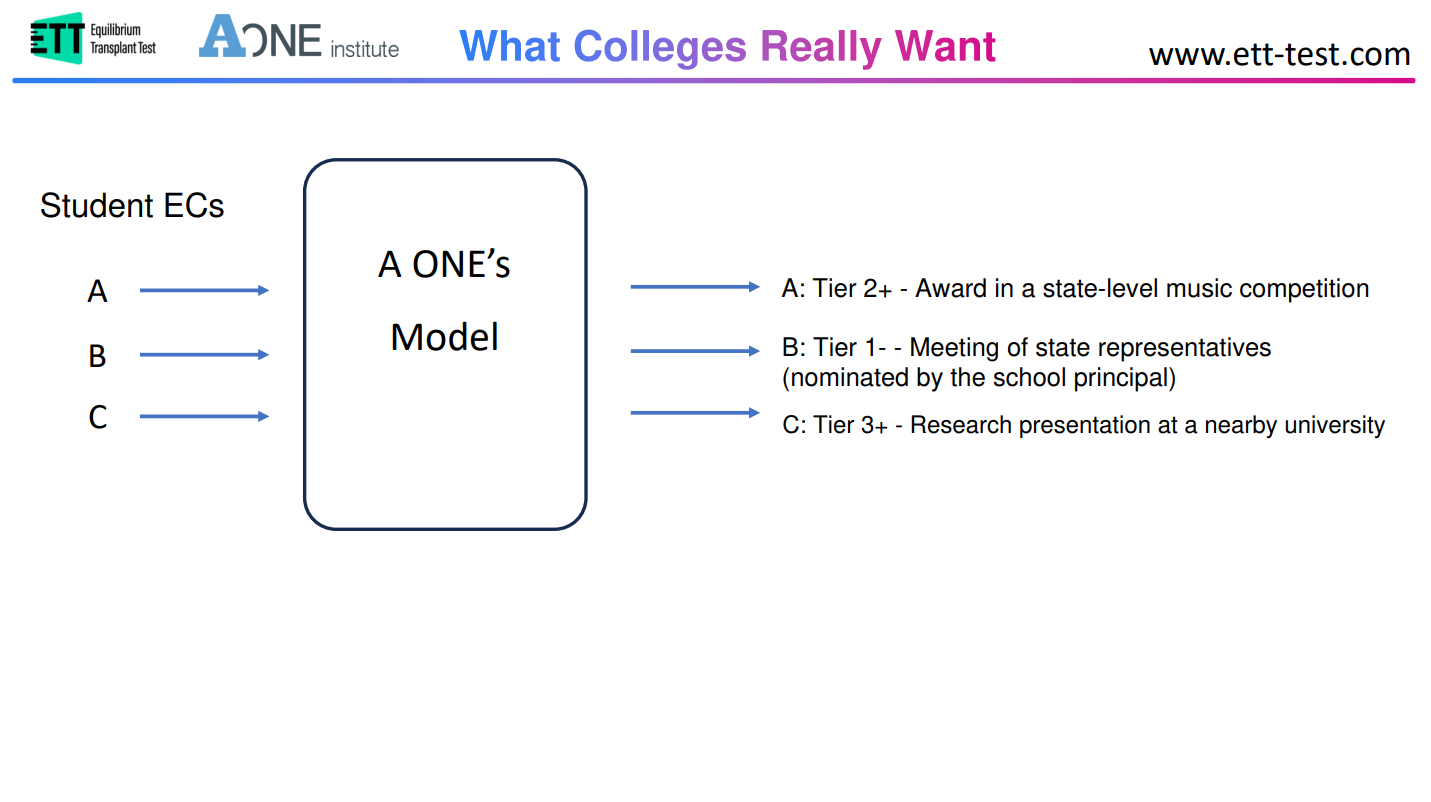
The advantage is efficiency.
Instead of spending considerable time researching and evaluating every activity individually, the model can organize information and produce an assessment much more quickly.
However, after repeatedly using this system to analyze different students' activities, we began noticing something.
The results were arriving faster, but something valuable seemed to be missing.
Before developing the model, evaluating an unfamiliar competition required investigating its history, purpose, judging criteria, previous winners, and related programs.
Even when we already knew an activity, we often researched it again to confirm our understanding.
That process took much longer, but it also provided knowledge that did not always appear in the final evaluation report.
Once AI began producing the results directly, many of those discoveries were no longer happening.
What the Bow Seat Competition Teaches Us About Understanding an Activity
Consider the Bow Seat Ocean Awareness Contest.
Under A ONE Institute's internal evaluation framework, certain Gold, Silver, and Bronze awards in this international youth competition may be evaluated around Tier 2 to Tier 2+, depending on the applicable rubric.
The competition invites young people to explore environmental issues through creative work, including visual art, writing, film, and other forms of expression.
A structured evaluation system can quickly provide that information.
But understanding the competition becomes much more interesting when we investigate how it began.
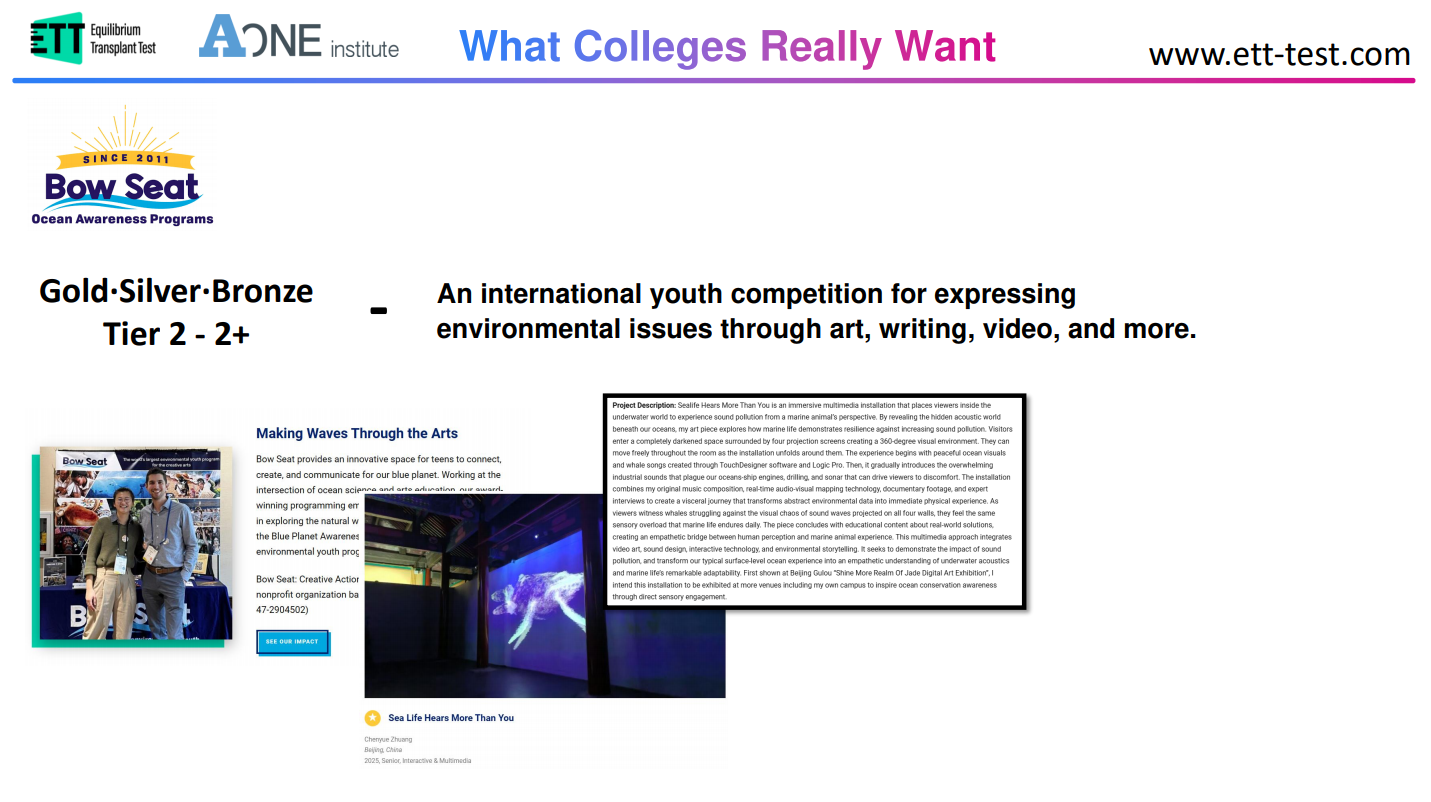
In 2011, Bow Seat founder Linda Cabot and her daughters created a documentary about environmental issues affecting the Gulf of Maine.
Through filming, researching, and engaging with those environmental concerns, they experienced something that reading textbooks or articles alone could not provide.
The process of making the documentary encouraged a deeper connection with environmental issues and demonstrated how creative work could motivate young people to become more involved.
That experience helped inspire Bow Seat's broader mission of encouraging environmental awareness through the arts.
There is another important element.
Students entering the contest must submit a written reflection explaining their creative process, motivation, and what they learned through exploring the competition's theme.
The reflection is not simply an optional explanation attached to the finished artwork. Its content and authenticity are considered during evaluation.
This means that understanding the student's motivation and creative journey is an important part of understanding the competition itself.
When reviewing previous winners, we can also learn how participants connect their personal interests with environmental issues, how their creative processes develop, and how their projects communicate a broader message.
Exploring the organization further can lead us to related programs and activities that may also be relevant to students.
These insights are not always captured by a simple competition description or achievement tier.
They develop gradually as we investigate the activity, read different materials, compare examples, and build our understanding.
That is the type of knowledge we risk missing when we receive only an AI-generated summary.
Explicit Knowledge vs. Tacit Knowledge: What AI May Leave Behind
There are two concepts that help explain this difference.
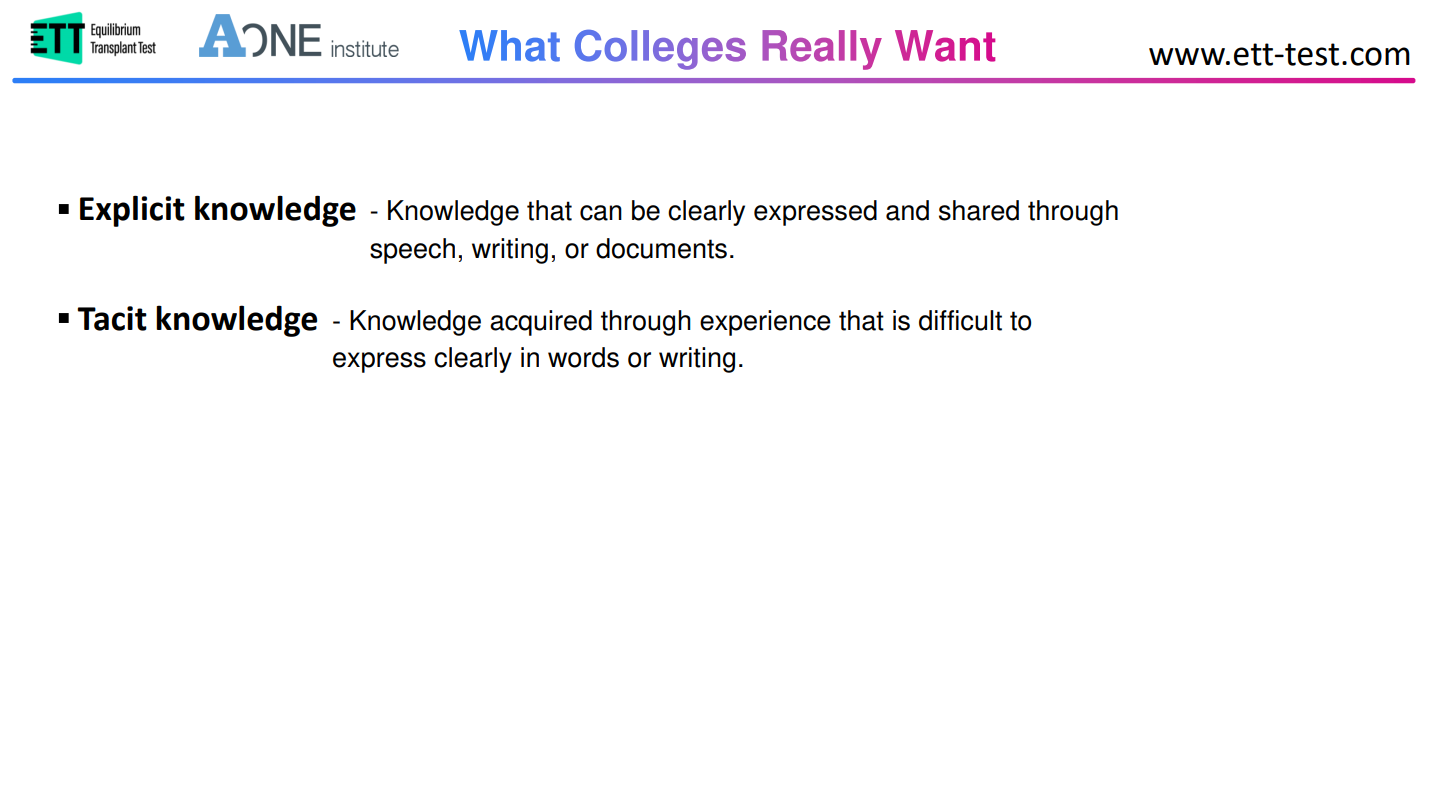
Explicit Knowledge refers to knowledge that can be clearly expressed through language, writing, documents, formulas, or organized information.
Tacit Knowledge refers to knowledge developed through experience that is difficult to fully explain or transfer through written instructions alone.
For example, an AI model can quickly tell us what the Bow Seat competition is, what awards it offers, and what its judging criteria include.
That is primarily explicit knowledge.
But the deeper understanding developed while exploring the competition's history, reading the reflections of previous winners, and recognizing meaningful differences between projects is not always fully captured by the final report.
Some of that understanding becomes tacit knowledge.
This distinction is not limited to college admissions consulting.
It applies to research, writing, entrepreneurship, professional work, and many other activities.
AI makes it increasingly easy to move directly from a question to a completed answer.
However, when we skip the work between those two points, we may also skip the experiences through which deeper understanding develops.
A ONE Institute has therefore been working to distinguish between tasks that can reasonably be delegated to AI and tasks where completing the process ourselves provides educational value.
The goal is not to avoid AI.
It is to determine which parts of the process are worth experiencing directly, even when AI could complete them faster.
Why AI-Generated Research Criticism Can Be Misleading
One situation we frequently encounter involves students conducting scientific research with mentors.
Naturally, parents want to understand whether their child's research is progressing appropriately and whether the project is strong enough for a particular competition or academic journal.
Some parents submit the research materials to an AI model and ask it to evaluate the project.
Using AI for this purpose is not necessarily a problem.
The difficulty begins when a lengthy AI-generated critique is treated as a definitive professional evaluation without carefully reviewing its reasoning.
For example, a parent may forward an extensive AI report and ask whether a project is unsuitable for a competition or insufficient for publication.
Sometimes the report contains so many technical comments that even understanding which criticisms are meaningful becomes difficult.
To illustrate this issue, A ONE Institute examined a research project that had already received a major award.
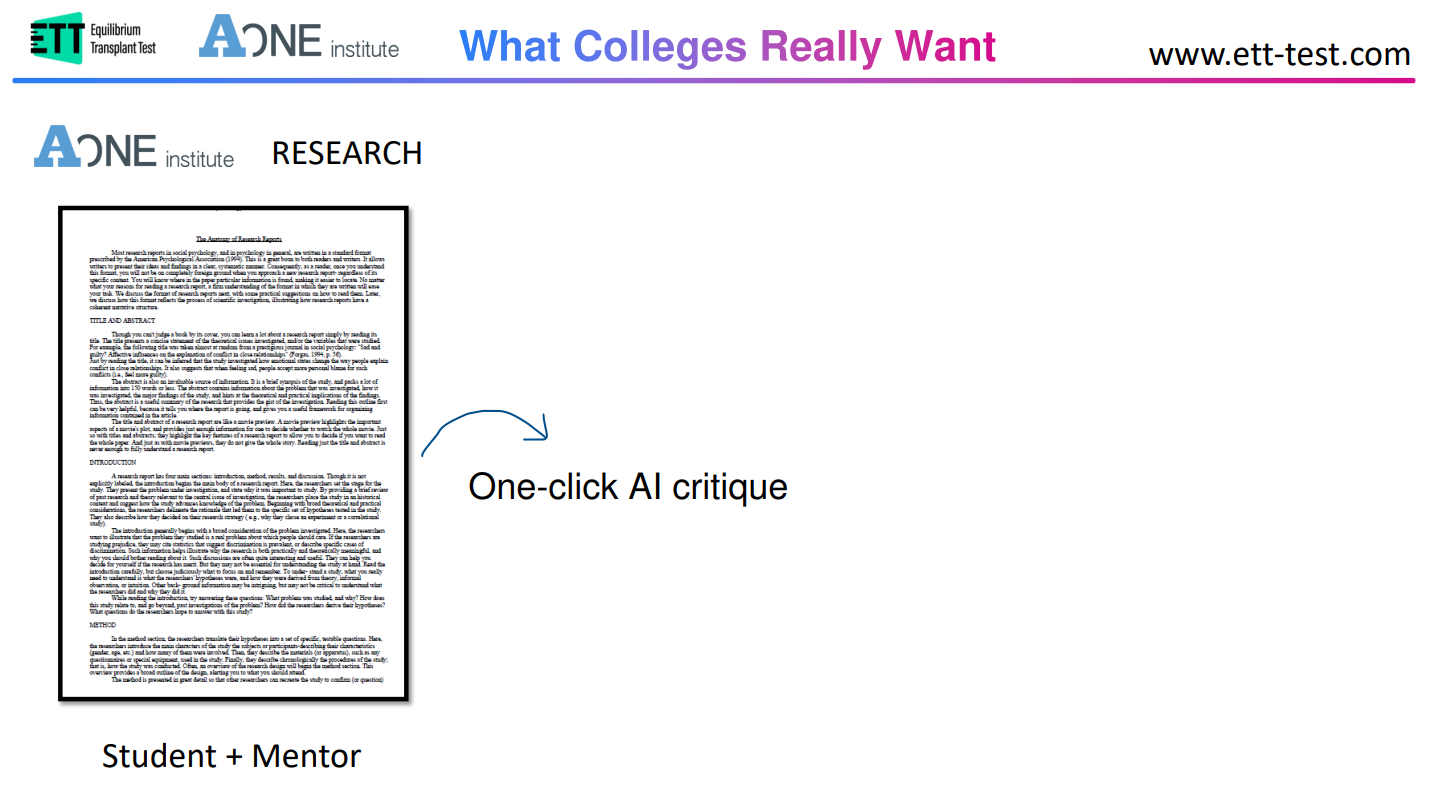
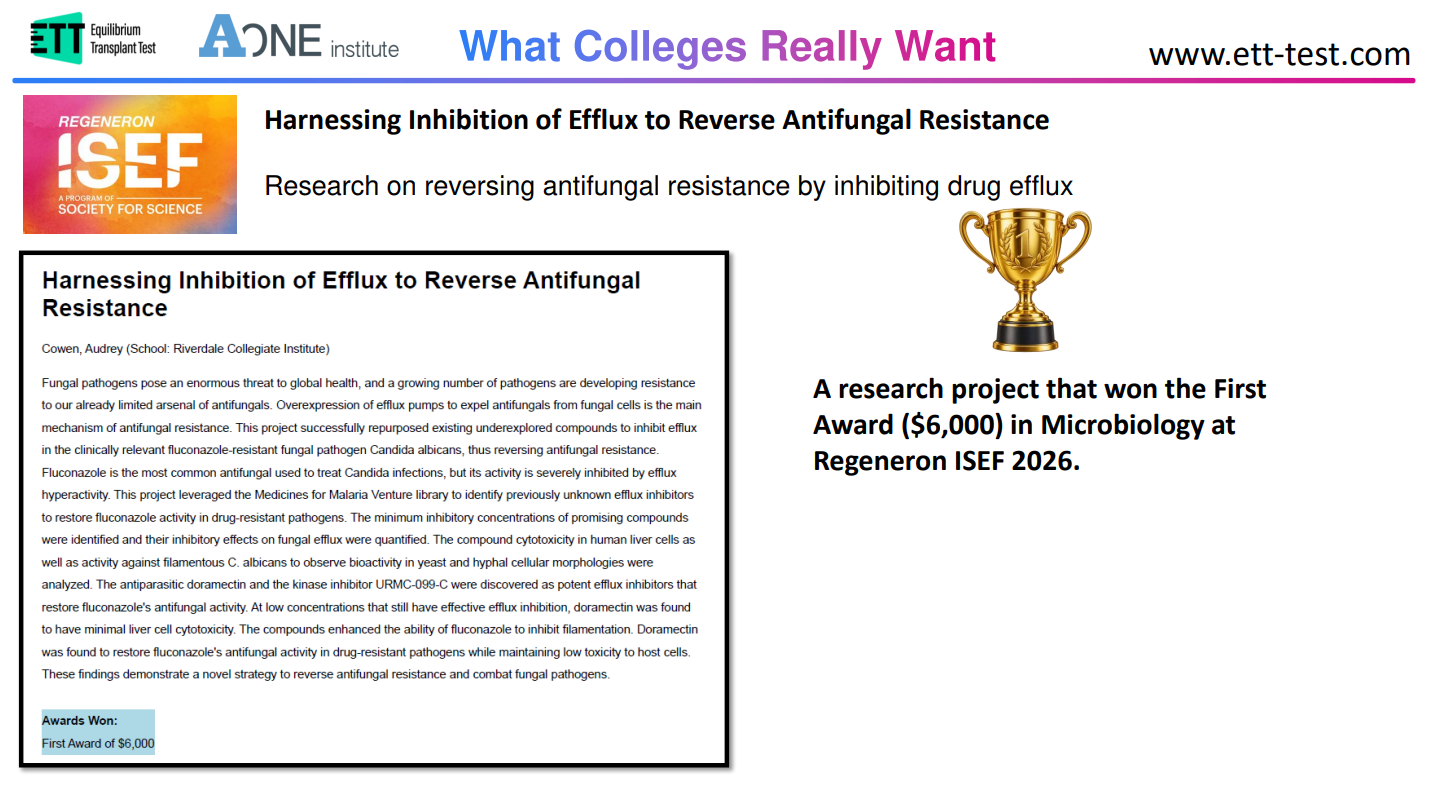
The project was titled Harnessing Inhibition of Efflux to Reverse Antifungal Resistance.
It investigated a strategy for addressing antifungal drug resistance by inhibiting mechanisms that allow fungal cells to expel antifungal drugs.
The project received a First Award of $6,000 in the Microbiology category at Regeneron ISEF 2026.
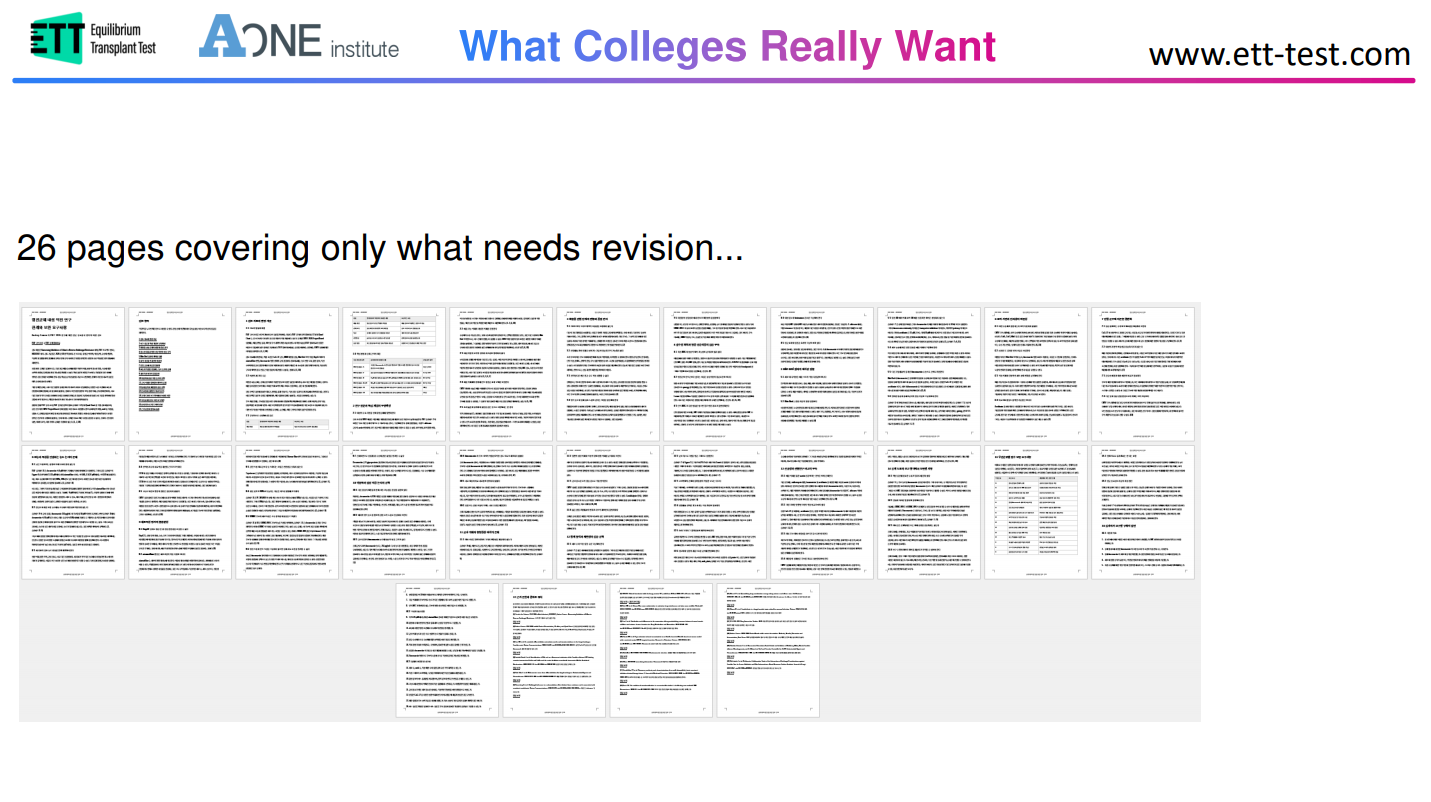
A ONE Institute submitted the award-winning research material to an advanced AI model and requested a critical evaluation.
Despite the project's recognized achievement, the model produced an extensive critique.
The resulting report contained approximately 26 pages of suggested revisions and criticisms.
This example illustrates an important distinction.
An AI model can identify potential weaknesses in a project, even one that has won a major award.
Some of those observations may be useful.
However, the length or technical complexity of an AI-generated critique does not automatically establish that its conclusions are correct or that the research is inadequate.
A research project can have legitimate limitations and still represent excellent scientific work.
The important task is to understand which criticisms are relevant, whether they are technically justified, and how they relate to the project's actual objectives.
When someone relies entirely on an AI critique without understanding the research, it becomes difficult to distinguish meaningful feedback from comments that are speculative, minor, or inappropriate for the project's scope.
In some cases, people may become so dependent on the AI-generated evaluation that they struggle to explain the research question itself.
That is precisely the problem we want students to avoid.
AI should help students evaluate their work, not replace their responsibility to understand it.
Why Students Should Experience Every Stage of Writing and Research
Consider what happens when a student independently prepares for a writing competition.
The process normally involves much more than producing a finished essay.
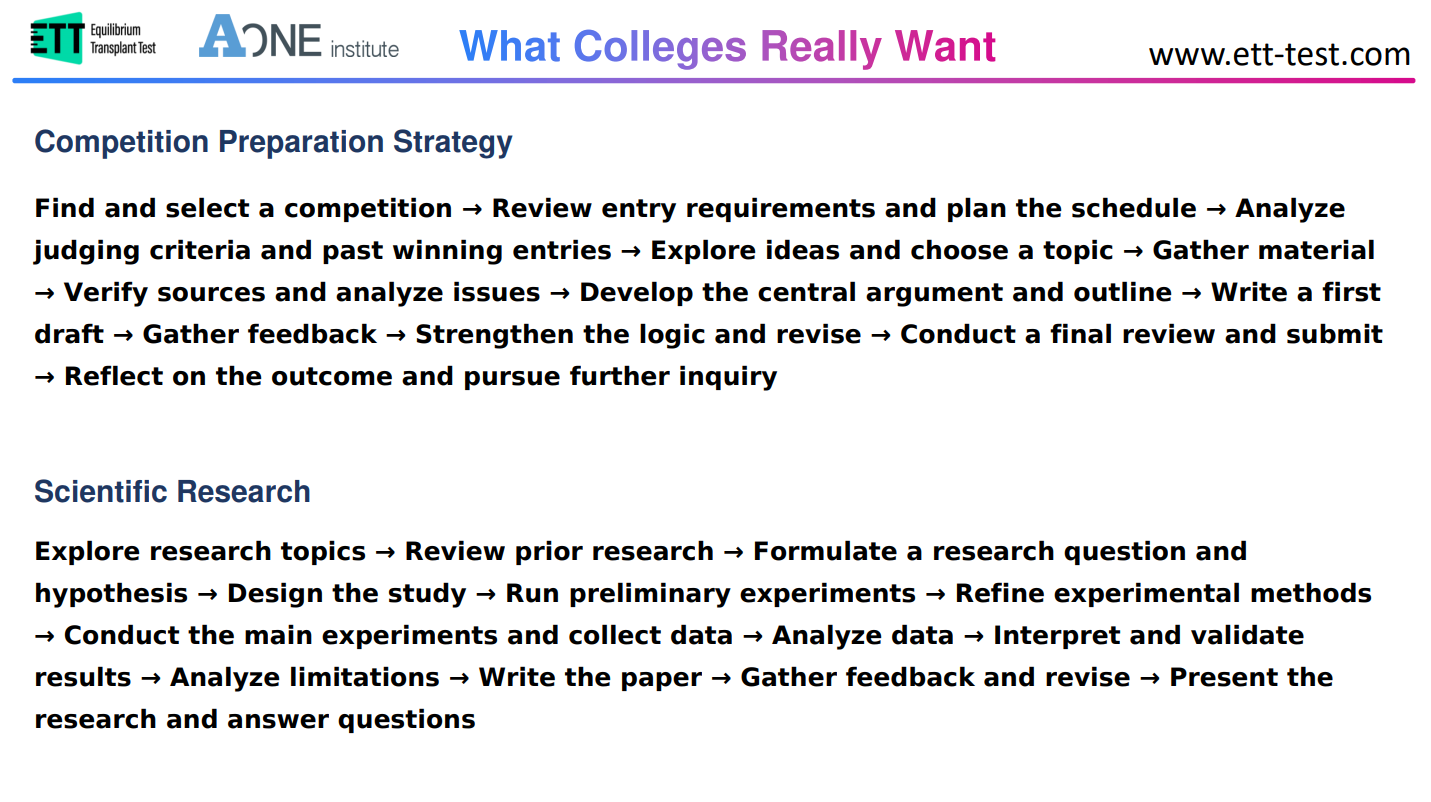
A student must first investigate available competitions, review eligibility requirements, understand deadlines, and examine judging criteria.
The student may also study previous winning entries to understand the expected quality of work.
Only then does the student begin selecting a topic.
After choosing a subject, the student gathers information, evaluates sources, identifies important issues, develops a central argument, and plans the structure.
Writing the first draft is followed by feedback, revision, editing, and final review.
Scientific research follows a similarly extensive process.
Students begin by identifying a research topic and reviewing existing studies. They develop research questions and hypotheses, design experiments, conduct preliminary tests, and refine their methods.
They then proceed to the main experiments, collect data, analyze results, interpret their findings, evaluate limitations, and prepare a research paper or presentation.
Every stage offers opportunities to develop knowledge and judgment.
A student may initially misunderstand a competition's judging criteria and discover the mistake through further research.
A research hypothesis may fail during preliminary testing, requiring changes to the experimental design.
A student preparing a writing competition entry may discover that the available evidence does not support the original argument.
These experiences require the student to reconsider decisions and develop a deeper understanding of the work.
AI can certainly assist with individual stages.
It can help organize research materials, explain unfamiliar concepts, provide preliminary feedback, or identify possible weaknesses.
However, suppose a student selects a topic and then asks AI to complete the research, analysis, structure, and first draft in a single step.
The student may receive a finished product much faster.
But the student has bypassed many of the experiences that would have developed their understanding.
This is why A ONE Institute emphasizes that students should remain actively involved throughout the process rather than using AI to jump directly from the initial idea to the completed project.
How Tacit Knowledge Contributes to Judgment and Decision-Making
Why is tacit knowledge so important?
Throughout our lives, we constantly make decisions.
We compare alternatives, evaluate uncertain situations, identify problems, and decide what action to take.
Not every decision can be made by following a clearly written formula.
Sometimes we rely on judgment developed through previous experiences.
We may recognize that something is unlikely to work even when we cannot immediately explain every reason.
We often describe this as intuition.
A ONE Institute views tacit knowledge as an important contributor to the development of that intuition.
When students repeatedly investigate problems, make mistakes, compare alternatives, and correct their decisions, they gain experience that can help them recognize similar situations in the future.
This does not mean intuition is always correct or that experience automatically produces good judgment.
Rather, firsthand experience can provide context that helps students evaluate information and make more informed decisions.
If AI performs most of the reasoning and decision-making, students may have fewer opportunities to develop those abilities independently.
That is the concern.
Students who complete projects without understanding the decisions involved may produce impressive work while remaining unprepared to evaluate or improve it.
For writing competitions and scientific research, we therefore believe the entire process deserves attention, not just the final submission.
Passion Projects Also Require End-to-End Experience
The same principle applies to activities outside traditional academic competitions and scientific research.
Consider a student who wants to develop and sell a service.
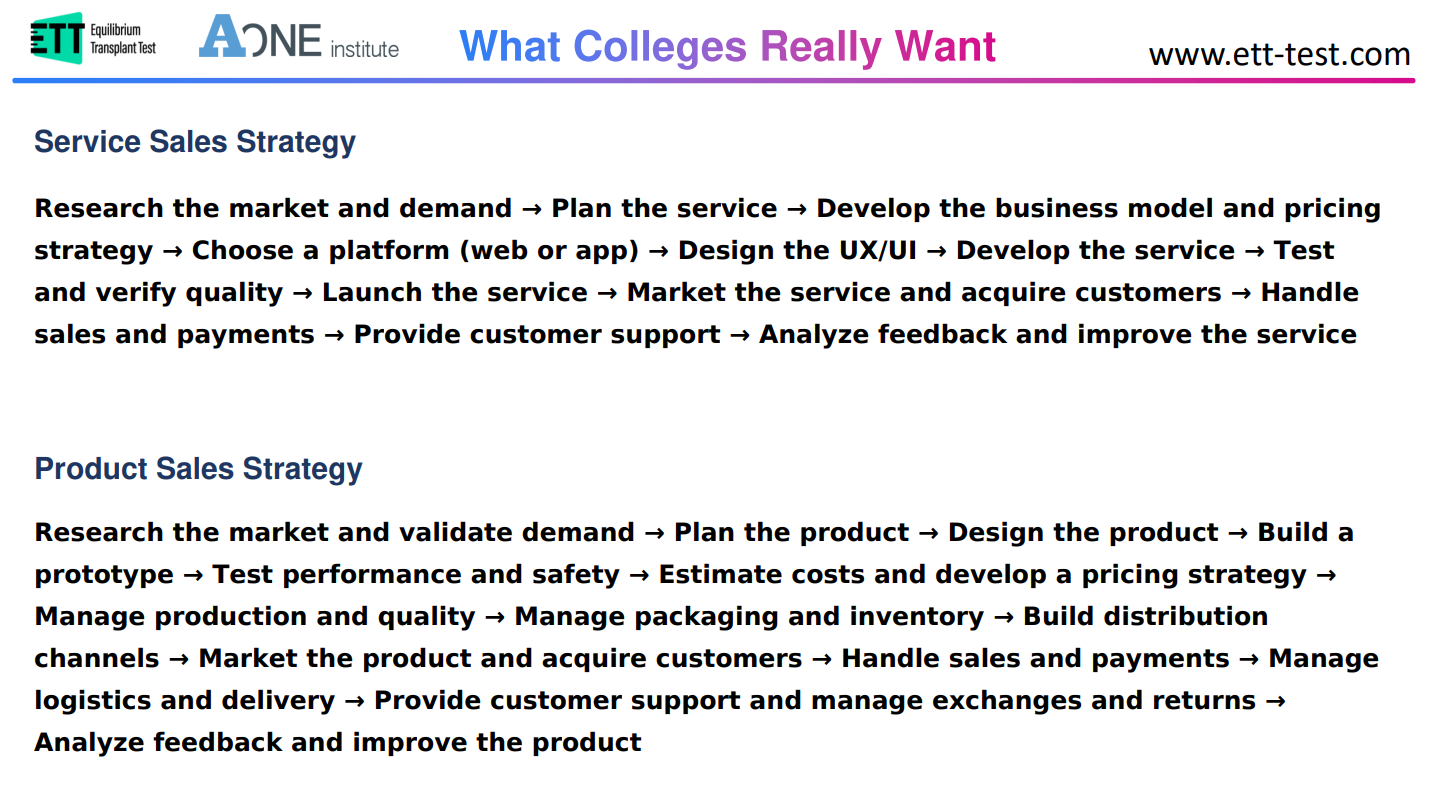
The project may begin with market research and an investigation of customer demand.
The student then develops a service concept, considers the business model and pricing strategy, and decides whether to create a website, mobile application, or both.
Next comes the user experience.
The student must think about how customers will interact with the service, how the interface should function, and how the service will actually be delivered.
The process continues through development, testing, quality assurance, launch, marketing, customer acquisition, sales, payment processing, customer support, and ongoing improvement.
A student developing a physical product faces a comparable process.
After researching demand, the student must plan the product, design it, build a prototype, evaluate performance and safety, estimate production costs, and determine pricing.
Production, quality control, packaging, inventory management, distribution, marketing, delivery, returns, and customer feedback may all become part of the experience.
These are not simply administrative tasks that exist between an idea and a final product.
They are opportunities to learn how the different parts of a project connect.
A student might discover that an appealing product idea is too expensive to manufacture.
A service may function technically but fail to meet customers' needs.
A product may attract initial interest but require improvements after receiving user feedback.
Working through such situations helps students develop practical judgment.
AI can support the work at many stages, including planning, design, coding, and analysis.
But if a student uses AI to move directly from a basic idea to a finished service or product without understanding the intermediate decisions, the result may not accurately reflect the student's independent capabilities.
This brings us to a concept A ONE Institute uses to describe the problem.
What Is Pseudo-Ability?
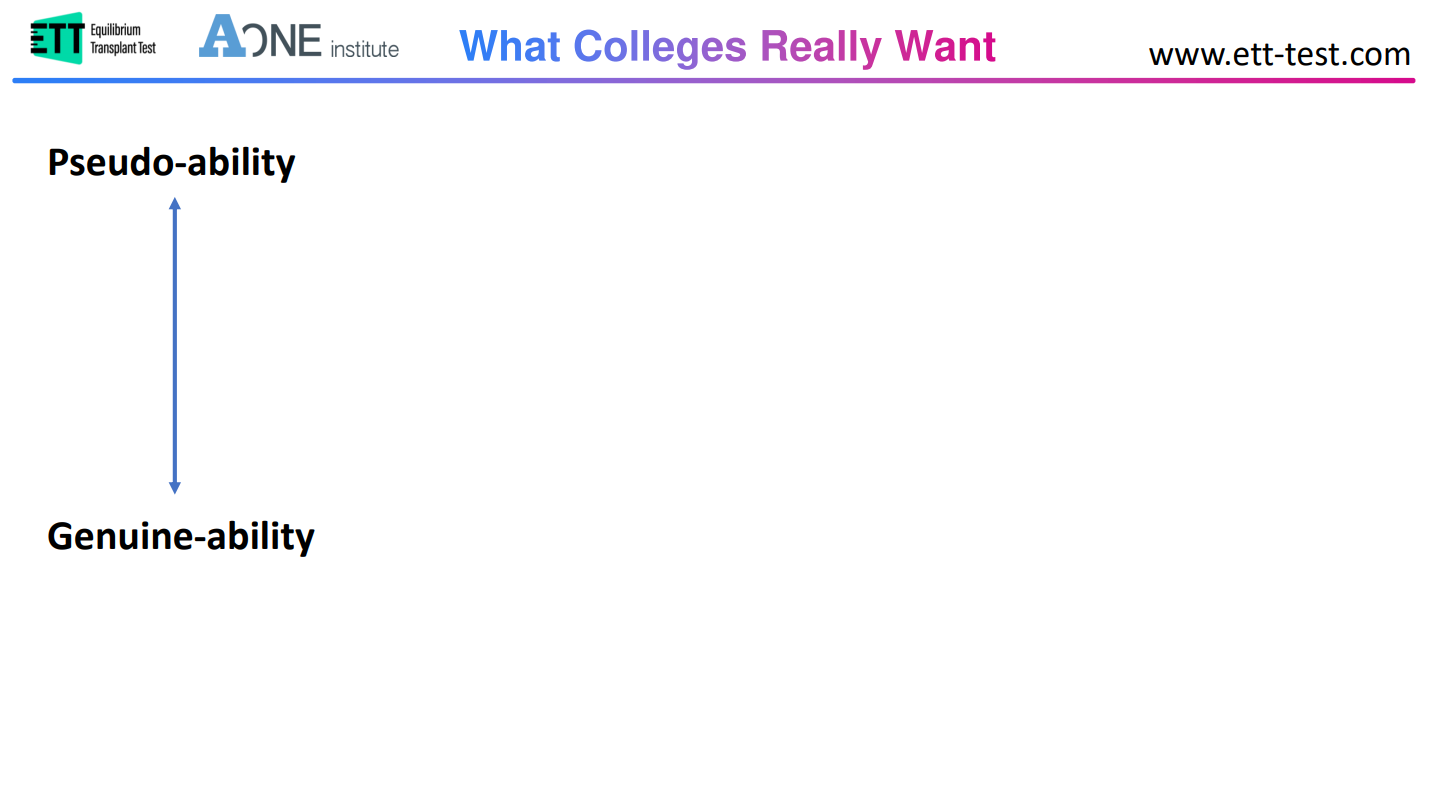
A ONE Institute uses the term Pseudo-Ability to describe apparent competence that is not supported by the ability to independently understand, evaluate, or apply the work being presented.
In this situation, a person relies on AI or other external resources to produce a result without developing the knowledge and skills normally associated with creating that result.
The final product may appear impressive.
However, its quality may lead others to overestimate the person's actual capabilities.
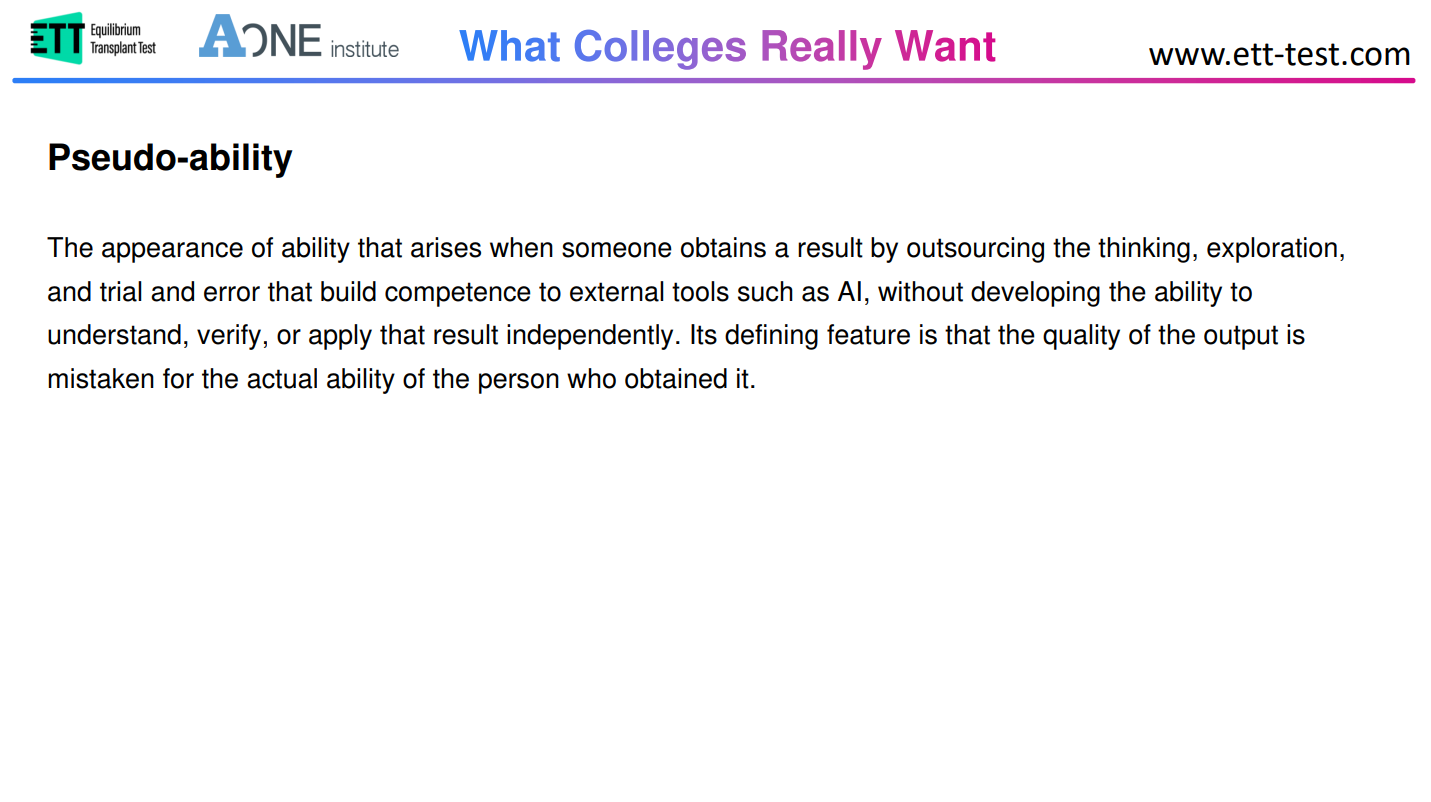
For example, a student might produce an advanced research report using AI.
If the student cannot explain the hypothesis, experimental design, data analysis, or conclusions, the quality of the report does not necessarily demonstrate equivalent research ability.
Similarly, a student may use AI to create an application but be unable to explain how its main functions work or how to correct a problem.
The student has obtained a result without fully developing the ability required to understand and manage it.
That is the central distinction behind Pseudo-Ability.
It is important to understand that this is an analytical term used by A ONE Institute, not an official college admissions classification.
The concern is not whether a student used AI.
It is whether the student genuinely possesses the understanding and judgment that the finished work appears to represent.
Why Genuine Ability May Become More Important in an AI-Driven Workplace
To understand why this distinction matters beyond college admissions, consider how AI may change professional organizations.
A conventional company may contain several levels of responsibility.
Senior executives make strategic decisions.
Middle managers coordinate employees, review information, and report to senior leadership.
Individual contributors perform specialized professional work.
Other employees handle more standardized or repetitive tasks.
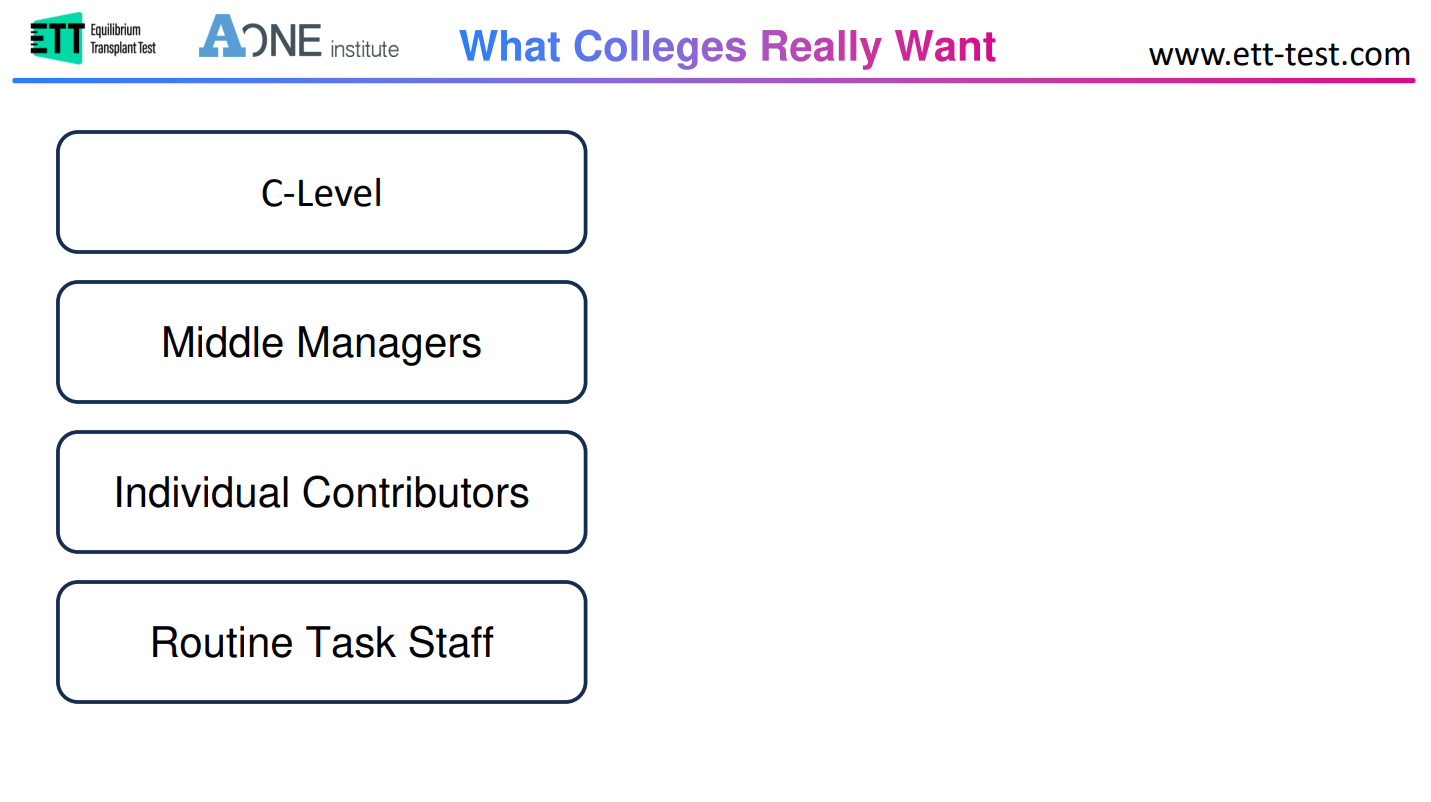
As AI develops, some analysts expect portions of this structure to change.
Repetitive tasks are increasingly suitable for automation.
Certain reporting, coordination, and information-processing functions may also become less dependent on traditional management structures.
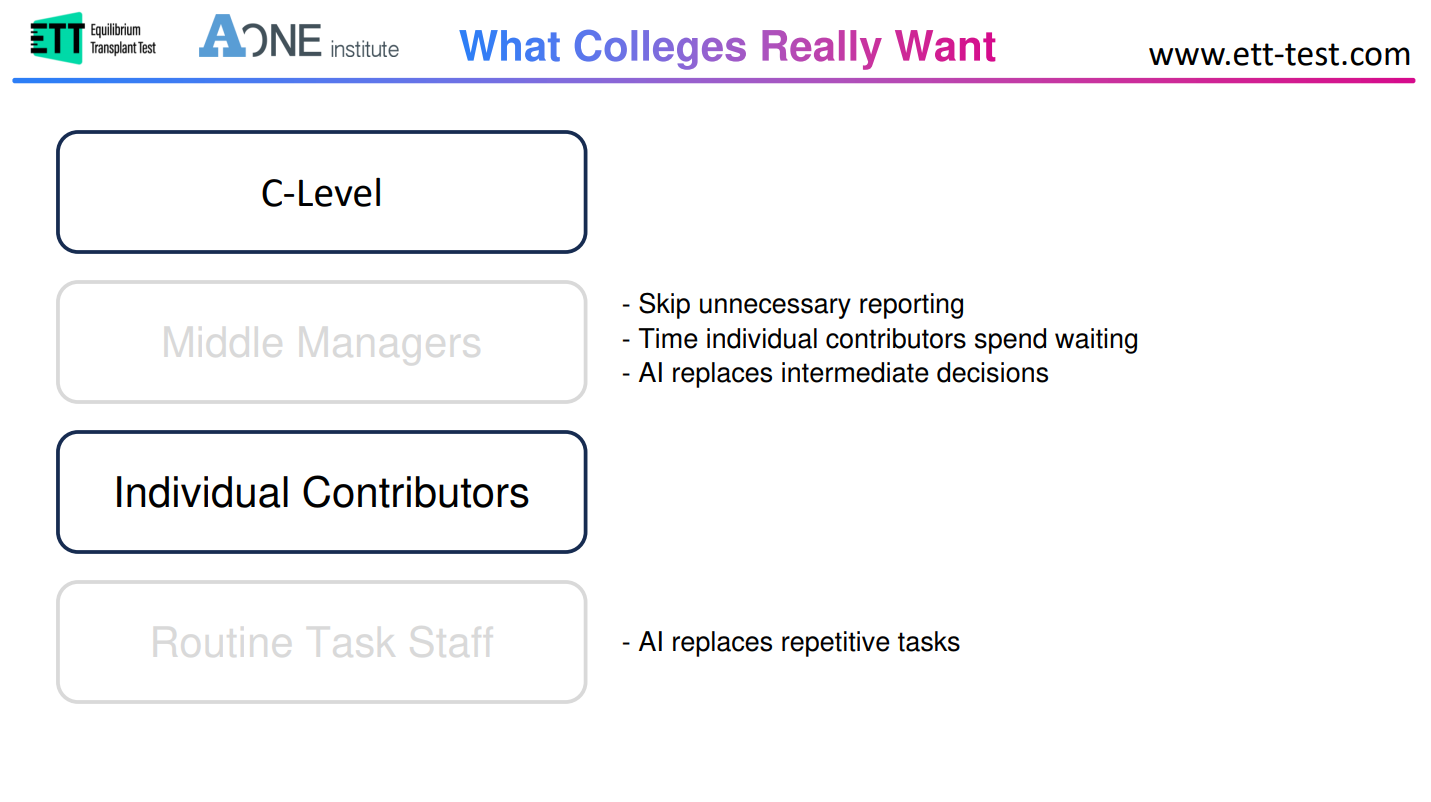
This does not mean that all middle-management or administrative positions will disappear.
The extent of these changes will depend on the industry, organization, technology, and nature of the work.
However, the possibility raises an important question.
If AI handles more routine work and organizational coordination, what will employers expect from the people responsible for the remaining tasks?
One possibility is that individual contributors will be expected to manage a larger portion of a project's overall lifecycle.
Instead of completing one isolated assignment and passing it to another department, employees may increasingly need to understand how their decisions affect the entire project.
That requires the ability to work from beginning to end.
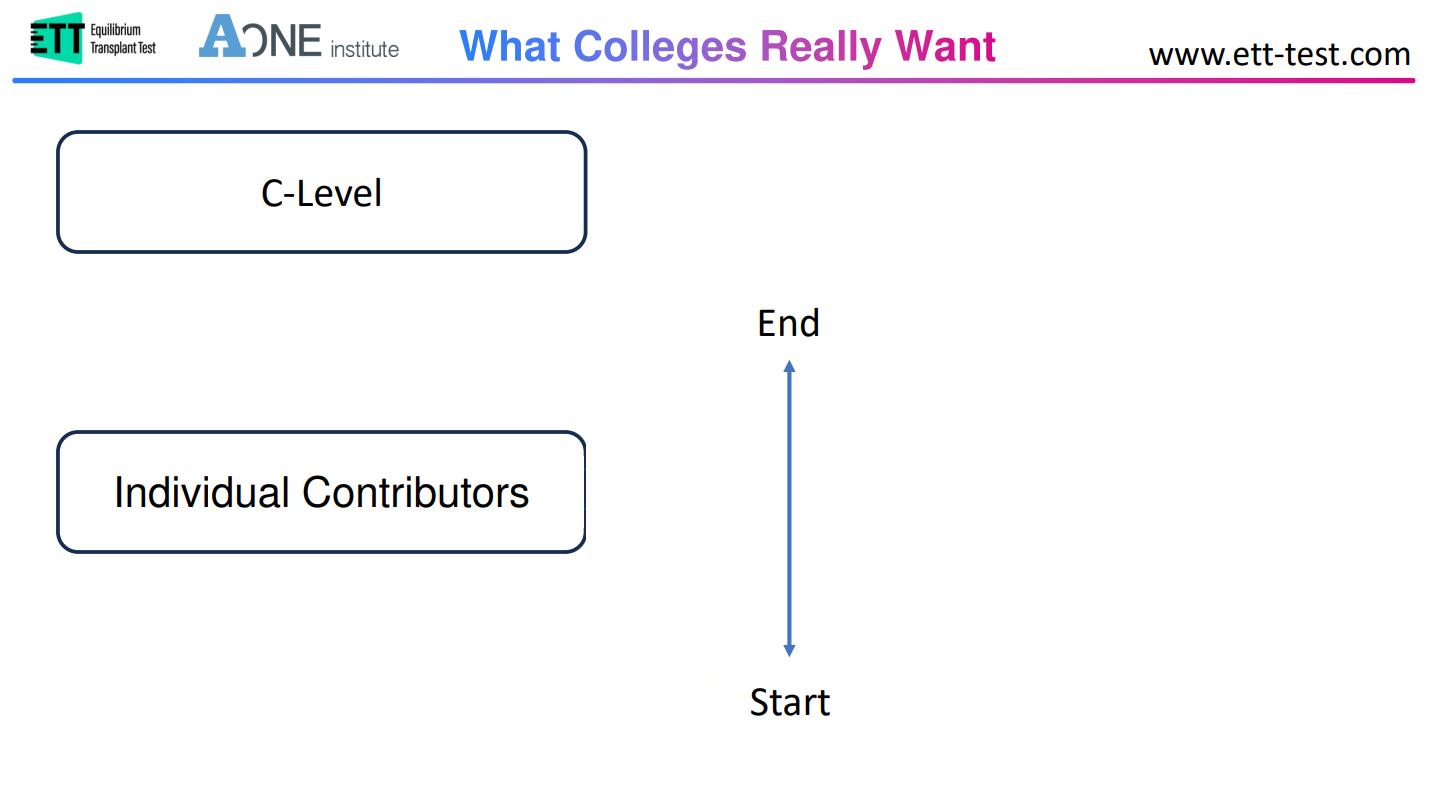
This is often described as end-to-end responsibility.
A person working in this way needs to understand the initial problem, evaluate possible solutions, manage implementation, assess the final result, and make corrections when necessary.
AI can assist throughout this process.
But the person responsible for the work must still understand what AI is doing and whether its output is appropriate.
For students entering an increasingly AI-driven professional environment, developing this kind of judgment may become especially valuable.
Why AI Cannot Replace Understanding Every Decision
Suppose a student uses AI throughout a project while remaining actively involved.
The student researches the topic, establishes the objectives, reviews AI-generated suggestions, evaluates different approaches, and makes corrections.
When something goes wrong, the student can investigate the problem.
If AI recommends an unsuitable method, the student has enough context to question that recommendation.
Over time, these experiences can develop both technical knowledge and practical judgment.
Now consider a different situation.
A student gives AI an initial instruction and receives a completed project without examining the intermediate work.
During that process, AI may have made many decisions.
It may have selected sources, established assumptions, chosen methods, generated conclusions, or designed technical components.
The student may not know why those decisions were made or whether they were appropriate.
This creates a serious limitation.
When the finished product needs to be defended, revised, or applied to a different situation, the student may have difficulty doing so.
A ONE Institute applies the same principle internally.
When employees use AI to prepare analyses or reports, they are expected to understand the information they present.
Submitting AI-generated conclusions without being able to explain or verify them is not an acceptable substitute for professional judgment.
We believe students should approach academic and extracurricular projects with the same responsibility.
The important skill is not merely producing an answer.
It is understanding how the answer was developed and being able to evaluate what happens along the way.
What Do Caltech, UPenn, and Carnegie Mellon Ask About the Learning Process?
This emphasis on process is also visible in actual U.S. college admissions essay prompts.
Several universities ask students to explain how they approach challenges, what they learned while developing something, or how they understand their own educational growth.
These questions offer useful examples of why the experience behind an accomplishment can matter alongside the final result.
Caltech: How Did You Approach the Problem?
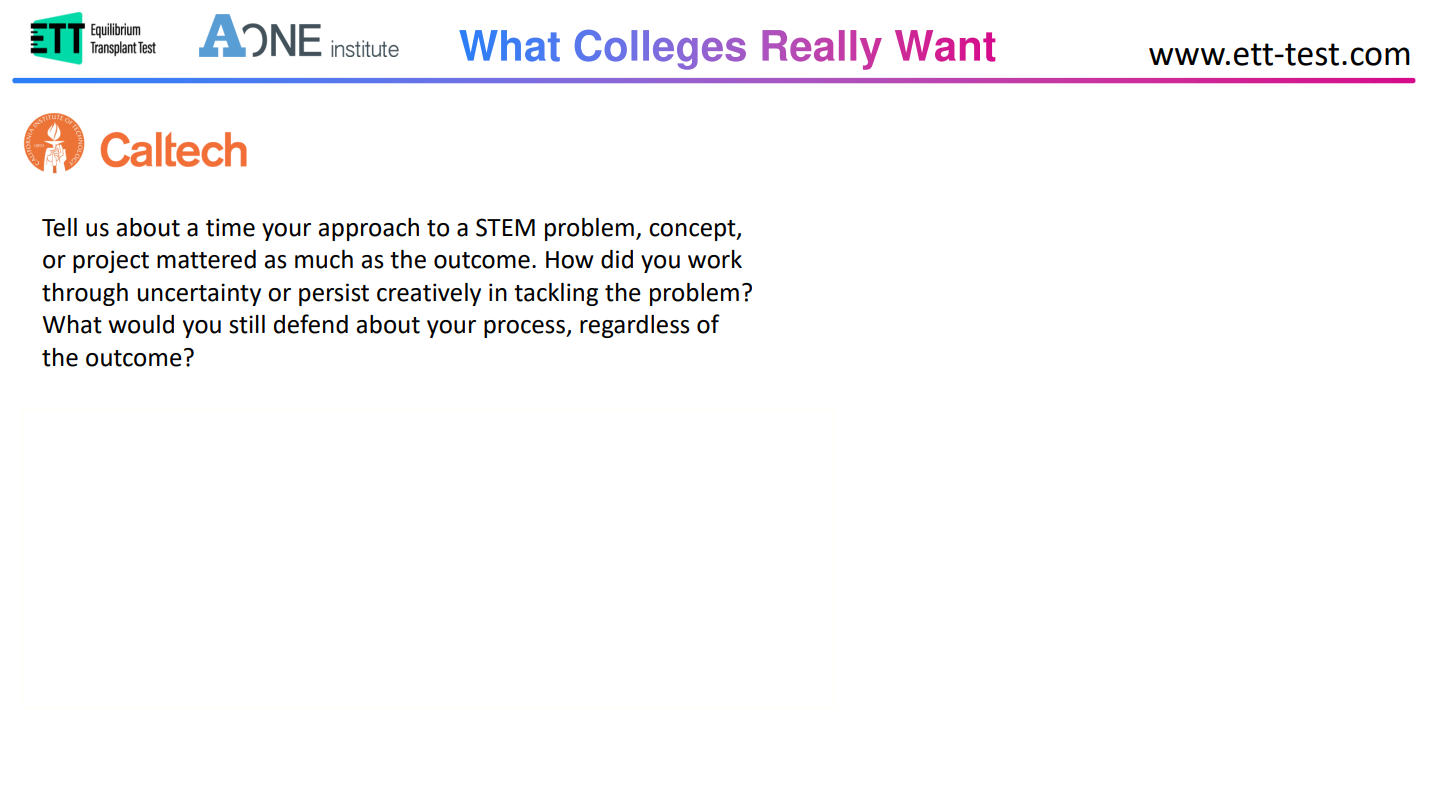
Caltech's 2026–2027 supplemental application includes a process-focused STEM essay option.
Students are asked to describe a situation in which their approach to a STEM problem, concept, or project was as important as the final outcome.
The prompt also asks how they handled uncertainty, persisted creatively, and what they would still defend about their approach regardless of the result.
The emphasis is significant.
Students are not simply being asked to identify a successful STEM project.
They are being asked to explain how they thought through the problem.
What happened when they encountered uncertainty?
How did they respond when the answer was not obvious?
Why did they choose a particular approach?
What part of their reasoning would they defend even if the final result was unsuccessful?
A student who personally experienced the work is more likely to have meaningful details to discuss.
A polished AI-generated result alone cannot provide the same firsthand account of the student's thinking.
UPenn: What Motivated You, and What Did You Learn?
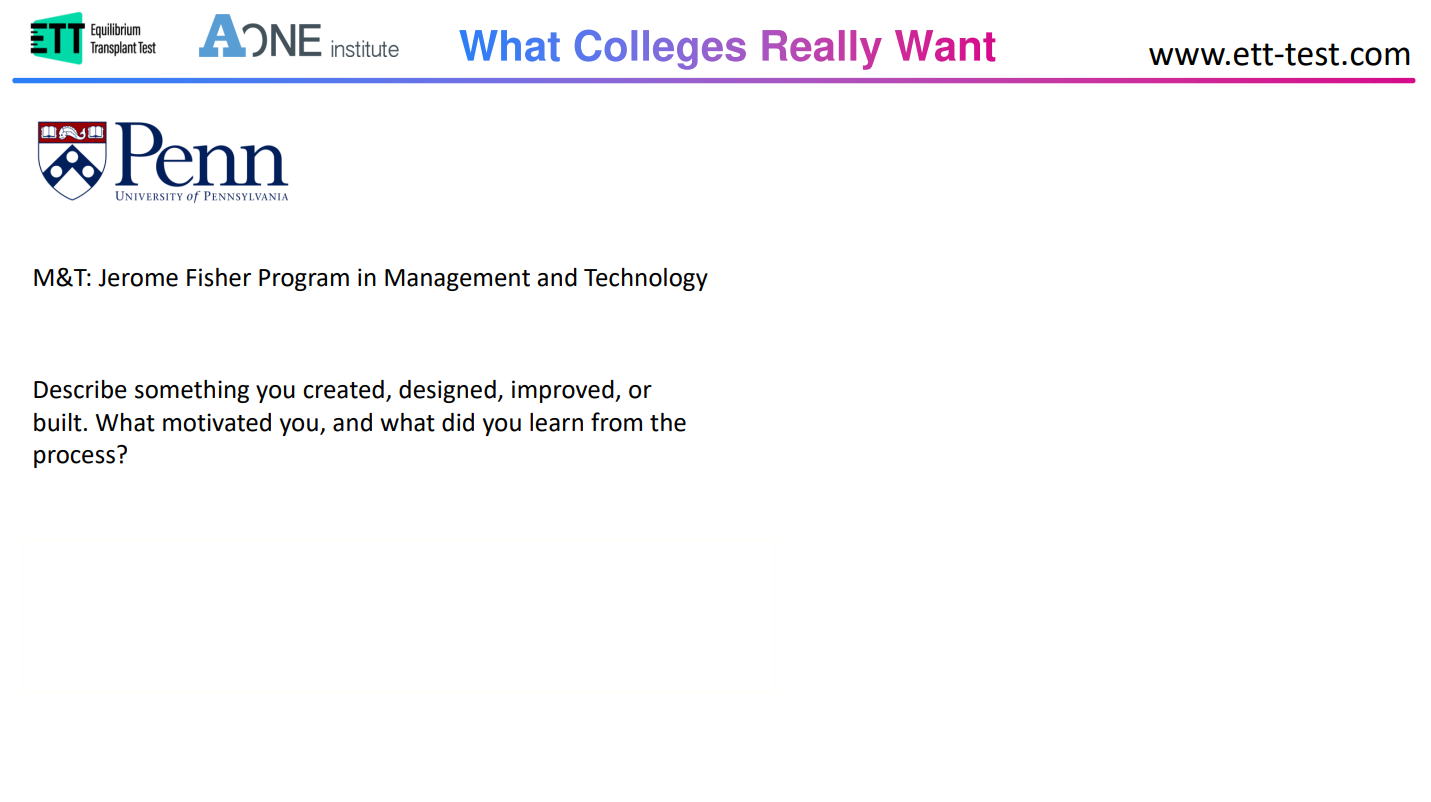
The University of Pennsylvania's Jerome Fisher Program in Management and Technology (M&T) also includes a process-oriented essay prompt.
Applicants are asked to describe something they created, designed, improved, or built.
The prompt then asks about the student's motivation and what the student learned from the process.
Again, the finished product is only part of the question.
The university wants the applicant to explain why the project began and what happened during its development.
What motivated the student to create something?
How did the student approach the work?
What did the student learn while developing or improving it?
This kind of question gives students an opportunity to demonstrate understanding beyond a project's title or final appearance.
It is particularly relevant to students pursuing entrepreneurship, engineering, product development, or other substantial extracurricular projects.
The experience of developing something can reveal important aspects of the student's interests, decisions, and learning.
Carnegie Mellon: What Defines a Successful College Experience?
Carnegie Mellon University approaches the subject from another perspective.
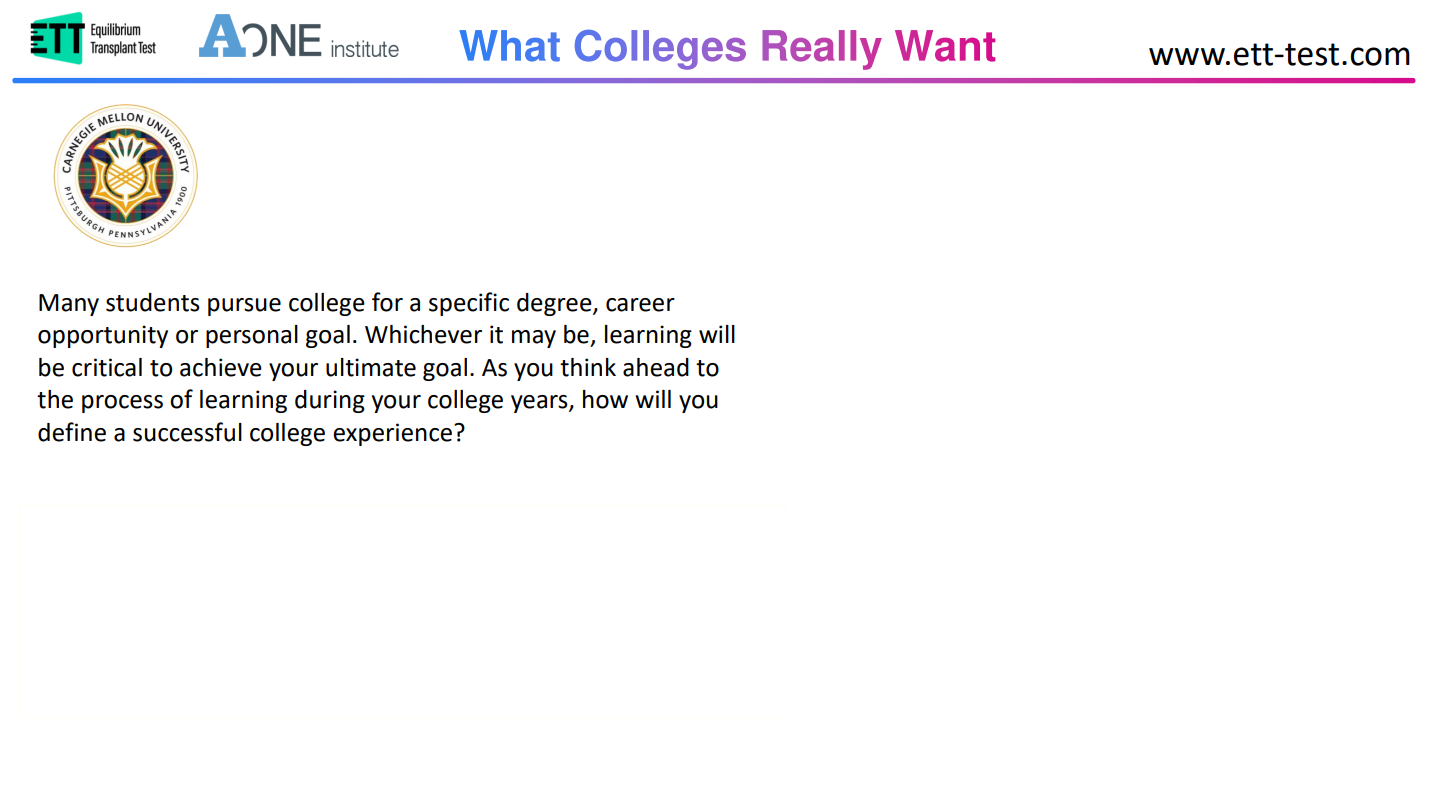
One of its undergraduate application prompts asks students to consider the learning process during their college years and explain how they would define a successful college experience.
This question encourages students to think beyond obtaining a degree or achieving a particular career objective.
It asks them to consider what meaningful learning and success would look like during college.
The connection to extracurricular activities is important.
Students who have participated directly in demanding projects may have a clearer understanding of how they learn, what challenges motivate them, and what kinds of experiences help them grow.
The three university prompts are not identical, and they should not be interpreted as evidence that every college evaluates applicants through a single standard.
However, they show that several universities explicitly invite students to discuss learning, reasoning, motivation, and the process behind their experiences.
How Colleges Can Distinguish Pseudo-Ability From Genuine Ability
A ONE Institute believes students should focus on developing Genuine Ability rather than relying on impressive final products that they cannot independently explain.
Genuine Ability is reflected in the student's understanding of the work.
Can the student explain the problem?
Can the student describe the decisions made during the project?
Can the student identify mistakes and explain how they were corrected?
Can the student defend the methods used?
Can the student apply what was learned to another situation?
These questions help distinguish a student who personally engaged with the work from someone who mainly obtained a finished result through external assistance.
A similar principle appears outside college admissions.
At the 2017 World Government Summit, Elon Musk described asking job applicants about difficult problems they had worked on and how they solved them.
His reasoning was that people who had genuinely solved a problem could usually explain the details of their approach.
Those who had not performed the work themselves might struggle when questioned more deeply.
The relevance to college applicants is straightforward.
An impressive project is more convincing when the student can explain the actual work behind it.
For that reason, the process of completing extracurricular activities matters not only for personal development but also for communicating the authenticity of those achievements.
How Can Students Demonstrate Genuine Ability?
A ONE Institute encourages students to begin with meaningful academic interests and develop them through substantial work.
For example, a student may pursue advanced study in a particular subject and then extend that knowledge through research, competitions, presentations, or activities connecting the subject to real-world problems.
The important point is that these activities should be developed through genuine participation.
Students should experience the planning, experimentation, research, decisions, difficulties, and revisions involved.
They can use AI at appropriate stages, but they should remain responsible for understanding the project.
Independent academic competitions can also provide another way to demonstrate ability.
In a properly supervised examination or competition, students may need to solve problems, explain their reasoning, or perform under conditions where direct AI assistance is restricted.
Such results can provide additional evidence of independently demonstrated skills.
Of course, not every competition evaluates the same abilities, and winning an award does not automatically establish every aspect of a student's competence.
Nevertheless, performance in an appropriately structured assessment can complement the evidence provided by research projects, essays, and extracurricular work.
A strong student portfolio should therefore reflect more than a collection of impressive outcomes.
It should reveal a developing body of knowledge, the student's increasing ability to make decisions, and meaningful connections between learning and action.
Why the Process May Matter More Than Ever in 2027 College Admissions
AI can significantly reduce the time required to complete many tasks.
It can help students organize information, clarify difficult concepts, develop ideas, and evaluate their work.
A ONE Institute does not believe students should avoid these advantages.
The problem arises when AI replaces almost the entire learning process.
When students repeatedly move from an initial idea to a finished result without understanding the decisions in between, they may lose opportunities to develop tacit knowledge, practical judgment, and independent problem-solving ability.
The finished product may become more sophisticated while the student's underlying understanding remains limited.
That is the risk behind Pseudo-Ability.
By contrast, students who work through difficult processes, even with appropriate AI assistance, have opportunities to build Genuine Ability.
They learn how to investigate problems, evaluate alternatives, correct mistakes, and defend their decisions.
These experiences can contribute to the development of judgment and prepare students for both college-level work and increasingly complex professional responsibilities.
For students preparing for college admissions in 2027, the central lesson is not that AI should be avoided.
It is that students should use AI without giving up responsibility for the learning, reasoning, and firsthand experience behind their accomplishments.
The result matters.
But the ability developed through the process is what allows students to explain, defend, improve, and build upon that result.
genuine academic ability through advanced learning, research, Olympiad preparation, writing competitions, and meaningful extracurricular experiences. Our live online programs are designed to help students work through challenging learning processes with professional guidance rather than simply obtaining polished final results. Families interested in our academic and extracurricular programs can contact [email protected].
College Admission 2027
Extracurricular Activities
College Admissions Strategy
