
The Signals Are Accumulating. Here's What They Mean Together.
Four significant developments have emerged in U.S. college admissions over the past several months — each meaningful on its own, and more telling when read together. At A ONE Institute, we track these shifts closely because they shape not just what students need to do, but why the landscape is changing and what it's likely to look like for the classes applying over the next two to three years.
Here's a clear-eyed look at each development and what it actually means for applicants.
Signal One: ETS Acquired ACT — and That Has Implications Beyond a Corporate Transaction
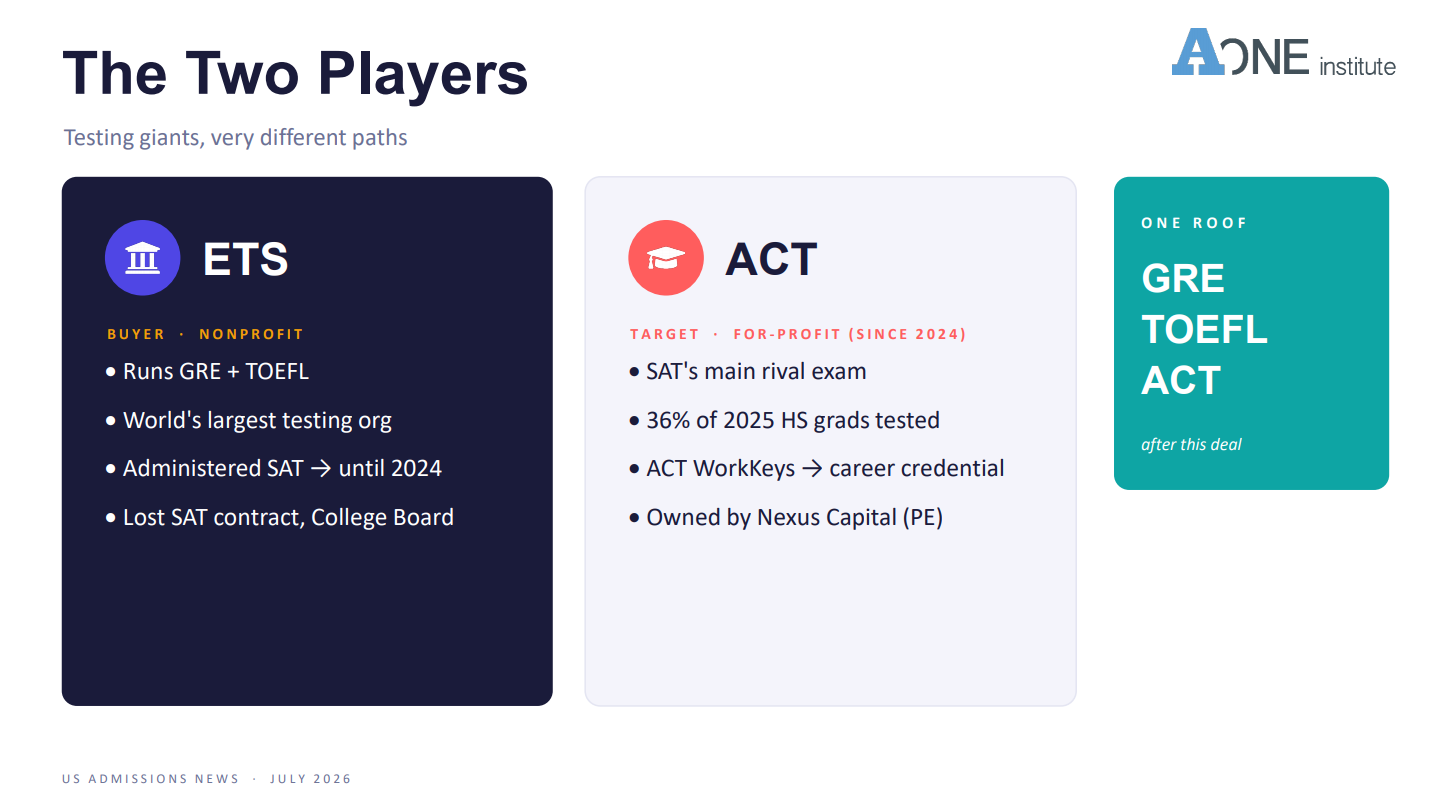
On June 30, 2026, ETS — the company that operates the GRE and TOEFL — completed its acquisition of ACT. The purchase price was not disclosed. This came roughly two years after ACT was acquired by Nexus, a private equity firm, in 2024, following a period of declining test-taker volume and large-scale staff reductions that had put the organization under financial pressure.
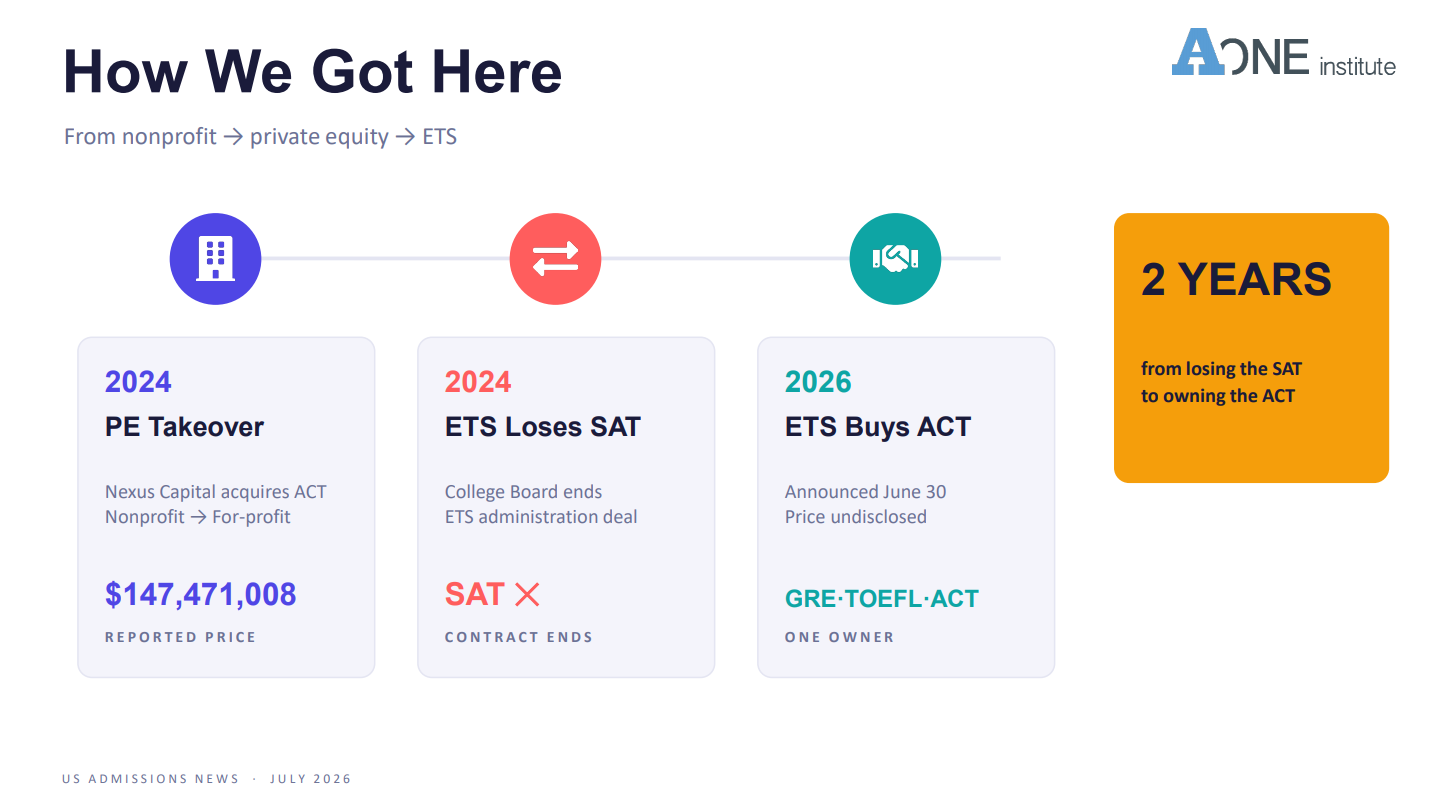
To understand why this matters, some context helps. ETS is one of the largest educational testing organizations in the world, and for several decades it had a significant operational relationship with the SAT — running much of the test's development and delivery infrastructure on behalf of College Board. That contract ended in 2024, when College Board chose to bring SAT operations fully in-house. ETS, having lost a major client, then moved to acquire ACT — the SAT's primary competitor at the high school level.
The short version: ETS, which spent decades helping run the SAT, now owns the ACT.
What this means in practice. In the near term, students taking the ACT are unlikely to see dramatic changes. But there are several plausible medium- and long-term developments worth anticipating.
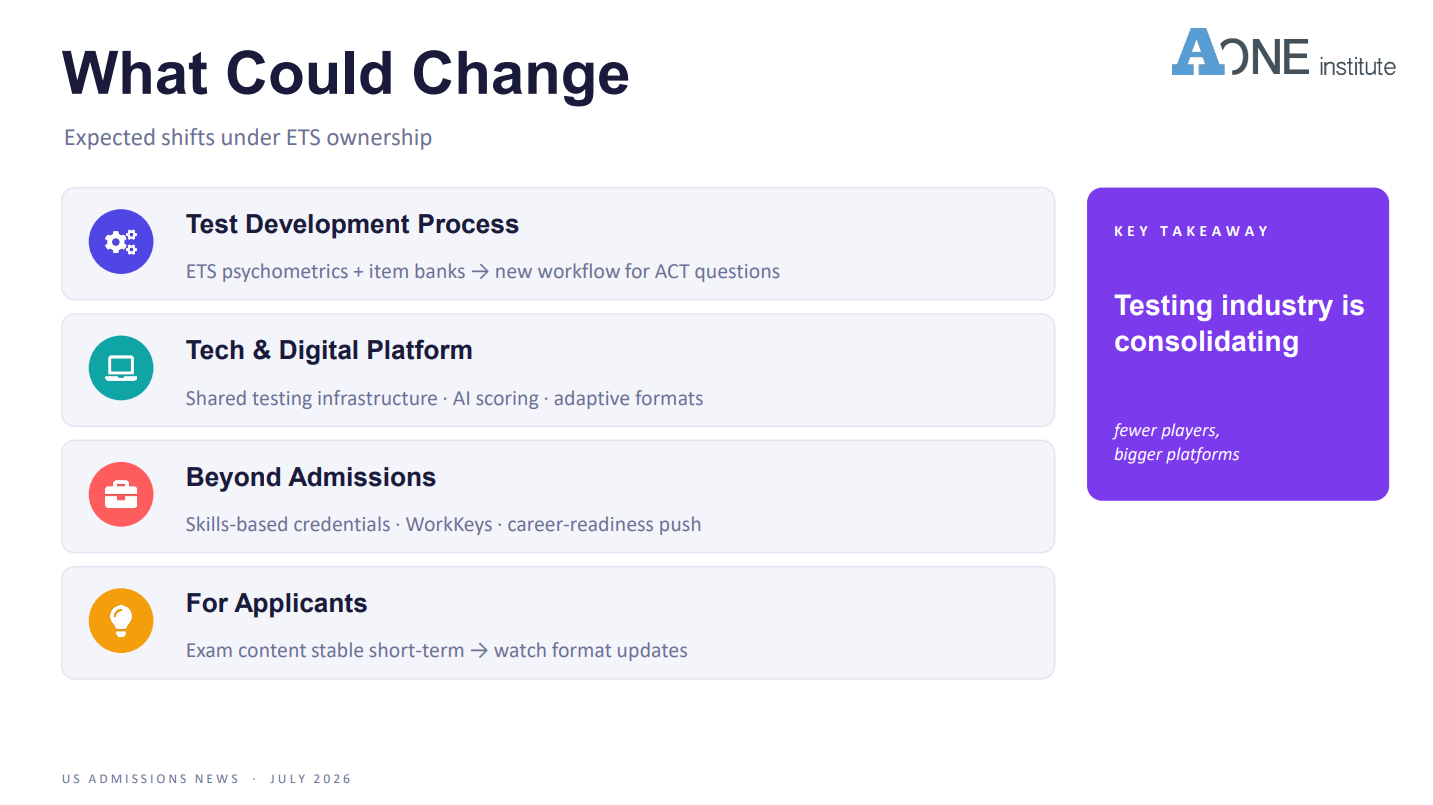
ETS brings significant technical expertise in psychometrics, item banking, and adaptive testing infrastructure. The ACT's current digital format, which transitioned relatively recently, has faced criticism for user interface quality and inconsistent item quality compared to the SAT. ETS's engineering and test development capabilities are likely to improve both. Adaptive testing — where question difficulty adjusts in real time based on student performance, as the digital SAT does — is a natural evolution for ACT under ETS management.
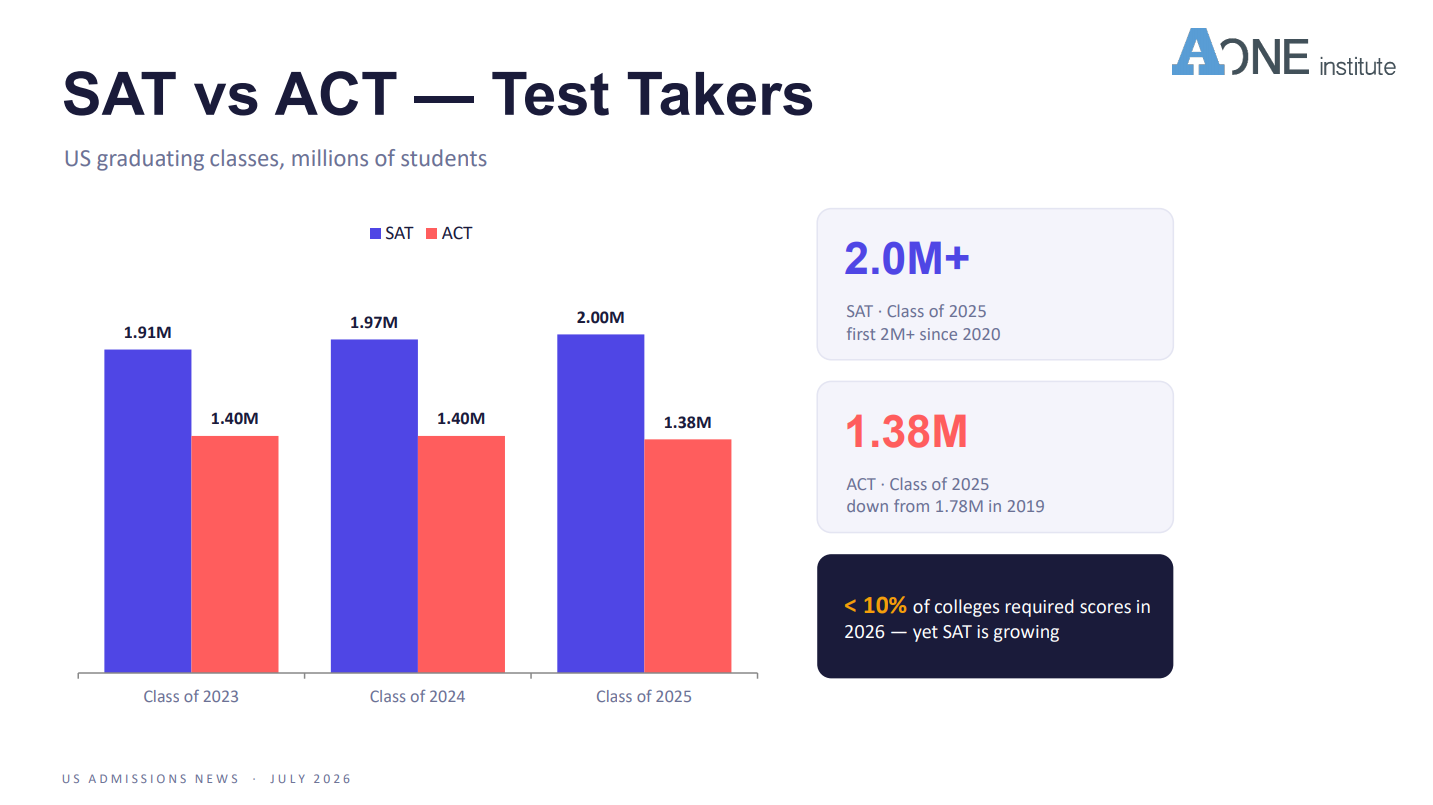
More strategically, ETS now spans three distinct student populations: high school students (ACT), college graduates and professionals (GRE), and international students (TOEFL). The ability to develop and maintain testing relationships across a student's full educational arc is a meaningful competitive position, and ETS will likely work aggressively to grow ACT's market share, which has been declining relative to SAT in recent years.
The primary uncertainty: any ownership transition introduces operational instability, and the ACT's digital infrastructure is still relatively new. Students planning to take the ACT should monitor for any structural or format changes, particularly as ETS integrates its systems. In the longer run, the quality and consistency of the ACT is expected to improve meaningfully under ETS management.
Signal Two: Top Universities Are Cutting Supplemental Essays — Here's What's Driving It and What It Means
Several universities have quietly reduced the number of supplemental essays required for the current application cycle. The changes vary in scope but point in the same direction.
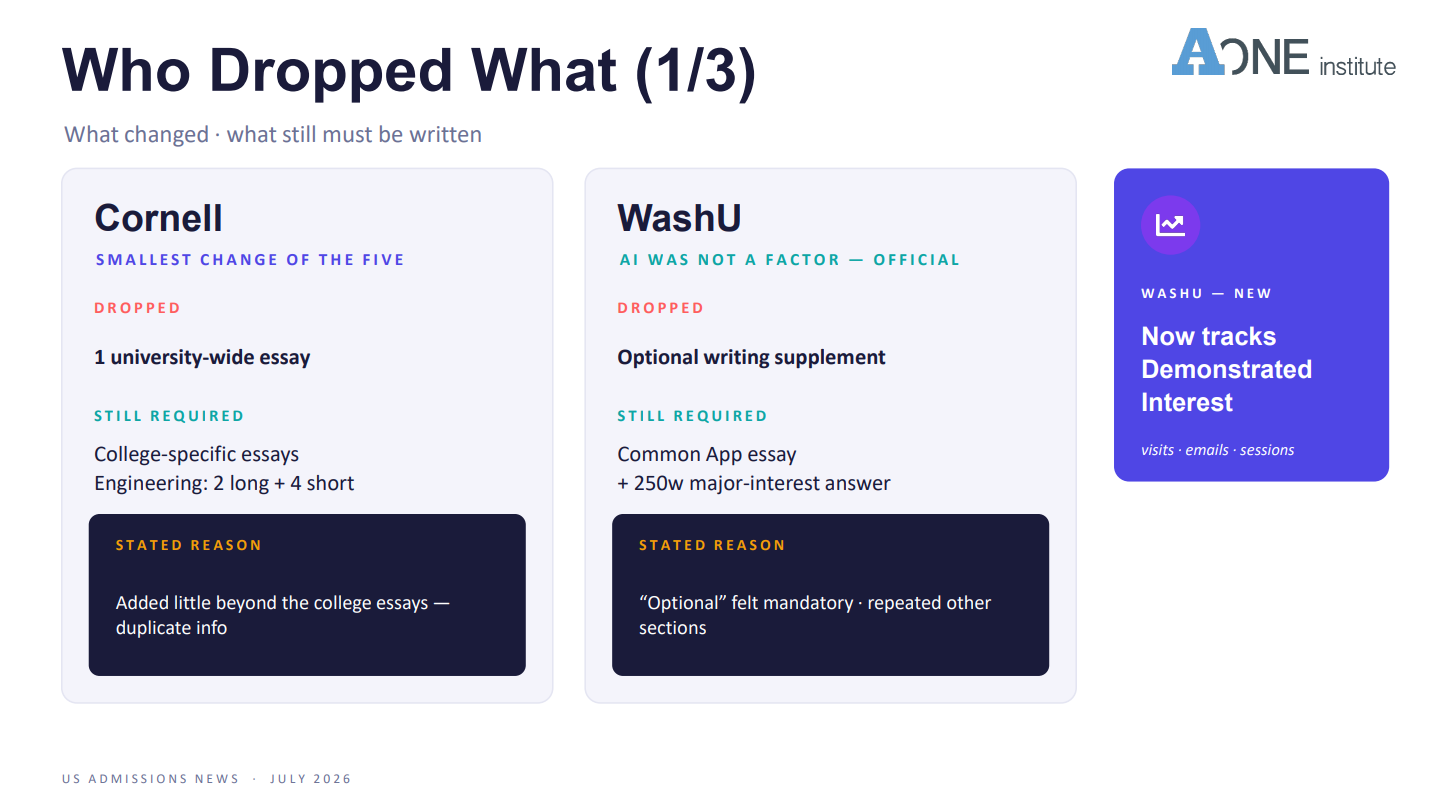
Cornell eliminated one shared supplemental essay that all college applicants had previously answered. The college-specific essays remain, as does a 250-word Major Interest response — though even that has been made more clearly optional to reduce redundancy with other application sections.
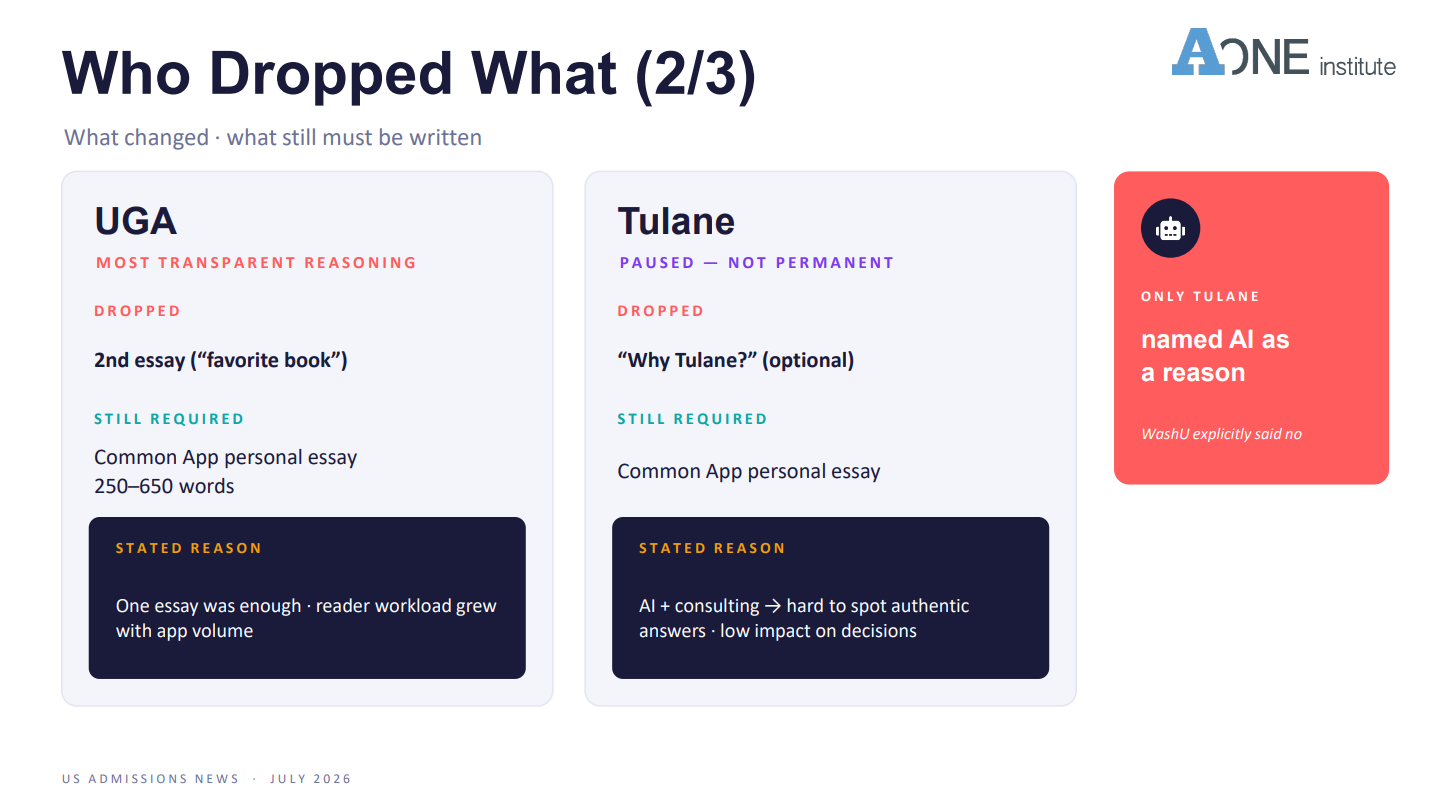
University of Georgia removed a short-answer prompt asking students to describe a favorite book or intellectual influence. The university's stated reason: one core essay is sufficient, and additional prompts were creating unnecessary workload for admissions readers.
Tulane University eliminated its "Why Tulane?" essay — the prompt asking students to explain why they want to attend specifically. The university was notably candid about its reasoning: the prompt rarely proved decisive in admissions decisions, and the proliferation of AI-assisted applications had made it increasingly difficult to identify authentic responses. Tulane is the only institution in this group to cite AI explicitly as a factor.
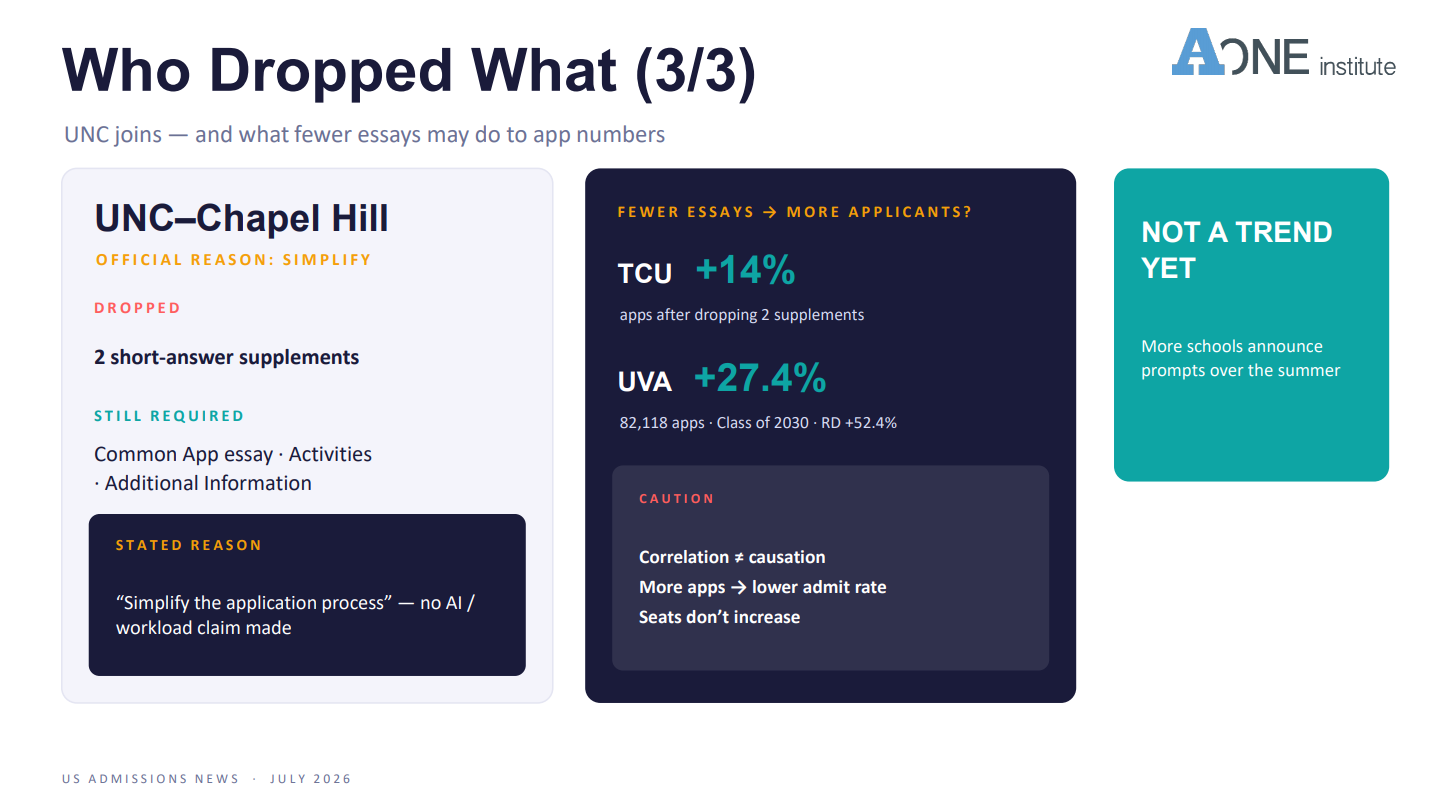
UNC Chapel Hill reduced the number of short-answer prompts, citing a desire to simplify the overall application process.
Why this is happening. Several factors are converging simultaneously. Application volume at top universities continues to grow while the number of trained admissions readers has not kept pace. Processing a longer application takes more time per file — and when hundreds of thousands of applications arrive in a compressed window, the pressure to reduce per-application reading time is real. Eliminating redundant or low-signal prompts is one straightforward way to manage that pressure.
The AI dimension is also genuine. When AI tools can produce plausible, polished responses to standardized prompts at scale, the average information value of any given supplemental response declines. Some prompts — particularly generic "why this school" questions — have become harder to use as meaningful differentiators.
What this does not mean. Essays are not disappearing. The core personal statement and the most substantive supplemental questions remain, because they serve a function that universities haven't found a better way to replicate: giving admissions readers direct access to how a student actually thinks. What's being trimmed is the periphery — prompts that generated more noise than signal and created workload without proportional insight.
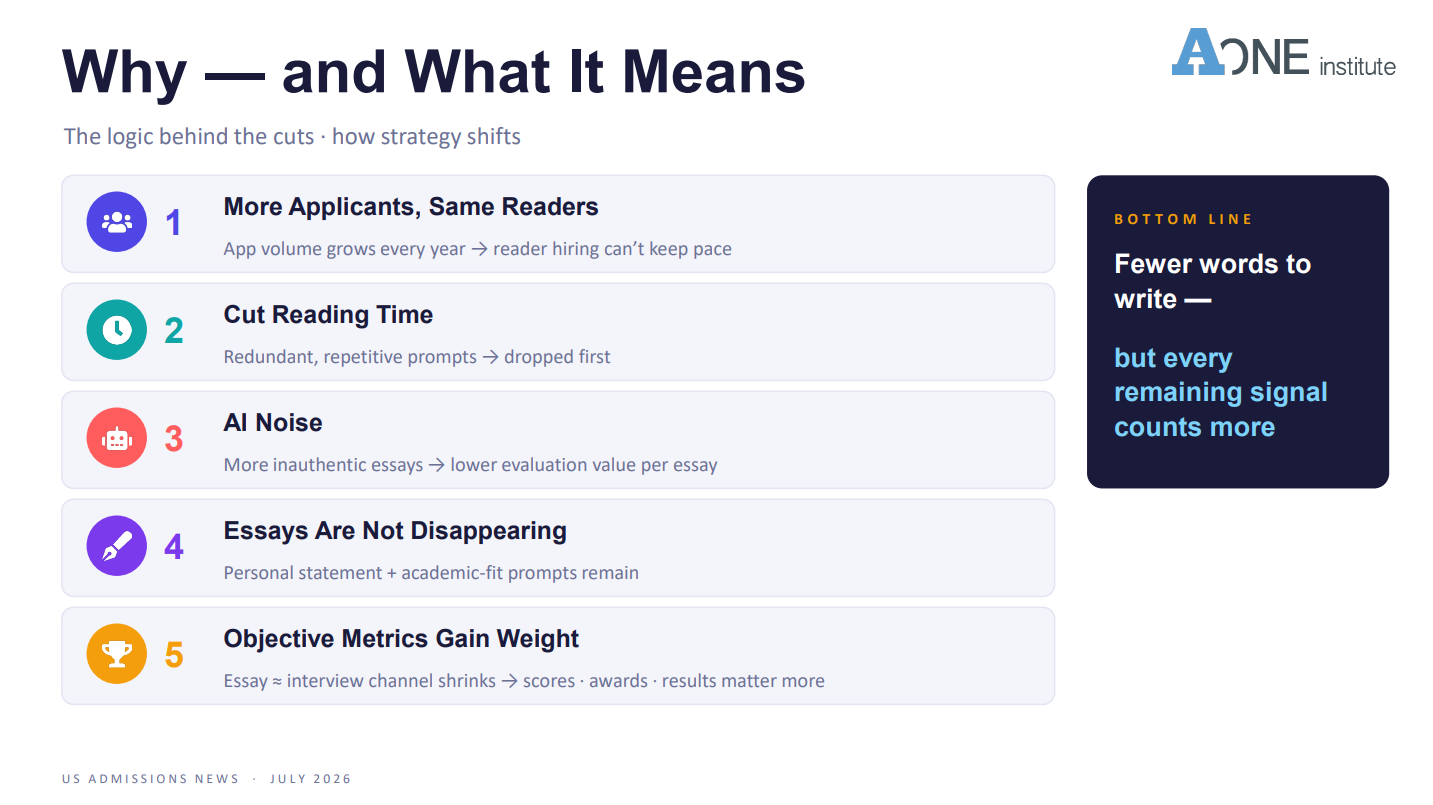
What this does mean. When fewer essays are available for evaluation, the remaining application components carry proportionally more weight. Objective, verifiable outcomes — academic competition results, research, demonstrated subject-matter achievement — become relatively more important when there are fewer writing opportunities to fill in the picture. This is a continuation of the broader trend toward academic credentialing that was described in our earlier coverage of the new admissions landscape.
A secondary effect worth noting. Schools that have eliminated prompts are also reporting meaningful increases in total application volume. Texas Christian University and a comparable institution saw application increases of 10.4% and 27.4% respectively after streamlining their essay requirements. More applications can mean lower published admit rates — so students should not interpret rising application volume at a given school as evidence that admission is becoming easier. The opposite may be true.
Signal Three: International Applications Are Down Sharply — and That May Be an Opportunity for International Students Who Are Applying
Approximately 60% of U.S. universities reported declines in international applications for the most recent cycle, according to sector-wide survey data. The decline in Indian student applications has been particularly pronounced.
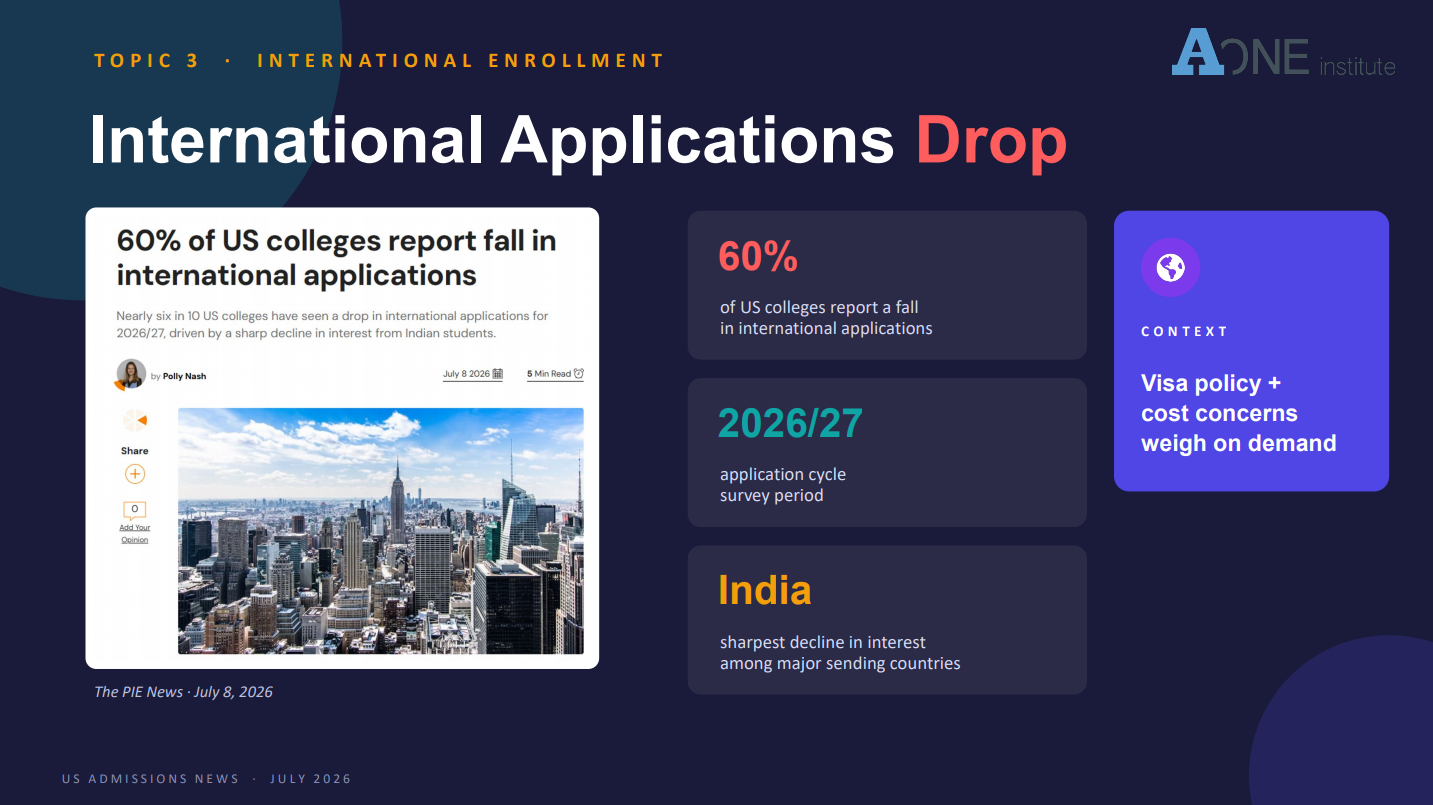
The drivers are partly structural — U.S. immigration policy under the current administration has created significant uncertainty for international students, and a number of students who would previously have enrolled at U.S. universities have either returned to their home countries or chosen institutions in other countries instead.
The implication for international applicants who are still pursuing U.S. institutions. Universities have both financial and institutional incentives to maintain a certain proportion of international students within their enrolled classes. International students typically pay full tuition and contribute meaningfully to the campus diversity that universities use to differentiate themselves. When the international applicant pool contracts while those institutional targets remain in place, the competitive dynamics shift modestly in favor of international students who do apply.
This effect is real but should not be overstated. It doesn't mean international admission becomes easy or that a below-threshold profile suddenly becomes competitive. What it does mean is that the marginal international applicant — one who is competitive but might have fallen just short of an offer in a stronger cycle — has slightly better odds than they would have had two to three years ago.
There is also a longer-term consideration. If the financial impact of reduced international enrollment becomes acute enough, universities may respond by actively increasing international recruitment and expanding their international admission targets. That would compound the near-term advantage described above, though the timeline is uncertain.
Signal Four: UC Berkeley Professors and Math Department Chairs Are Formally Pushing to Reinstate Standardized Testing
This is not a new story, but it has continued to develop in ways that make it more likely to produce real policy change — and the underlying data is striking enough to warrant careful attention.
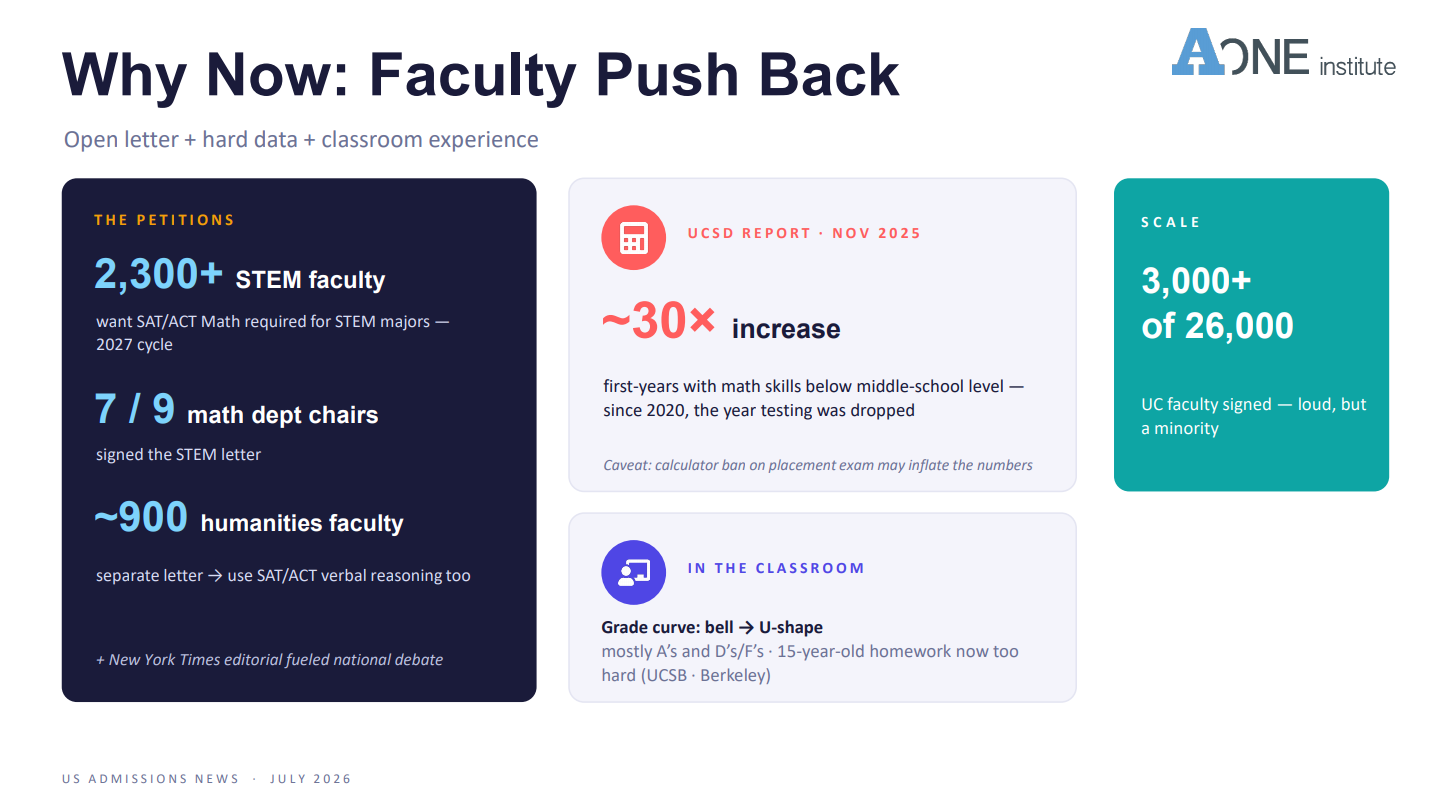
The background: over 2,300 faculty members at UC Berkeley — predominantly from STEM disciplines — submitted a formal petition to the UC Academic Senate, arguing that the shift to test-blind admissions had produced a measurable and serious decline in the mathematical preparation of incoming students. UC San Diego provided specific data: the number of admitted students performing below high school level in mathematics increased approximately 30 times over a five-year period. And among enrolled students, academic performance has become increasingly bimodal — with concentrations at the top (A and A+) and bottom (D and F) and a hollowing out of the middle. That pattern typically indicates that a student population is academically mismatched with the curriculum it's enrolled in.
Nine UC campus mathematics department chairs were approached to sign the faculty petition. Seven of them did. Faculty from humanities departments subsequently submitted their own letters, citing parallel concerns about writing and critical reading preparation.
This coverage attracted widespread attention, including reporting from the New York Times, which substantially amplified the story.
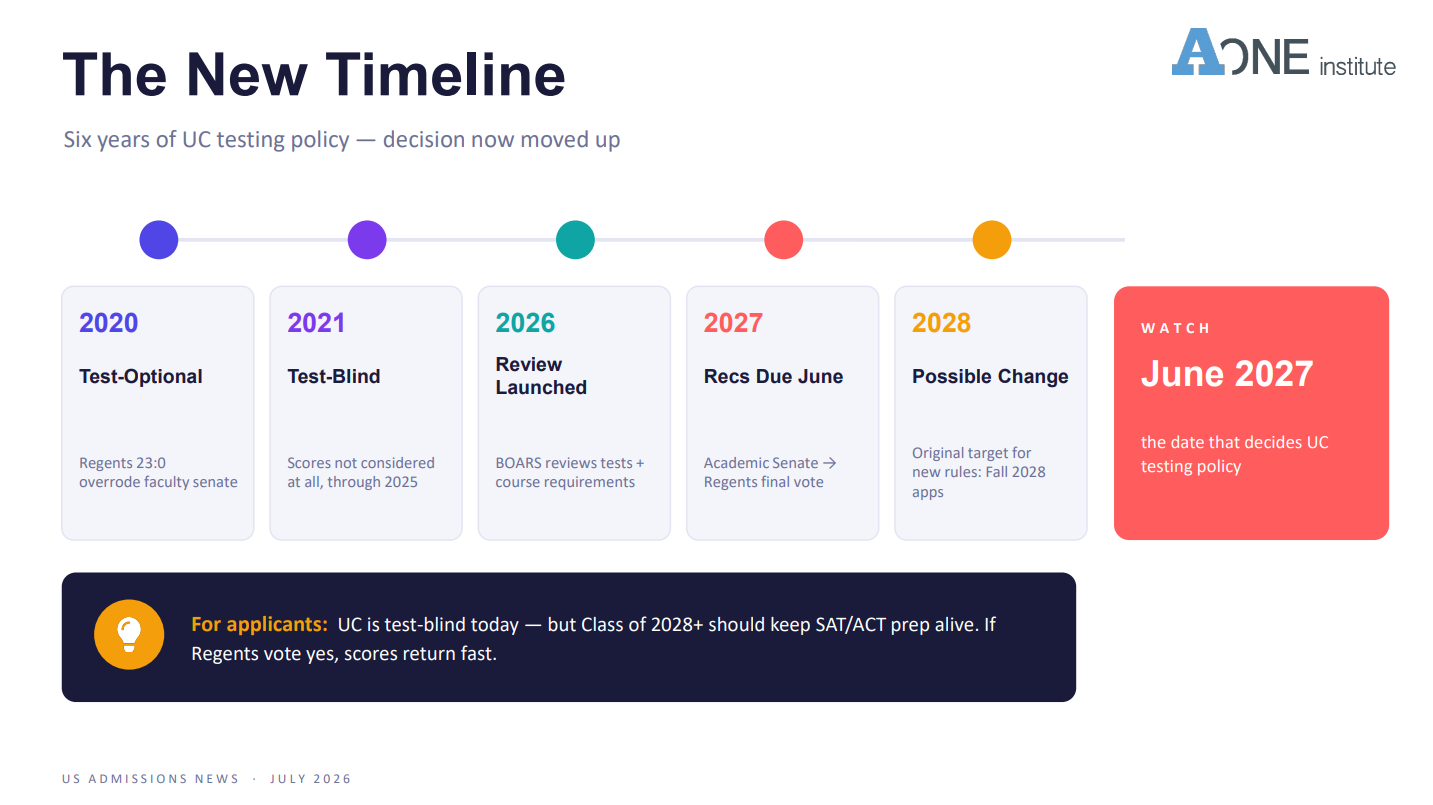
What happened next. The UC Academic Senate's Board of Admissions and Relations with Schools, which governs undergraduate admissions policy across the UC system, had previously voted 23-0 in favor of the shift to test-blind admissions during the pandemic period. Under mounting faculty pressure and accumulating evidence of declining academic preparation, that body is now conducting a formal review of its admissions process — and has moved the timeline for that review forward.
The review is not expected to produce immediate policy changes for the current cycle. But the institutional momentum is now clearly moving in one direction: toward reinstating standardized test scores as part of UC admissions, likely starting with mathematics.
What this means for students. The UC system's trajectory reinforces a point that other developments in this article also support: demonstrated academic preparedness — through standardized tests, academic competitions, rigorous coursework, and subject-specific achievement — is becoming more important in elite admissions, not less. The test-optional period produced a brief window in which those signals were de-emphasized. That window is closing.
Students currently in middle school or early high school should build their profiles with the assumption that quantitative academic credentials — SAT and ACT scores, AP and IB results, math and science olympiad performance, research with genuine rigor — will matter significantly by the time they apply. Students preparing to apply in the current or next cycle should treat strong standardized test scores as essential rather than optional wherever they have a choice.
What These Four Signals Mean Together
Taken individually, each of these developments is significant. Taken together, they point toward a consistent and accelerating direction:
Testing is returning. ETS's acquisition of ACT, the UC faculty petition, and the reversal of test-optional policies at a growing number of institutions all point toward an environment where standardized test scores will carry more weight than they have in the past five years — not less.
Essays are being streamlined. The most generic and lowest-signal supplemental prompts are being eliminated, partly to reduce workload and partly because AI has degraded their usefulness as differentiators. What remains will be more consequential, not less — and objective academic credentials will fill some of the space that narrative writing used to occupy.
International applicants face a temporarily favorable environment. The contraction in international applications creates modest but real structural advantages for international students who are well-prepared and actively pursuing U.S. admissions. Those advantages may not last indefinitely.
Academic preparation is being re-centered. Across multiple institutional signals — the UC faculty petition, the broader reinstatement of testing requirements, the reduction of narrative-heavy essay prompts — the direction of travel is clearly toward prioritizing verifiable academic competency. Students whose profiles demonstrate genuine subject-matter depth through external, competitive channels will be better positioned than those whose profiles rely primarily on softer forms of self-presentation.
The preparation path that follows from these signals is consistent with what A ONE Institute has been recommending for some time: strong standardized testing, rigorous coursework pushed to its available limits, academic competition participation in at least one subject area, and research or other sustained academic projects that provide external validation of intellectual depth.
At A ONE Institute, we help students understand not just what to do — but why the admissions environment is shifting and how to position themselves ahead of those shifts. If you have questions about how these trends affect your specific situation, we're here to help.
supplemental essays
international admissions
SAT reinstatement
college admissions trends 2026
standardized testing
