
The Questions We Couldn't Get to During the Seminar
At A ONE Institute's recent online seminar, the chat filled up faster than we could address. Today we're working through the questions that didn't get answered live — one by one, in the order they were asked.
Q1. I Attend an East Coast Boarding School Where Grades Are Reported on a 1–100 Scale Instead of Letter Grades. How Does GPA Conversion Work — and Does the School Profile Correct for a School That's Known for Grading Strictly?
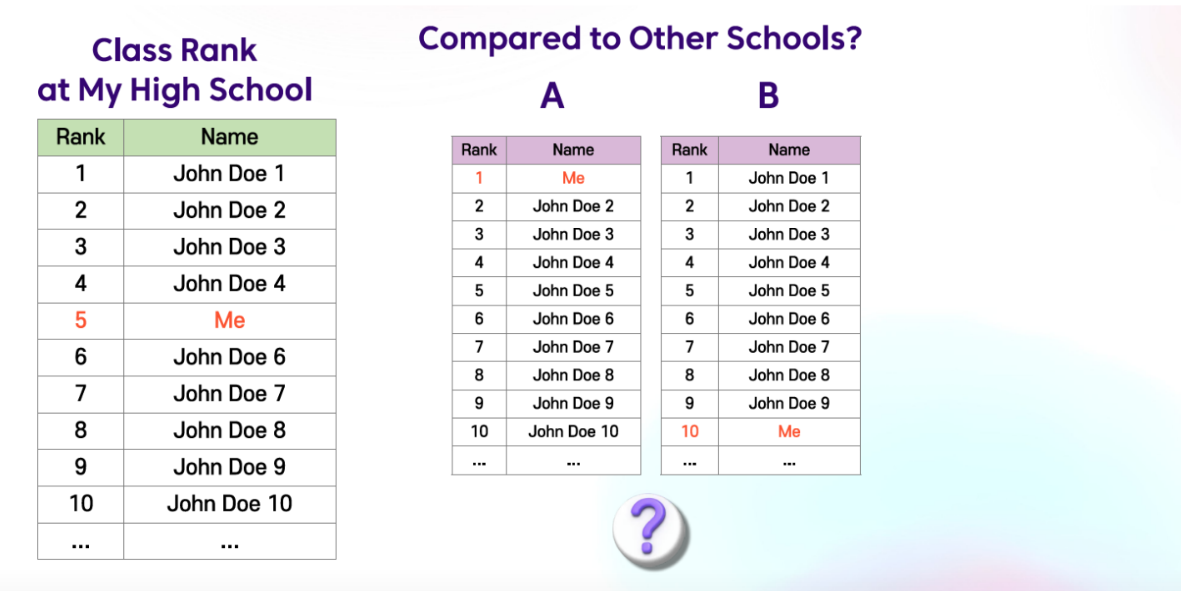
Because everyone at your school is graded on the same scale, comparing students within your school isn't difficult. Admissions readers can see exactly where you rank among your classmates who applied to the same university.
The concern most families have is the cross-school comparison: what if the top student at your school is actually equivalent to the 10th-ranked student at a different school? In practice, universities don't make that comparison directly. Instead, they ask a simpler question for each school independently: does this student clear the threshold we expect from applicants at this institution? If a student from School A clears it and a student from School B clears it, the two are then compared on other dimensions — extracurriculars, recommendations, test scores — rather than on GPA alone. Direct GPA comparisons across schools with different grading systems aren't reliable, and admissions readers know that.
The bottom line: clearing the threshold within your own school is the primary goal. Everything else flows from there.
Q2. Does a School That Gives Grades Generously Actually Disclose That to Universities? I'm Skeptical That Non-Accredited Schools Are Honest About Their Grading Scale.
Schools — including non-accredited ones and those known for grading generously — are expected to disclose their grading scale to universities through their School Profile. If a school doesn't do this, admissions readers tend to assume grade inflation is built into the numbers, which works against applicants from that school.
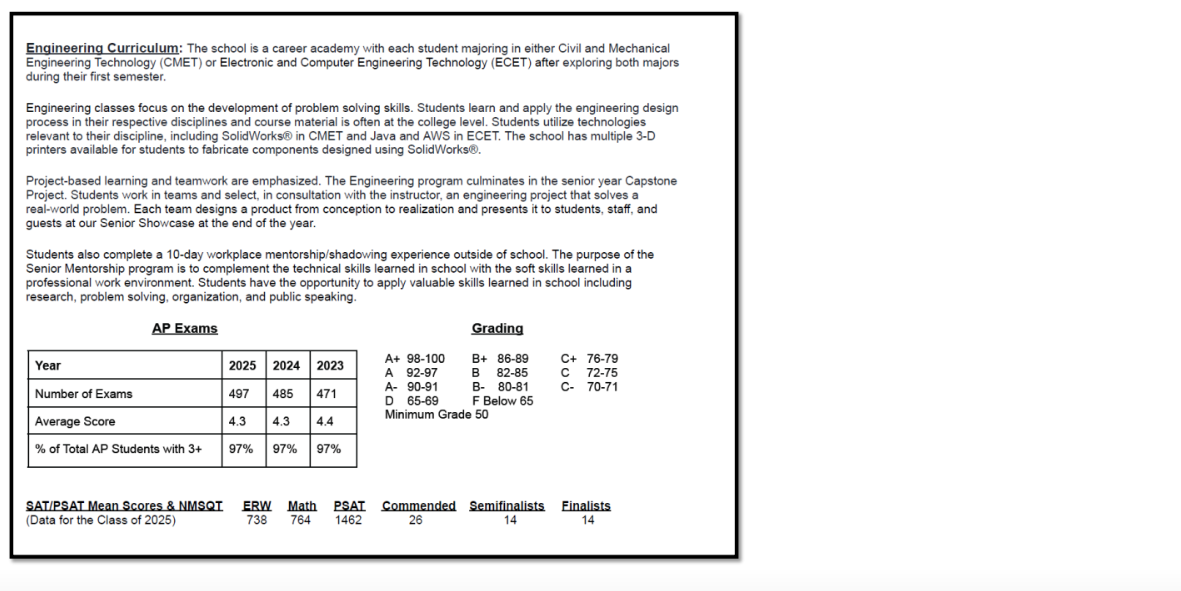
The opposite is also true: schools that provide a transparent, detailed profile are in a stronger position. A counselor's School Profile typically documents not just the grading scale but also what percentage of students earn the top marks — giving readers a clear picture of what a given GPA actually means in that environment. If your school is known for grading strictly and you've earned strong grades there, that context is already well understood by readers familiar with your school. There's no need to worry about being misread.
Q3. I'm a Junior. If I Do a Research Extracurricular This Summer, Will It Actually Matter for My College Applications?
The concern here is timing: even if you start research before summer and finish during it, journal review processes typically take one to eight months, meaning you'll likely submit your application without a published result — just a paper and a topic. Does that still count for something?
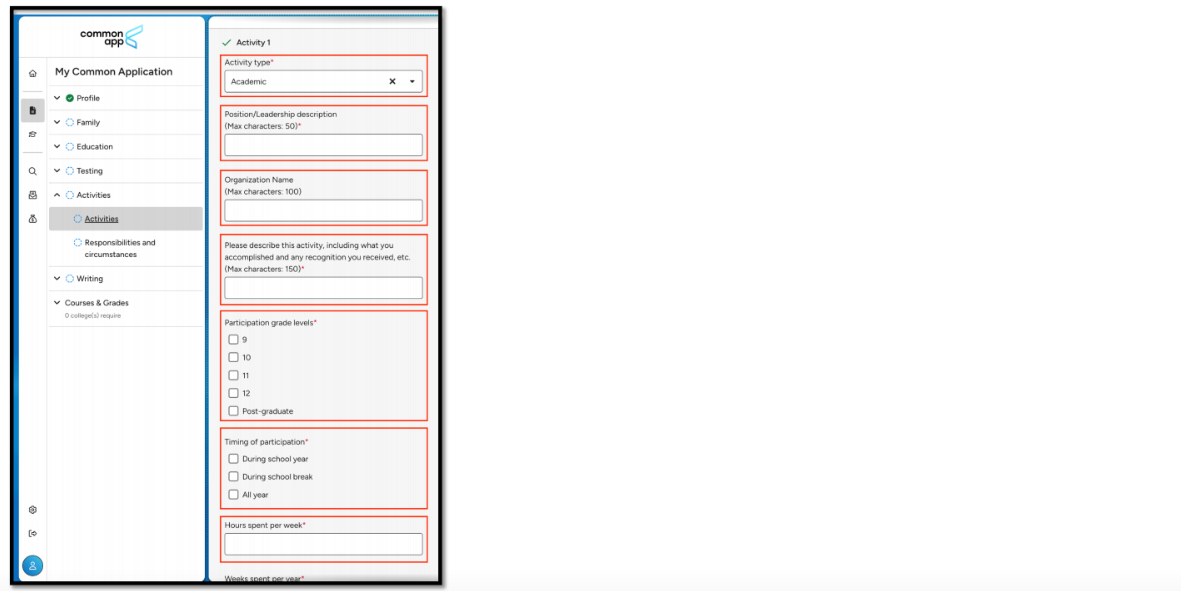
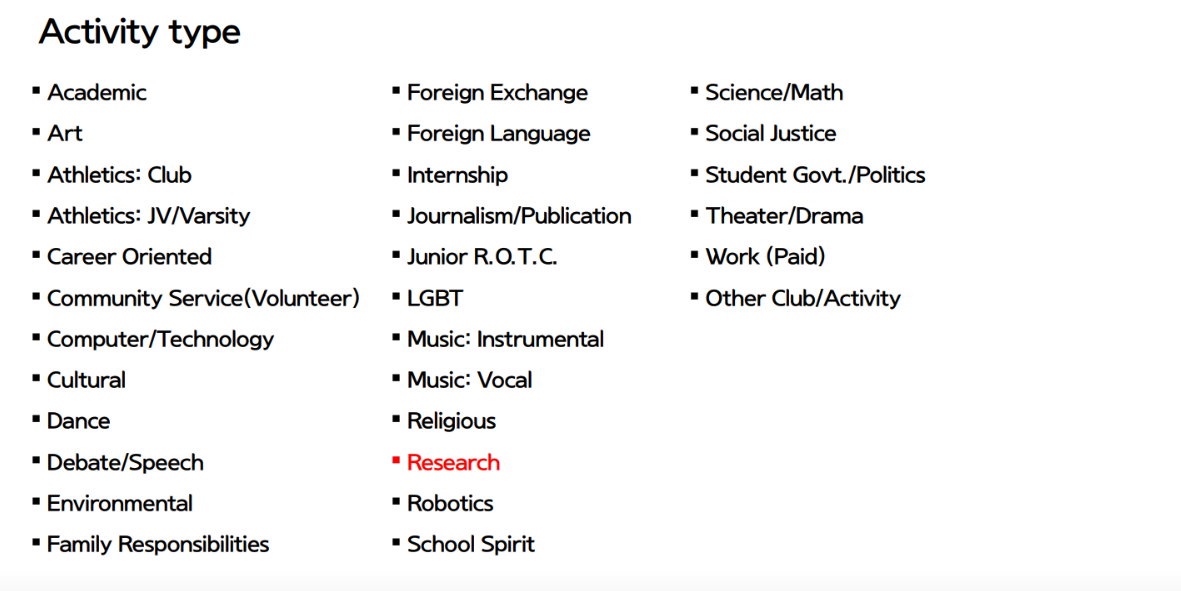
The first thing to understand is that the Common App added Research as its own standalone activity type this year, separate from the existing Academic category. That's a meaningful signal. It happened because so many students are now submitting research that it warranted its own classification. And that's precisely why the bar has shifted: it's no longer enough to have done research. What matters now is whether the research is genuinely strong.
Research that would only meet the threshold for journals exclusively designed for high school students isn't likely to function as a meaningful differentiator. What actually moves the needle is research that would be credible to evaluators outside the high school ecosystem.
That said, strong junior-year research absolutely still counts. Schools like Harvard and Princeton allow students to submit supplementary papers through their portals, giving readers the ability to evaluate the work directly. Even without a formal publication outcome, you can list your research topic and title in the activity description — and that alone carries weight when the underlying work is solid.
The broader principle: build your academic foundation first — strong GPA, strong test scores, AMC or olympiad results, academic competition participation — and then layer research and related activities on top. If your research genuinely meets a high quality standard, starting it in junior year is absolutely worthwhile.
Q4. Are Outside Recommendation Letters Allowed? And Is More Always Better?
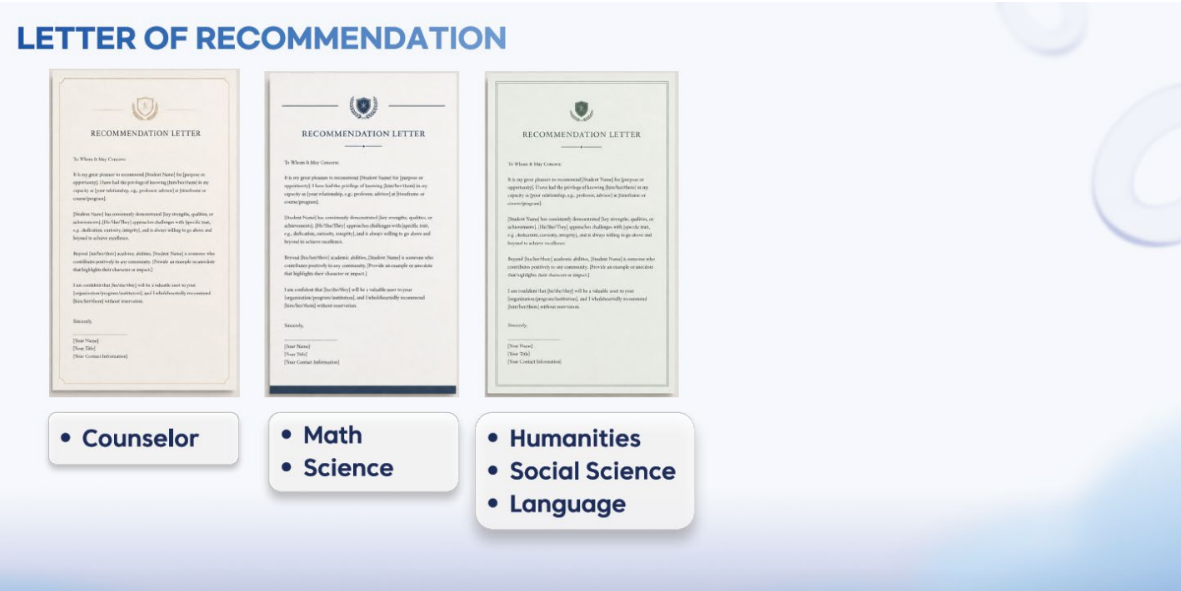
More is not better. Universities are known to view over-submission negatively, and students who submit excessive materials can receive lower evaluations as a result.
The standard package is one counselor letter and two academic teacher letters. A fourth letter — from someone outside the school — can be submitted, but only when all of the following conditions are met.
The recommender must have known and observed the student directly for at least several months. A letter from someone who met the student once, or who knows the family socially without sustained direct contact with the student, adds nothing.
The letter must show a dimension of the student not visible in the other three letters. Standard letters cover classroom performance and school-wide character. An external letter earns its place by documenting who the student is outside of school — in a professional, research, or community context — with specific episodes and concrete detail.
The letter must reinforce rather than contradict the student's overall narrative. If the rest of the application presents a coherent picture of a student committed to one area of focus, an external letter from an unrelated context can actually create friction rather than add value.
Name recognition can be a bonus — but it's not a prerequisite. A well-known person who writes a generic letter based on superficial acquaintance doesn't help at all. A less prominent person who can write with genuine specificity and sustained knowledge of the student is far more valuable. The ability to describe the student clearly and concretely is what matters most.
Q5. Since ALDC Students Take Up Close to Half of Early Seats at HYPS Schools, Is It Actually Worth It for Non-ALDC Students to Apply Early Action?
ALDC refers to Athletes recruited at the varsity level, Legacy applicants, Development cases (children of donors), and Children of faculty or staff. According to NBER research, approximately 43% of Early admitted students at top schools like Harvard, Yale, Princeton, and Stanford fall into one of these categories. With nearly half the Early seats going to ALDC, one reasonable conclusion is that non-ALDC students might be better off applying Regular Decision.
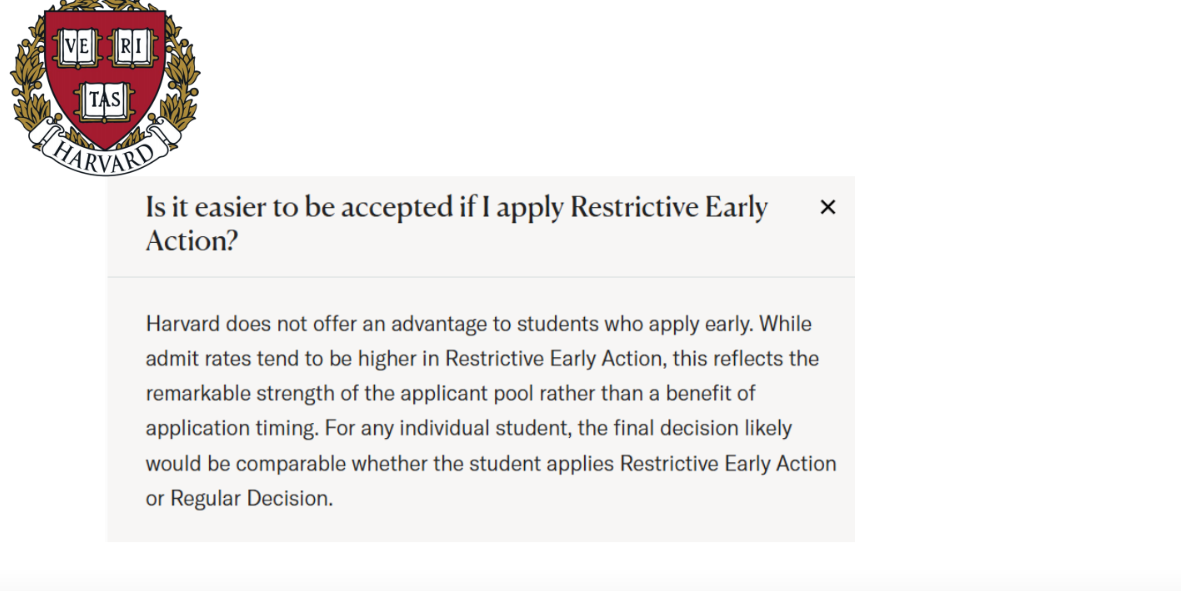
Harvard's own public guidance addresses this: the university states that applying through Restrictive Early Action doesn't make admission easier, and that students admitted Early would also have been admitted Regular Decision. On its face, that seems to support skipping Early.
But there are two reasons why Early is still worth it for non-ALDC students.
First, applying Early sends a credible signal of genuine commitment. Research on Early admissions has found that this signal effect creates real strategic advantages for non-ALDC students — not just for those with institutional ties.
Second, evaluation standards in any large selection process are partially shaped by the candidates reviewed earliest. Admissions readers begin calibrating their judgment against the Early pool. Before those standards fully crystallize, there's slightly more flexibility in how borderline cases are evaluated. That advantage disappears by Regular Decision.
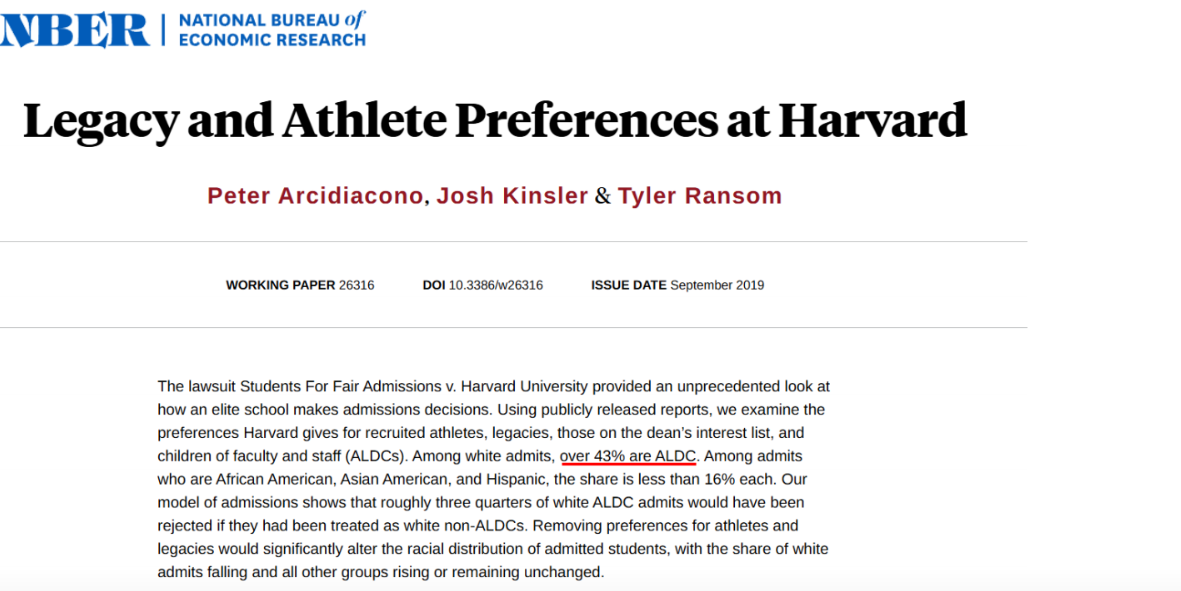
The conclusion: even with ALDC students accounting for close to half of Early seats, the remaining spots are worth competing for. If a student is strong enough to be admitted Early, they're strong enough to have benefited from applying Early. If they're not admitted Early, they typically would not have been admitted Regular either. Apply Early if you're ready.
Q6. Are Essays Going to Disappear Because of AI-Generated Content?
No. Essays are not going away.
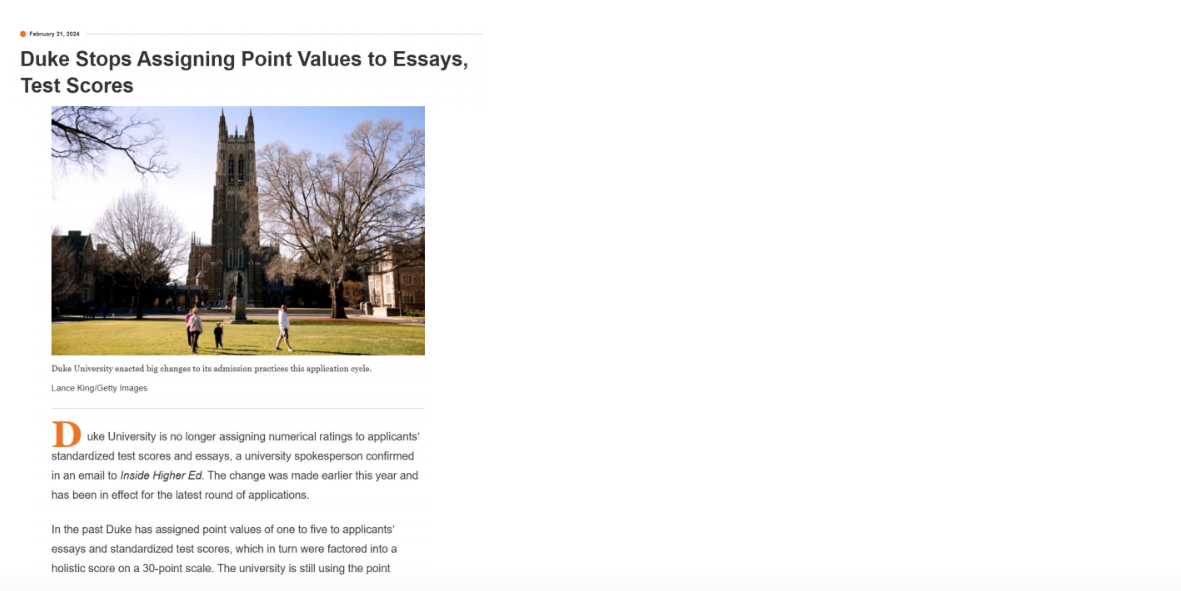
The concern grew after Duke announced in 2024 that it would remove essays from its formal evaluation rubric. That announcement influenced other schools and sparked widespread speculation about the future of essays in admissions.
But the underlying function of essays hasn't changed. MIT describes essays as a tool for getting to know applicants — not as a writing test. UC Berkeley frames them as the equivalent of an interview with the admissions office. The reason is structural: admissions readers can't personally interview tens of thousands of applicants. Essays are currently the only mechanism that gives readers direct access to how a student actually thinks. Eliminating essays without a replacement means making decisions based almost entirely on quantitative data, which makes it significantly harder to build a diverse class.
Cornell's research team analyzed more than 30,000 actual admissions essays alongside outputs from multiple large language models. The finding: AI-generated essays were consistently more generic and less distinctive than essays written by actual students. That result points in exactly the opposite direction from what the "essays are going away" narrative suggests — it means authentic, specific, personal voice is becoming more valuable, not less.
If essays evolve, it will likely be in the direction of fewer supplemental prompts, shorter and more concrete short-answer responses, and potentially additional formats like video submissions. The function — giving admissions readers a direct line to student thinking — won't disappear. The format may shift.
Q7. I Took Korean 2 in 9th Grade, Couldn't Take It in 10th Due to Scheduling, and Am Considering Korean 4 in 11th After a Level Assessment. Do Top Colleges Care More About Years of Study or Level Achieved?
This is one of the most frequently asked questions every semester. Here's a clear answer.
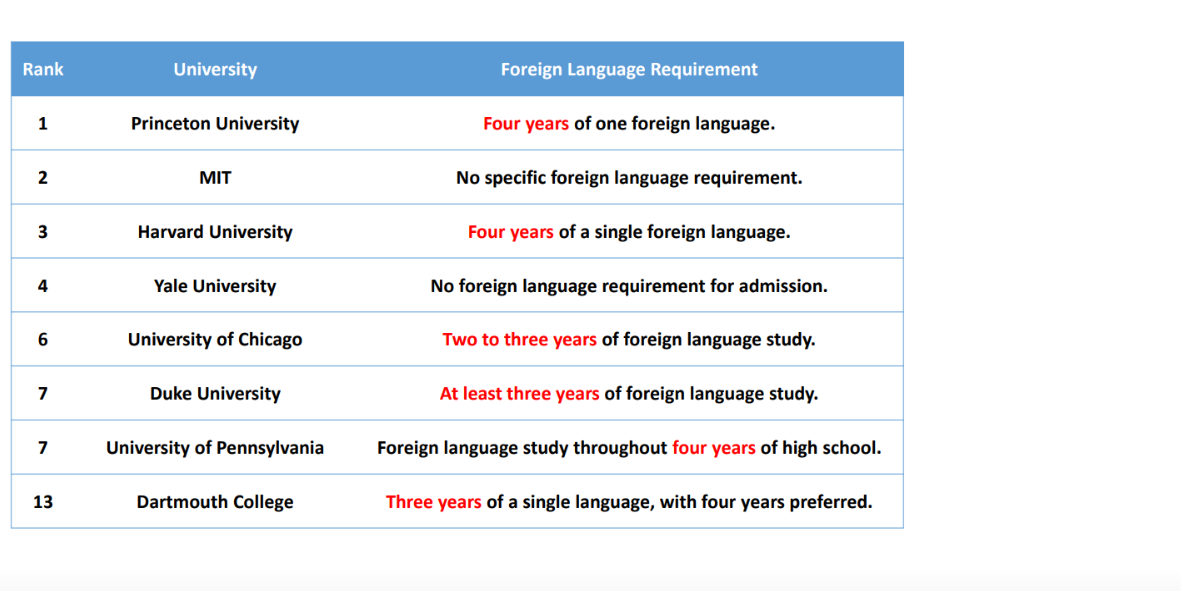
The stated expectations from major universities are as follows:
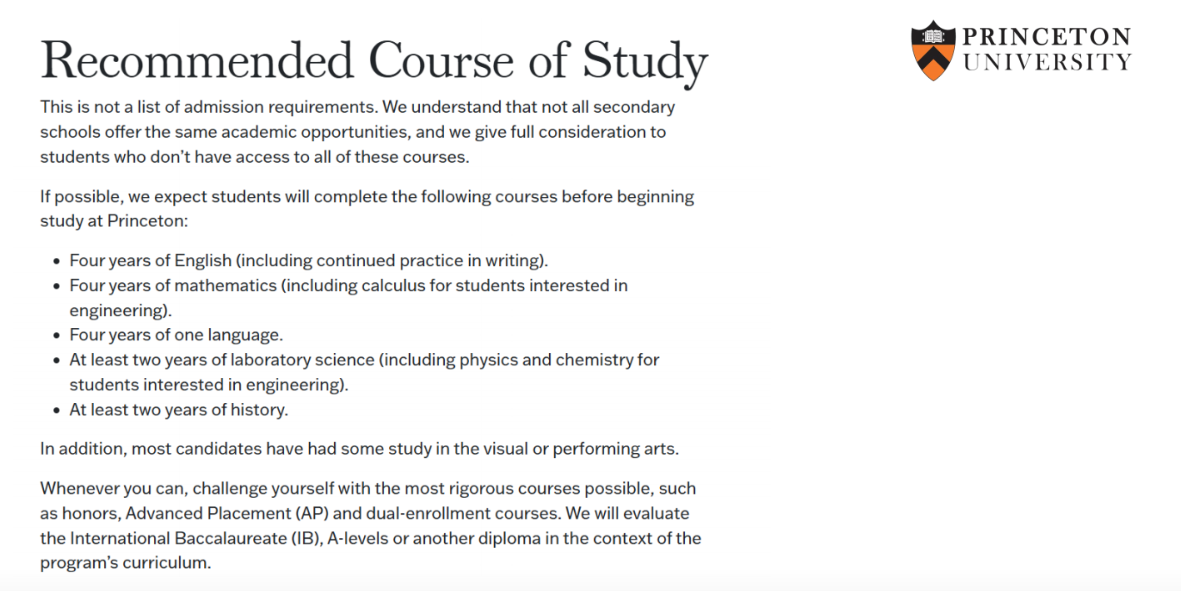
- Princeton — four years of one foreign language, strongly recommended
- Harvard — four years, strongly recommended
- UPenn — four years, strongly recommended
- University of Chicago — two to three years minimum
- Duke — at least three years
- Dartmouth — three years
- MIT — no specific requirement
- Yale — no specific requirement
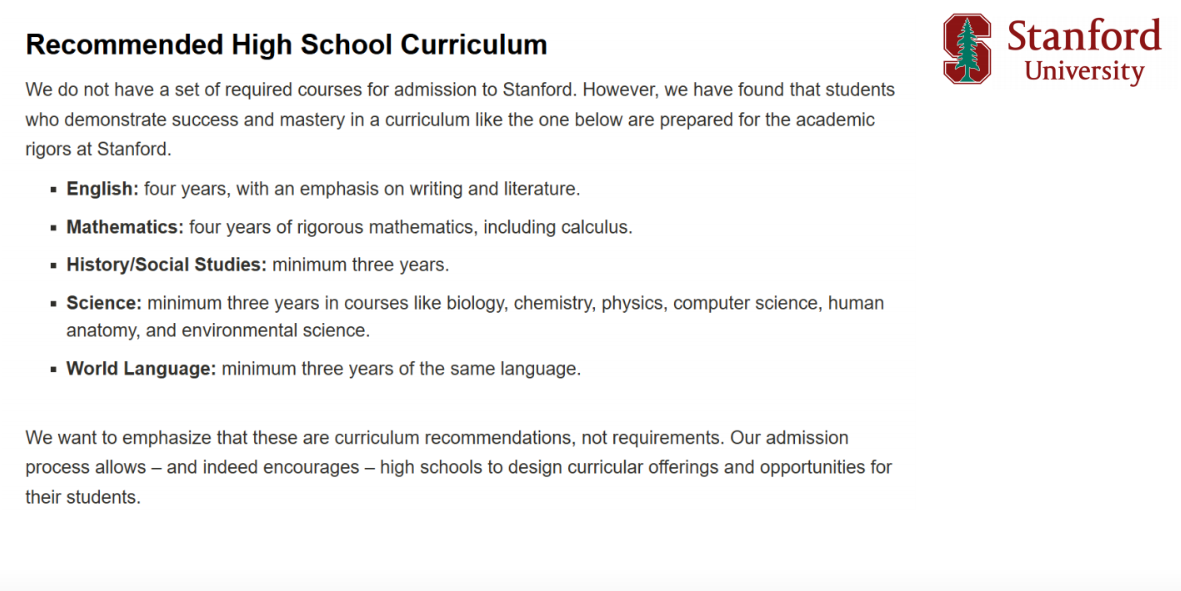
Stanford recommends a minimum of three years of world language study, but explicitly states that this is a curriculum recommendation, not an admissions requirement.
The practical conclusion: none of these are absolute requirements that disqualify applicants, but one to two years creates a noticeably weak impression. Three years is the minimum threshold worth targeting. A student who completes at least three years and demonstrates a strong ending level can gain admission to schools like Princeton and Harvard that recommend four — we've seen it happen. The safest path is four continuous years of one language with clear progression, but if that isn't feasible, three years with a strong level is a defensible alternative.
A note on the specific situation described: the gap in 10th grade introduces a question that readers may notice. It's manageable when the rest of the application is strong, but it's unnecessary friction that a bit of planning could have avoided. Three years — even with the gap — positions this student reasonably well. Four years would have been cleaner.
At A ONE Institute, we help students work through exactly these kinds of nuanced decisions — from course planning to research strategy to application sequencing. If you have a situation that doesn't fit neatly into a general answer, we're here to think through the specifics with you.
college admissions Q&A
Early Action strategy
HYPS admissions
college essays AI
foreign language requirements
recommendation letters
