
AI Didn't Kill the Writing Competition. It Made It More Important.
With AI tools now capable of drafting, editing, and refining written work at a level most people can't match on their own, a reasonable question has started coming up more frequently: if everyone's writing looks polished, does writing still differentiate applicants?
The answer is yes — but the reason is more specific than most families realize.
The issue isn't whether AI can improve writing mechanics. It can. The issue is that what top colleges are evaluating through writing isn't polish — it's personal voice. And personal voice is precisely what AI cannot generate for you.
What Top Colleges Are Actually Looking For
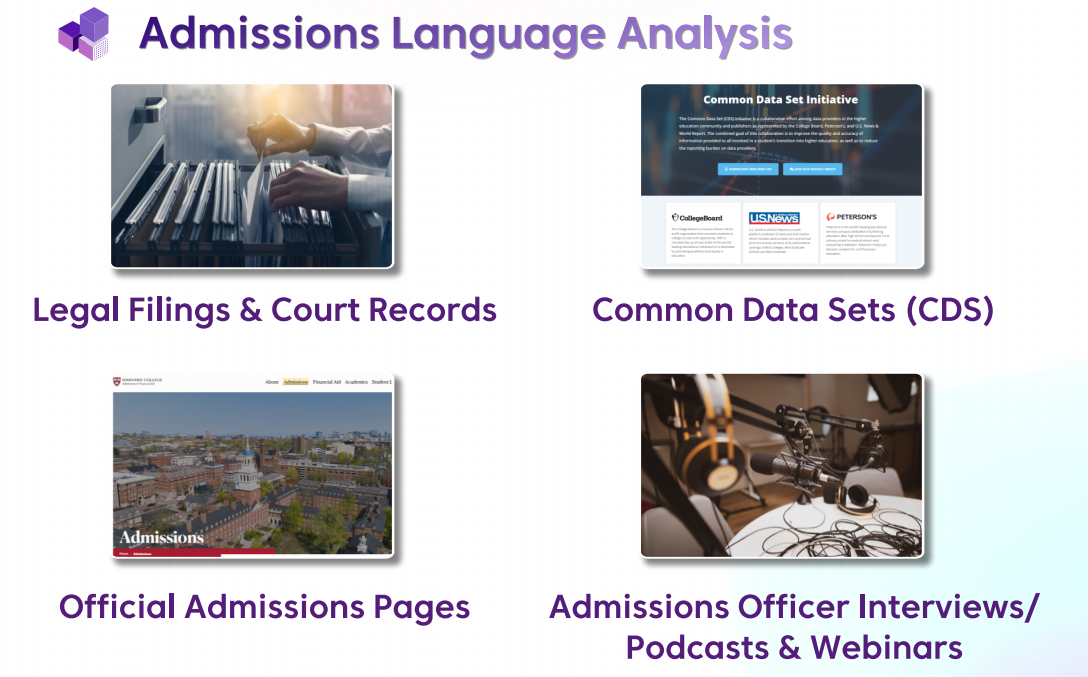
Colleges have become increasingly specific about the qualities they value in applicants. This information surfaces through multiple channels: court documents from admissions-related litigation, Common Data Sets, official admissions pages, and — most usefully — columns, podcasts, and interviews from current and former admissions officers at specific institutions.
Across these sources, roughly ten core qualities appear consistently. Among them is one that deserves particular attention: personal voice.
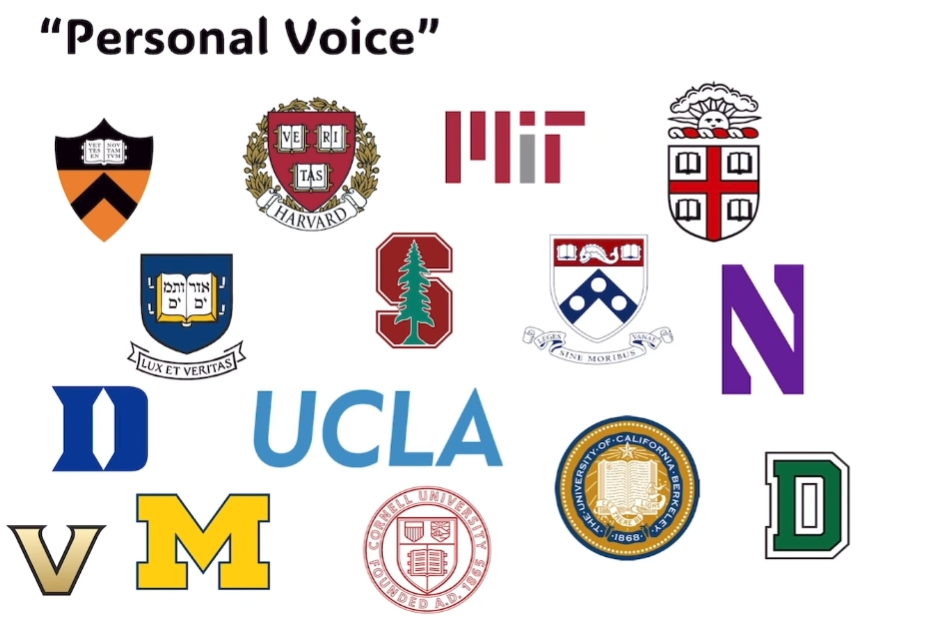
The list of schools that explicitly emphasize personal voice — under various names — includes Princeton, Harvard, MIT, Brown, Yale, Stanford, Penn, Northwestern, Duke, UCLA, Dartmouth, UC Berkeley, Cornell, University of Michigan, and Vanderbilt, among others.
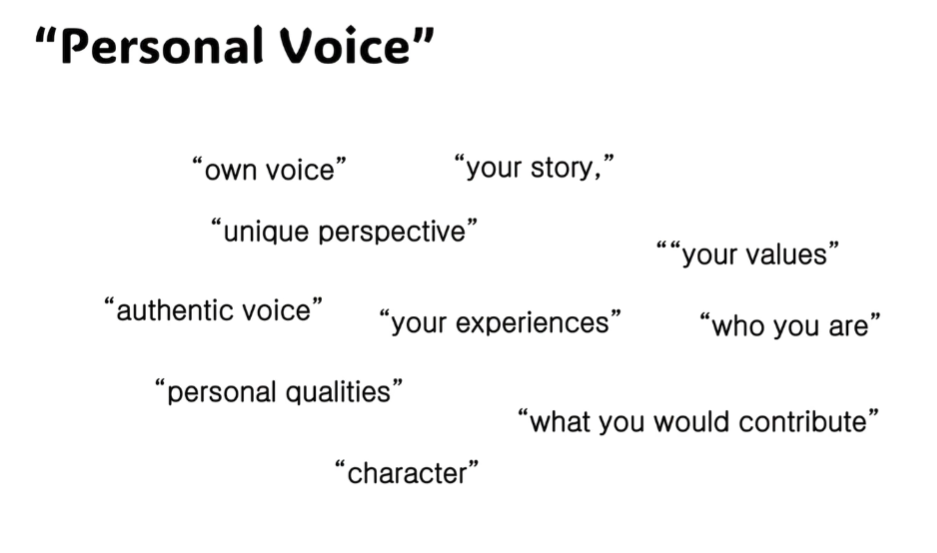
Depending on the school, this quality may be described as "own voice," "your story," "unique perspective," or "your values." The terminology varies. The underlying concept doesn't.
What Personal Voice Actually Means
Personal voice is the capacity to take experiences, form a genuine perspective from them, and express that perspective in a way that is distinctly your own.
It's not about having an unusual story. It's not about writing in a particularly literary style. It's about having something to say — a real point of view — and the ability to communicate it in a way that couldn't have been generated by someone (or something) else.
The clearest way to understand this: anyone can recite a dictionary definition. AI can do it faster and more accurately than any human. What AI cannot do is arrive at a perspective through lived experience, integrate that experience with other experiences in unexpected ways, and express the result with a voice shaped by a particular person's history.
That's what personal voice is. And that's why colleges value it more, not less, as AI tools become more widespread.
The Ways Students Can Express Personal Voice
Personal voice can be expressed through several channels, each of which has a place in a competitive application:
Written expression includes writing competitions, essay contests, op-ed contributions, and column writing. The term "op-ed," incidentally, has a specific origin: it refers to content that appeared opposite the editorial page in traditional print newspapers — meaning external contributors, not the paper's own editorial staff. The format has evolved, but the concept of publishing an external perspective in a public forum remains the same.
Spoken expression includes debate, speech, public lectures, and podcasting. These formats require the same underlying quality — a genuine perspective, clearly articulated — but in a different medium.
Artistic expression offers another pathway for students whose voice is most naturally communicated through visual, musical, or other creative forms.
Each of these channels gives colleges a way to verify that a student's voice is genuinely theirs — something that's harder to fake across multiple contexts than in a single polished essay.
The Skill AI Cannot Replace: Redefining What Already Exists
The most durable form of intellectual distinctiveness isn't knowing more facts. AI already surpasses human memory and retrieval by an enormous margin. The skill that remains uniquely human is the ability to take a concept that everyone knows — and redefine it through the lens of genuine experience.
Several well-known figures offer useful examples of this.
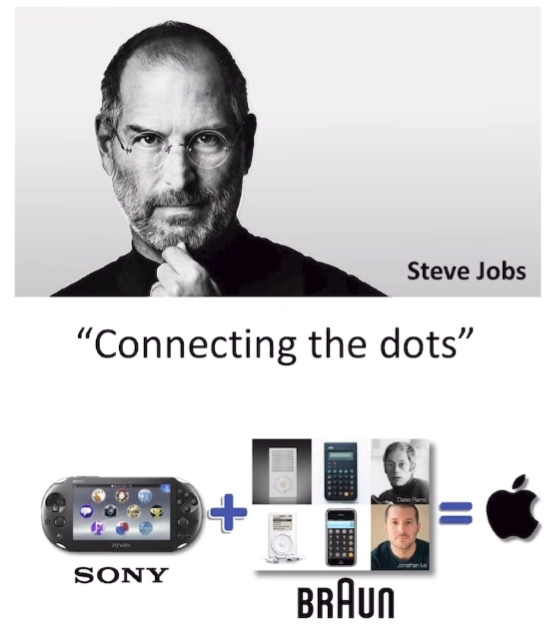
Steve Jobs was frequently asked in interviews how he generated creative ideas. His standard answer was essentially: I just connected what I'd already seen. His definition of creativity wasn't "producing something from nothing" — it was synthesizing existing experiences into something new. Some observers have noted that Apple's aesthetic combined Sony's engineering sensibility with Braun's design philosophy. Whether or not that's precisely accurate, Jobs's insight — that creativity is the act of connecting dots from your own experience — is a redefinition that shaped how an entire generation thinks about the concept.
Warren Buffett approached risk the same way. The conventional economic definition of risk is volatility — the beta of an asset, how much its price fluctuates. Buffett rejected that framing. His definition: risk is not understanding the business you've invested in. That reframing, simple as it sounds, became the philosophical foundation of one of the most successful investment approaches in history.
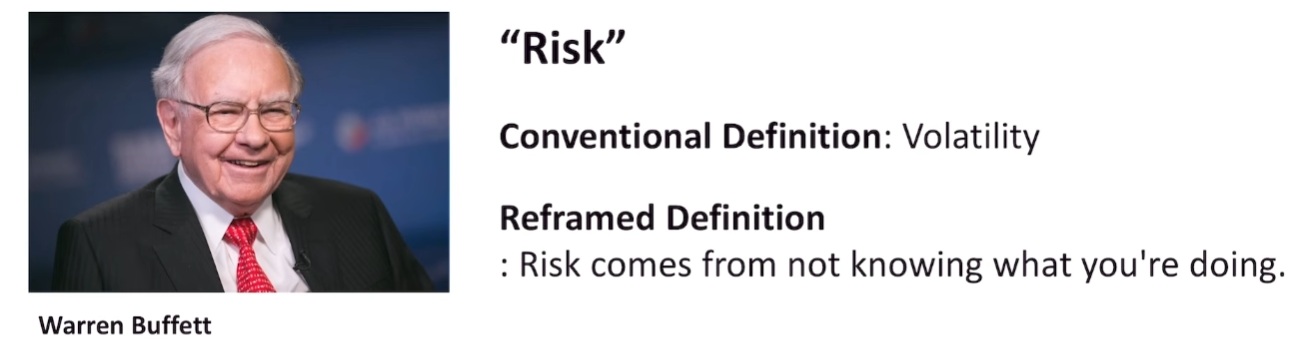
Peter Thiel, in his 2014 book Zero to One, redefined competition itself. The standard view treats competition as a market virtue — the mechanism that drives efficiency and innovation. Thiel argued the opposite: competition is what destroys value. The companies that generate enduring returns aren't the ones that compete most effectively within existing markets — they're the ones that create new markets where no competition exists. Going from zero to one, in his framing, is categorically different from going from one to n.
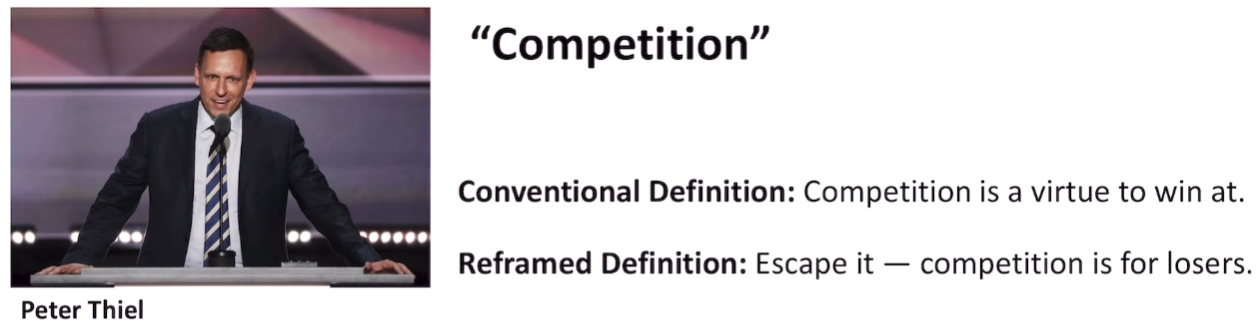
Each of these examples involves the same underlying move: taking a familiar concept, approaching it through direct experience and observation, and arriving at a definition that is both personally grounded and genuinely illuminating.
Students can do this too. The scale is different. The mechanism is the same.
How to Develop This Capacity
There are two main pathways to developing genuine personal voice, and they work best in combination.
The first is direct exposure to people whose lives are meaningfully different from your own. When you encounter someone whose circumstances, assumptions, and emotional reference points differ significantly from yours, perspective shifts become possible. A student who has only read about poverty as an economic condition — income below a certain threshold, access to certain resources — may encounter a different frame entirely when speaking with a peer who couldn't attend a friend's birthday party because they had no money for a gift. Poverty, in that moment, becomes not an economic category but an experience of quiet exclusion from ordinary social life. That's the kind of perspective shift that produces original thinking.
The second is the practice of writing itself. Thoughts that exist in the mind occupy a kind of three-dimensional, overlapping, fluid space. When those thoughts are written down, they become linear, sequential, and visible. This act of externalization creates a useful distance — the thought that was inside you is now in front of you, and you can observe it with a degree of objectivity that wasn't available before.
This is why writing under emotional stress — making a list of your worries, for example — often reduces anxiety: the act of writing reveals that there are perhaps twenty discrete concerns, not an undifferentiated mass of dread. The same principle applies to intellectual development. Writing forces clarity, reveals gaps, and creates the conditions for genuine perspective-taking.
This is also why writing competitions are valuable independent of whether a student wins. The requirement to produce finished written work consistently — to move from vague impressions to precise articulations — is one of the most reliable ways to develop the capacity for original thinking. Entering a writing competition creates a deadline and a standard that most informal journaling doesn't. Even the act of preparing a submission forces a level of refinement that accelerates development.
The Practical Implication
In an environment where AI can produce competent, polished prose on demand, the differentiating factor in college admissions writing is not technical quality — it's the presence of a genuine perspective that couldn't have been produced by a language model drawing on generalized data.
That perspective develops through experience, reflection, and the sustained practice of articulating ideas in writing. Writing competitions are one of the most structured ways to build that practice consistently. But the underlying habit — writing regularly, taking positions, developing and refining your own definitions of the concepts you encounter — is valuable regardless of whether it leads to a competition submission.
What colleges are looking for, and what AI cannot provide, is evidence that a real person — with a specific history, a genuine set of experiences, and a voice shaped by those experiences — produced this work. That evidence becomes more important as AI tools become more prevalent, not less.
At A ONE Institute, we work with students on writing development as a sustained practice — not just competition preparation. If you're interested in how to build genuine personal voice through structured writing work, we're here to help.
writing competitions
personal voice
college admissions
AI writing
extracurricular activities
