
One Factor. One Outcome. Here's What It Comes Down To.
If you're currently in 11th grade, have been building your activities consistently, and meet the academic threshold for your target schools — there is one remaining variable that can genuinely decide whether you're admitted or rejected.
That variable is how you write your activity descriptions.
Before getting there, it's important to understand why this matters so much — and that requires understanding something most families never think about: how admissions readers actually compare GPA across completely different high schools.
The Problem With Comparing GPA Across Schools
From an admissions reader's perspective, ranking applicants within a single high school is relatively straightforward. Comparing applicants across different schools is a fundamentally different challenge.
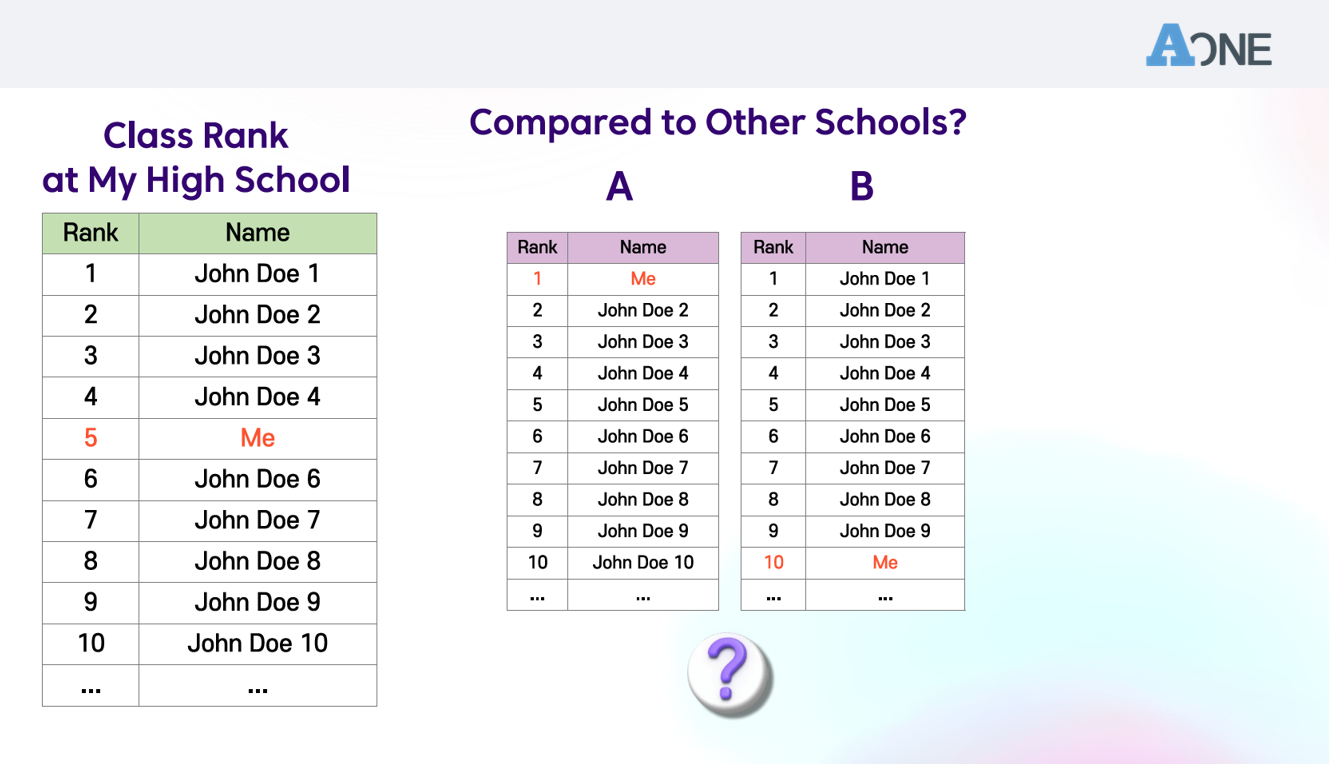
There's no universal standard that lets a reader say with confidence that a 4.0 at School A is equivalent to a 4.0 at School B.
American universities have been working on this problem for nearly a century — and the solutions have largely failed.
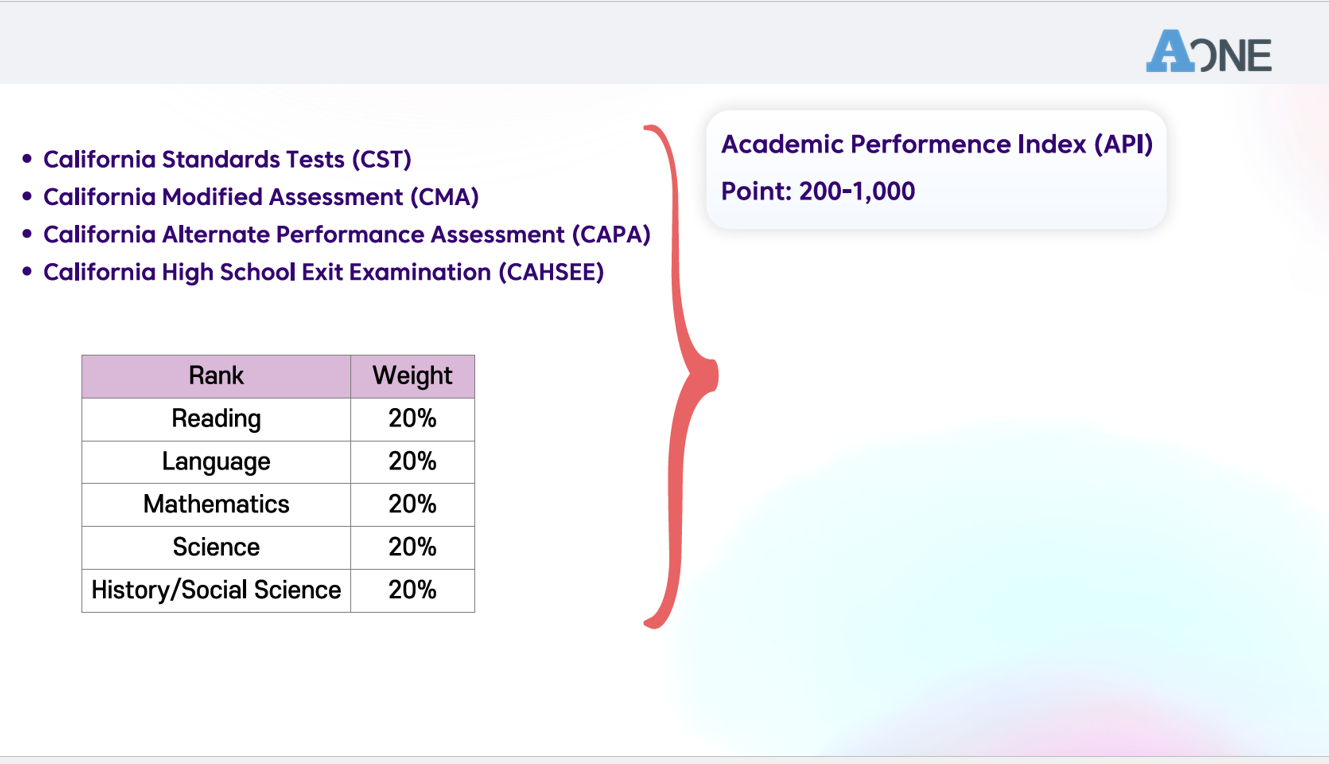
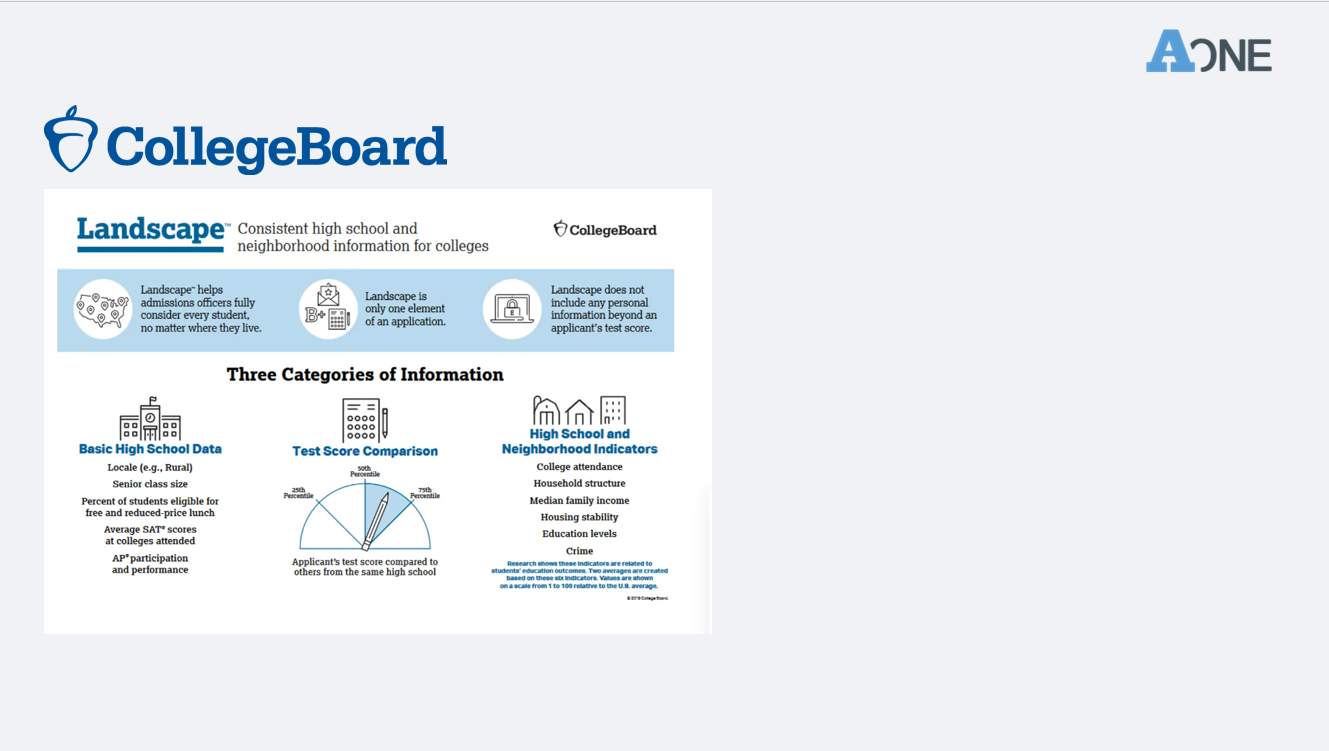
California developed the Academic Performance Index (API), which indexed high schools on a 200–1,000 scale using weighted standardized test results across multiple subjects. College Board launched a project called Landscape, which attempted to rank approximately 30,000 schools by accounting for regional and academic context. Both efforts recognized something real: without a shared baseline, GPA comparisons across schools are inherently unreliable.
And both were ultimately discontinued. California's API was abolished in 2014. College Board's Landscape service was shut down in September 2025.
The broader shift is clear: since the COVID disruptions of 2021, the trend has moved decisively away from standardized school-ranking tools. High schools are simply too varied — in course offerings, grading standards, AP availability, and academic culture — for any single framework to capture meaningfully.
What Admissions Readers Actually Use Instead
In the absence of standardized ranking tools, the 2026 admissions cycle relies primarily on one thing: the accumulated experience of first readers.
Each admissions reader is assigned a specific geographic region and evaluates every application from high schools within that region. When comparing applicants across different schools, readers don't consult a comparison table. They draw on everything they've learned from years of reading applications from those same schools — patterns, context, and a calibrated sense of what strong performance looks like in each environment.
To manage this, readers informally categorize high schools into roughly four types:
The Four Types of High Schools — And Why It Matters
Pipeline Schools send a consistent number of admitted students to a given university every year. Readers have extensive accumulated knowledge about these schools — grading patterns, course rigor, typical applicant profiles. The data is rich and reliable.
Emerging Schools send students less frequently — perhaps every two to three years — but consistently enough that readers have meaningful context to draw on. Information is somewhat thinner than Pipeline Schools, but still substantial.
Unknown Schools have never sent an applicant to this particular university before. With no prior data, readers have no choice but to rely entirely on the school profile document — the formal record submitted by the high school describing its course offerings, GPA distribution, AP results, and student population.
For Unknown Schools, two things become critically important: the quality of the school profile itself, and the counselor who prepares and submits it. The profile is the only evidence available. A well-constructed profile that shows strong AP participation rates, score distributions, and a realistic GPA curve gives readers enough to work with. A thin or poorly organized profile leaves readers with almost nothing.
Underserved Schools don't submit a school profile at all. Without any contextual information, readers have no way to calibrate a student's GPA against their school environment. As a result, high GPAs from these schools are often assumed to reflect grade inflation rather than genuine academic achievement — and the advantage that GPA might otherwise provide is significantly diminished.
What This Means for Your Application Strategy
Most students fall into one of two broad categories: those attending Pipeline or Emerging Schools (Types 1 and 2), and those attending Unknown or Underserved Schools (Types 3 and 4).
For students at Pipeline or Emerging Schools, the key benchmark is what A ONE Institute calls the admissions threshold — the historical rank within your school that correlates with admission to your target schools.
If your school has consistently sent four students per year to Brown, for example, you need to be credibly within that top four among Brown applicants from your school in a given year. Readers with years of experience evaluating your school will instinctively position you relative to previous admitted students. If you fall below that threshold, you're starting from a disadvantaged position regardless of your other credentials.
For students at Unknown or Underserved Schools, the GPA credibility problem is more acute. Readers can't easily verify what your grades represent in context. To compensate, these students need to signal academic excellence through other measurable means — and demonstrating top-percentile performance within their school, combined with strong standardized test results, is the most reliable path to establishing credibility.
In both cases, the underlying principle is the same: GPA alone is not self-interpreting. Readers are always evaluating it in context — and that context is shaped by everything they know, or don't know, about your school.
Once You Clear the Threshold — Here's What Actually Decides It
Assume for a moment that a student is in 11th grade, has maintained strong grades, and meets the academic threshold for their target schools. What's left?
At this stage, the remaining variables in a college application are the essay, the activity list, and — where required — a resume. Recommendation letters matter, but they're outside the student's direct control.
Admissions readers spend between 4 and 10 minutes on each application file. That's the window. Within that window, the reader needs to understand clearly who this student is — their intellectual identity, what they've committed to, what they've built.
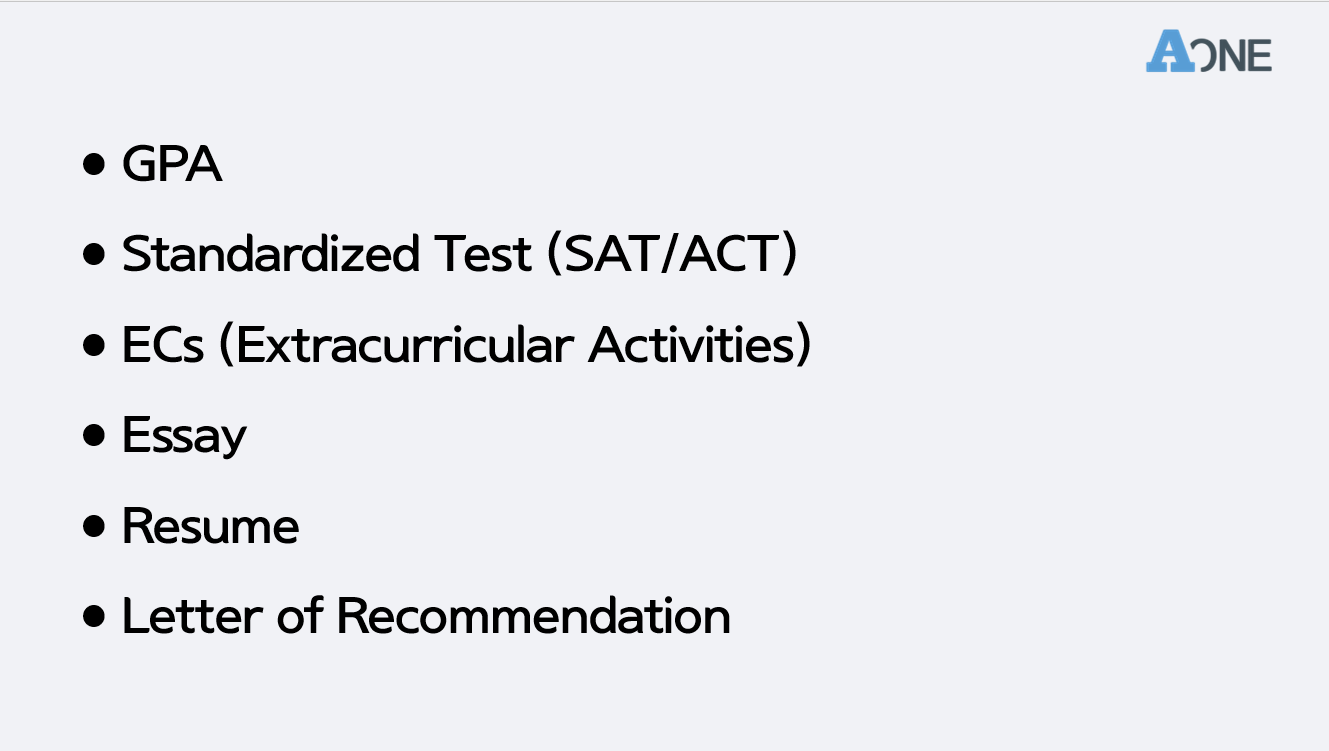
The activity list and resume are the primary tools for communicating that identity. And here's what makes them so consequential: by junior year, the activities themselves are largely fixed. There's limited time to add meaningful new experiences before applications are due. What remains entirely within the student's control is how those activities are described.
This is why activity description writing is the single most impactful variable left for a junior who has already built a solid foundation. It's not about what you did — it's about how clearly and compellingly you communicate what you did, why it mattered, and what it says about who you are.
The Same Principle Applies at Every GPA Level
It's worth being explicit about this: strong activity writing isn't only important for students who are right on the edge.
Students whose GPA puts them comfortably within the admissions threshold still need to cement that advantage. The threshold gets you into serious consideration — it doesn't guarantee an outcome. Within the pool of candidates who clear the threshold, differentiation happens through the quality of the application narrative.
Students whose GPA falls slightly below the threshold face a steeper climb, but strong activity writing and a well-constructed resume can partially compensate by demonstrating the kind of depth, coherence, and intellectual identity that admissions readers find compelling.
In both cases, the mechanism is the same: within the 4–10 minute review window, your activity descriptions are doing the work of defining you. If they're vague, generic, or poorly organized, that window closes without a clear impression. If they're precise, vivid, and coherent, the reader leaves with a specific, memorable understanding of who you are.
For a junior with limited time remaining, this is where the effort belongs.
In the next article, we'll go through exactly what not to do when writing your 10 activity descriptions — the specific mistakes and phrases that consistently weaken applications, and how to avoid them.
After that, we'll address resume writing — which is more complex than it might appear. Because the reader who sees your activity list is the same reader who sees your resume, the two documents need to work together as a coherent picture of one person. Writing them in isolation produces a weaker result than writing them as a unified set.
At A ONE Institute, we work with students to write activity descriptions and resumes that communicate a clear, compelling identity within the narrow window admissions readers have available. If you're a junior preparing your application and want guidance on this specific step, we're here to help.
college application strategy
activity descriptions
admissions readers
high school profile
Common App activities
