
The Question Families Ask — And Almost Nobody Answers Clearly
When students apply to college, the typical sequence goes like this: choose the school first, then select a major. But one question consistently comes up and rarely gets a straight answer: does the major you list on your application actually affect whether you get in?
The short answer is yes — but only at certain schools, and in different ways depending on how those schools are structured. At A ONE Institute, we want to make this as clear as possible before application season, so students can make informed decisions when that major selection field appears on the Common App.
Here's what's actually happening. Harvard asks about your primary academic interest. Penn has you choose a specific undergraduate school within the university, then a major within that school. Cornell works the same way. And yet many of these schools don't require you to officially declare a major until well after you've enrolled. So why does the application ask for it at all — and does it matter?
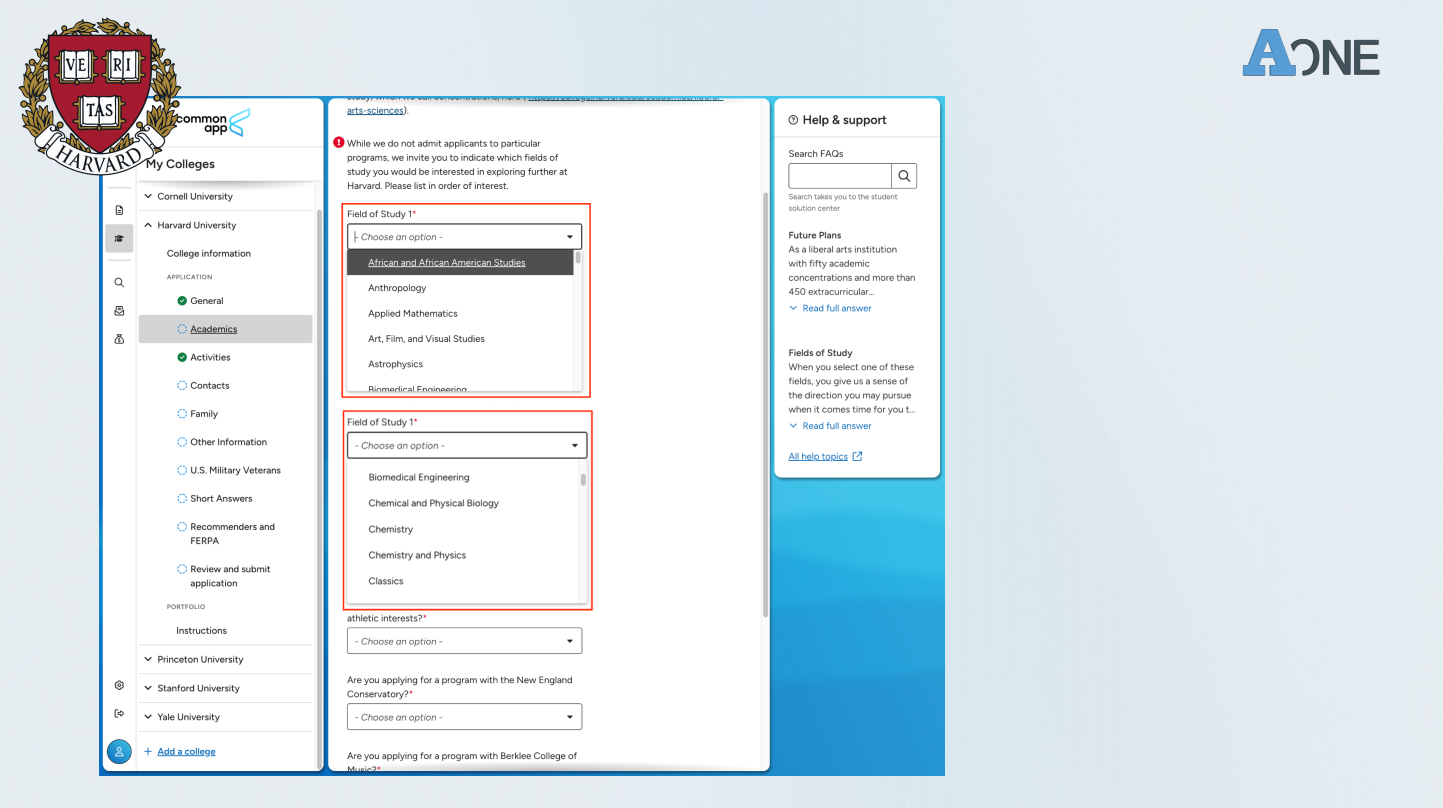
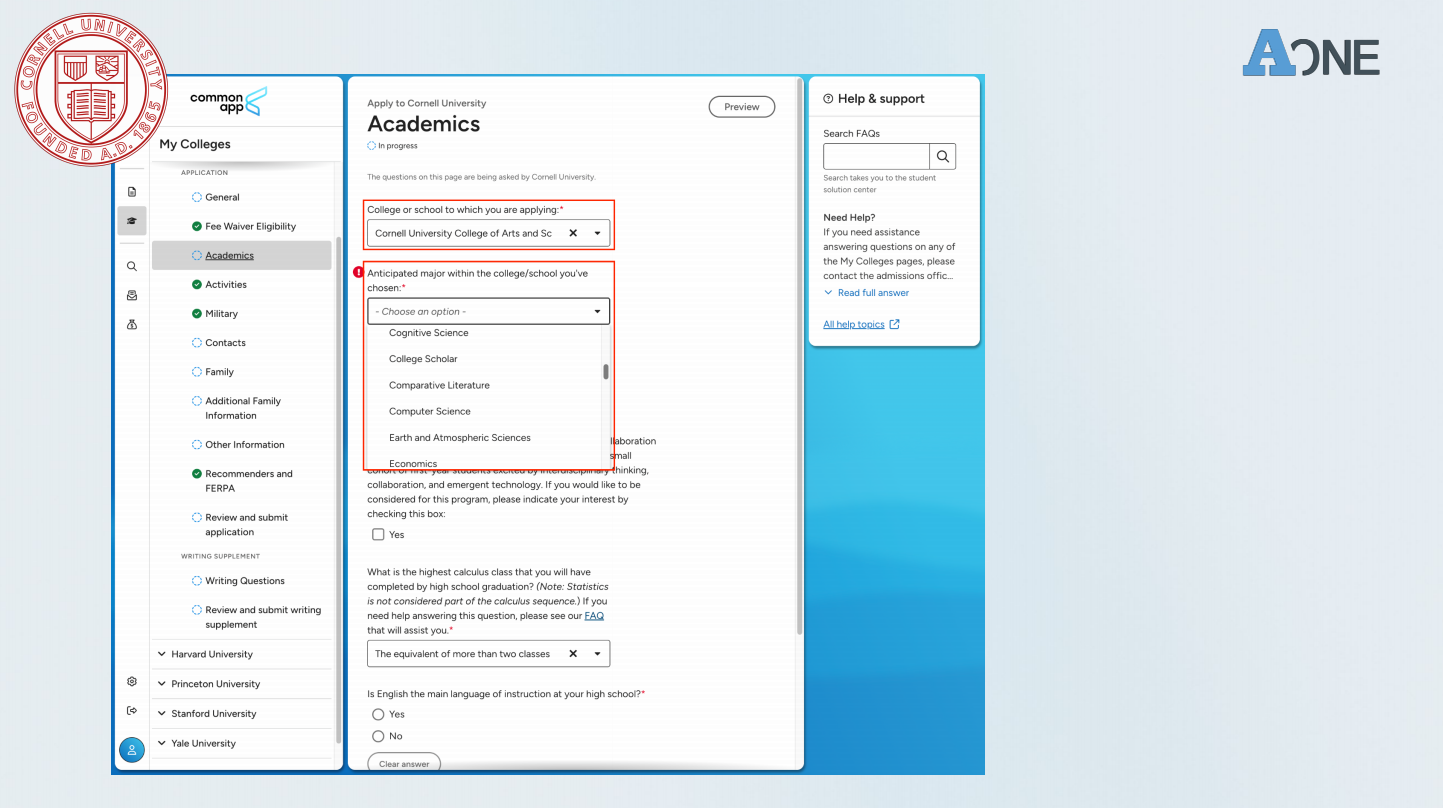
The answer depends entirely on the school's internal structure. And understanding that structure is what this article is about.
Three Categories of Schools: Major-Sensitive, College-Sensitive, and Major-Neutral
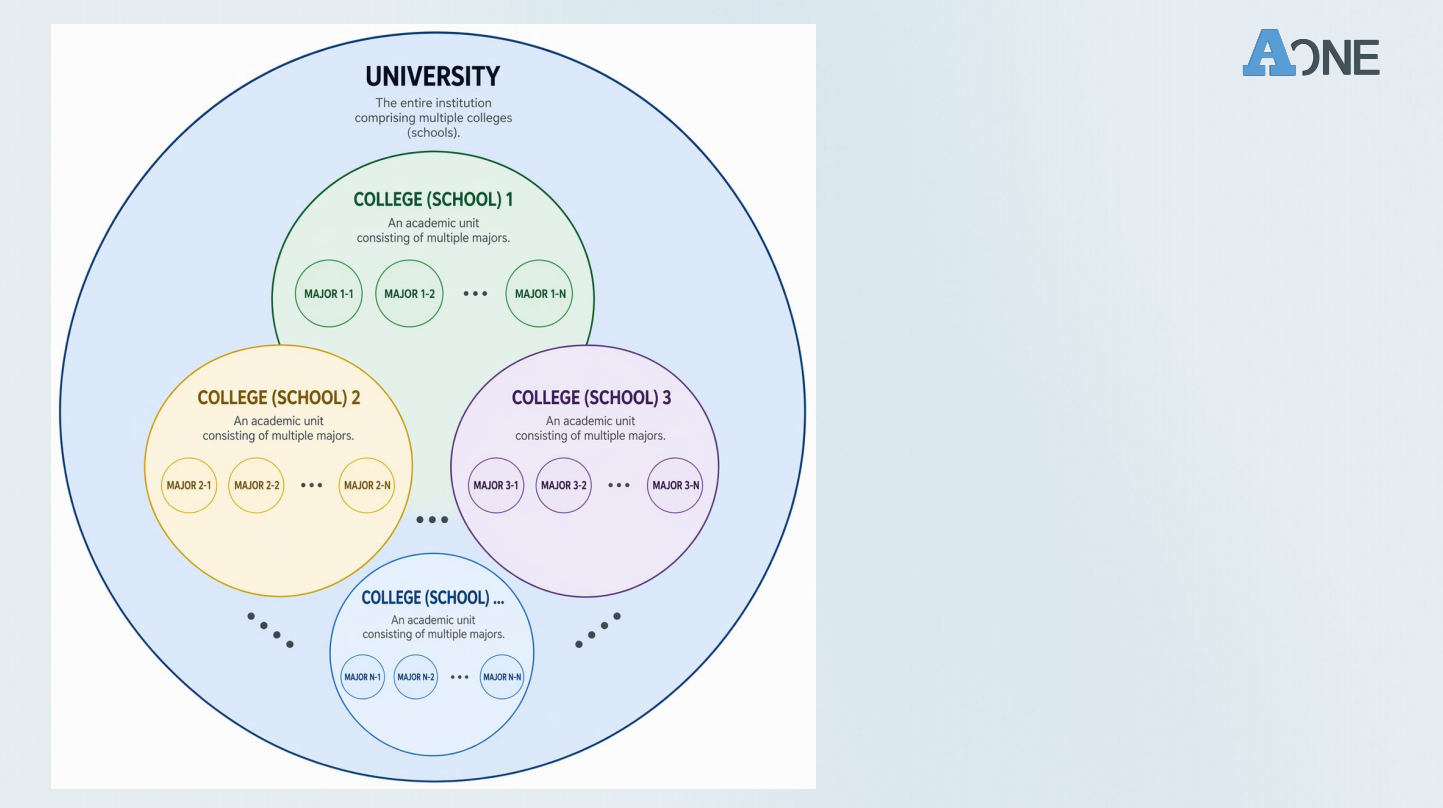
To understand how major selection works in admissions, you first need to understand how universities are organized. Most large universities consist of multiple undergraduate colleges or schools — each housing a set of majors. This creates two distinct dynamics:
Major-Sensitive schools are those where your admission odds can vary depending on which specific major you choose, even within the same college.
College-Sensitive schools are those where the more important variable is which college or school within the university you apply to — not necessarily the specific major within it.
Major-Neutral schools are those where neither the college nor the major you list has a meaningful impact on your admission odds.
Each category requires a different strategic approach.
Major-Sensitive Schools: Where the Specific Major Matters
UC Berkeley
UC Berkeley is one of the clearest examples of a major-sensitive institution.
The College of Letters and Science (L&S) is an enormous college that houses the majority of Berkeley's undergraduate majors. For most programs within L&S, major selection is effectively neutral — meaning it doesn't meaningfully change your odds. However, certain majors within L&S are classified as high-demand, and these operate with separate applicant pools and quota-style enrollment caps. Berkeley essentially pre-determines how many students it intends to admit into each of these programs.
The high-demand majors within L&S include:
- Computer Science
- Data Science
- Economics
- Psychology
If a student has a genuine academic focus in one of these areas, the right move is to list that major directly and honestly. There's also a counterintuitive strategic point worth knowing: because these majors are well-known as competitive, some applicants deliberately list a different major within the same college, thinking it's safer. In some cases, however, simply selecting the stronger, more targeted major may actually be equally viable — or even slightly better — if the student's profile genuinely aligns with it. The "safer" detour doesn't always pay off.
Beyond L&S, Berkeley's College of Engineering, the Haas School of Business, and the College of Chemistry also operate with enrollment caps that make major selection relevant at those schools as well.
UCLA
UCLA's structure is similar but with some important differences.
Within the College of Letters and Science, most majors are neutral — major selection has little bearing on admission odds, so students should simply choose the major that best reflects their genuine interests and activities. There's no need to overthink the major choice from a strategic standpoint for most L&S programs.
That said, several programs at UCLA do operate with meaningful enrollment constraints, and these are worth knowing:
- Engineering
- Nursing
- School of Arts and Architecture
- School of Theater, Film and Television
- School of Music
- School of Education and Information Studies
For applicants targeting any of these programs, the major listed does carry additional weight, and should be chosen with that context in mind.
Johns Hopkins
Johns Hopkins is primarily a College-Sensitive school, but one specific major makes it worth mentioning here: Biomedical Engineering.
For the vast majority of Hopkins applicants, the intended major doesn't significantly affect admission odds. But Biomedical Engineering is an exception — it's one of the university's most distinguished and competitive programs. Some students assume that because it's intimidating, fewer people apply, leaving room for a strategic opening. That logic doesn't hold here. This is a program where only genuinely strong, confident applicants should apply — not a hidden "easier" route.
Cornell CALS
Cornell is notable for having significant overlap across its colleges — the same or closely related fields of study appear in multiple colleges simultaneously. This makes it more strategically complex than most universities.
Within Cornell, the College of Agriculture and Life Sciences (CALS) is understood to operate with more major-level specificity than some of Cornell's other colleges — meaning major selection within CALS carries slightly more strategic weight than it might elsewhere on campus.
Carnegie Mellon
At Carnegie Mellon, the colleges of Engineering, Computer Science, and Fine Arts all operate with meaningful enrollment constraints at the major level. The major you list within these schools is a relevant factor in your application evaluation.
University of Michigan
Michigan uses what it calls a Preferred Admission system for certain programs, which means some competitive majors have effectively pre-allocated pools of students. Major selection carries additional weight in these cases.
College-Sensitive Schools: Where the College Matters More Than the Major
For a large group of highly selective universities, the more strategically important variable is which undergraduate college or school you apply to — not the specific major within it. Once you've selected a college, the major choice within that college is comparatively less consequential.
Schools in this category include many of the most well-known selective universities:
Johns Hopkins, Vanderbilt, Carnegie Mellon, Cornell, Duke, Penn, Washington University in St. Louis, University of Michigan, Notre Dame, USC, Rice, Columbia, Georgetown, Northwestern
At these schools, students should think carefully about which college they're applying to rather than which major they're listing within it. College-level admit rates can vary meaningfully, and this is where the real strategic leverage exists.
Two Concrete Strategic Examples
Cornell: Biological Sciences
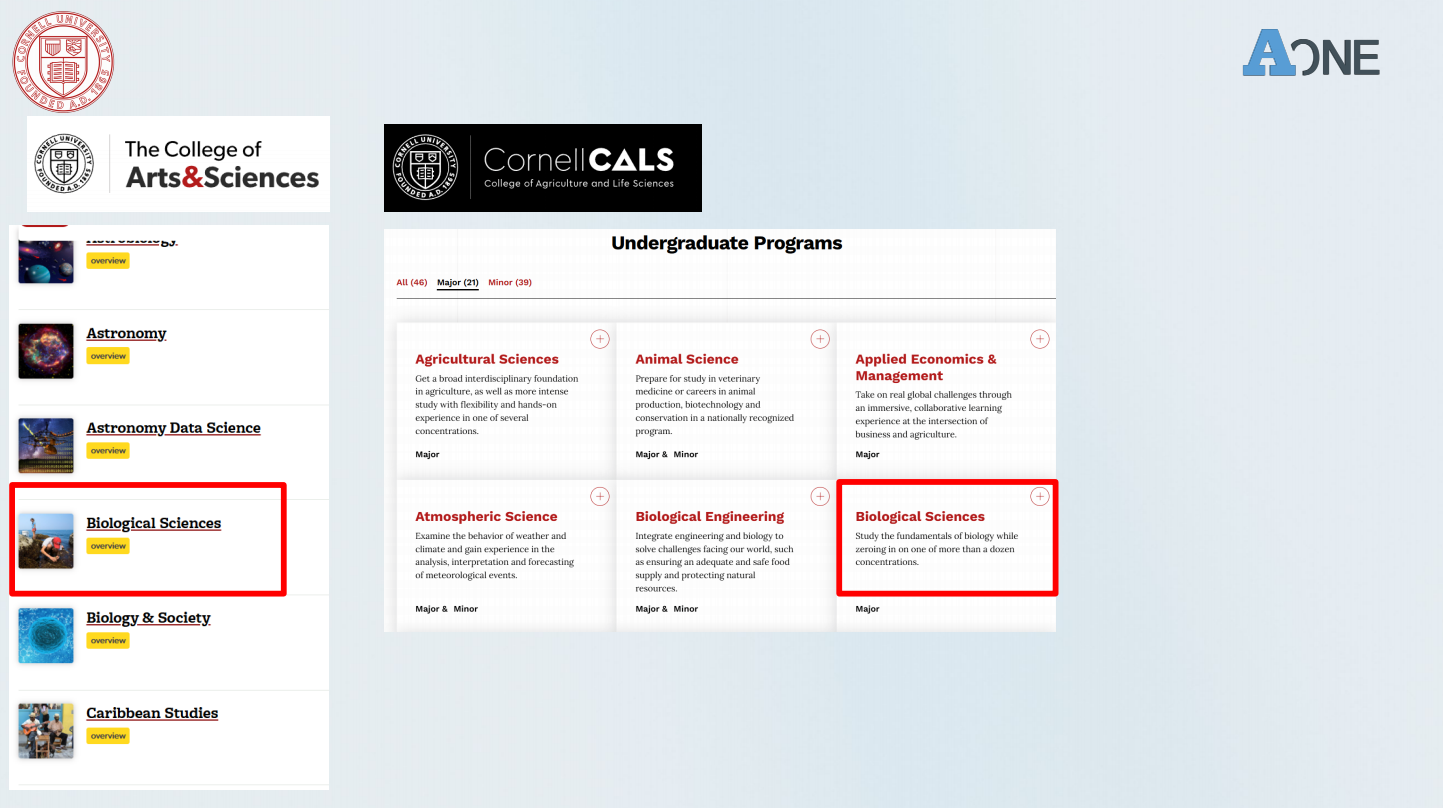
Cornell offers Biological Sciences in more than one college — both in Arts and Sciences and in CALS. If a student is interested in this field, they have a choice about which pathway to pursue.
Based on typical admit rate ranges:
- Arts and Sciences: approximately 7.9%–10.9%
- CALS: approximately 13%–17%
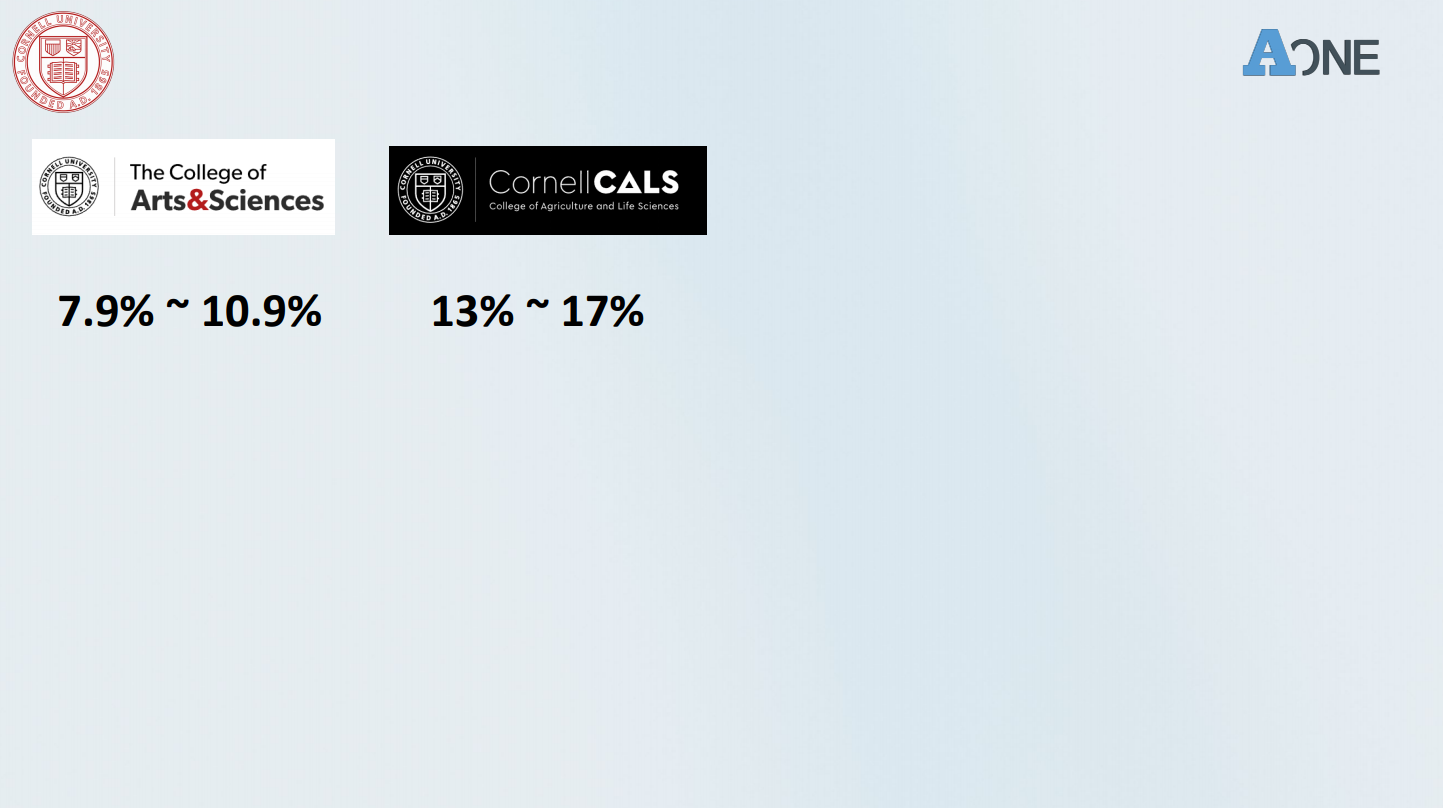
Both are genuinely competitive. But for a student who could reasonably pursue either path, applying through CALS offers a meaningful statistical advantage while still leading to a comparable academic experience. This is the kind of margin that's worth understanding.
Cornell: Computer Science
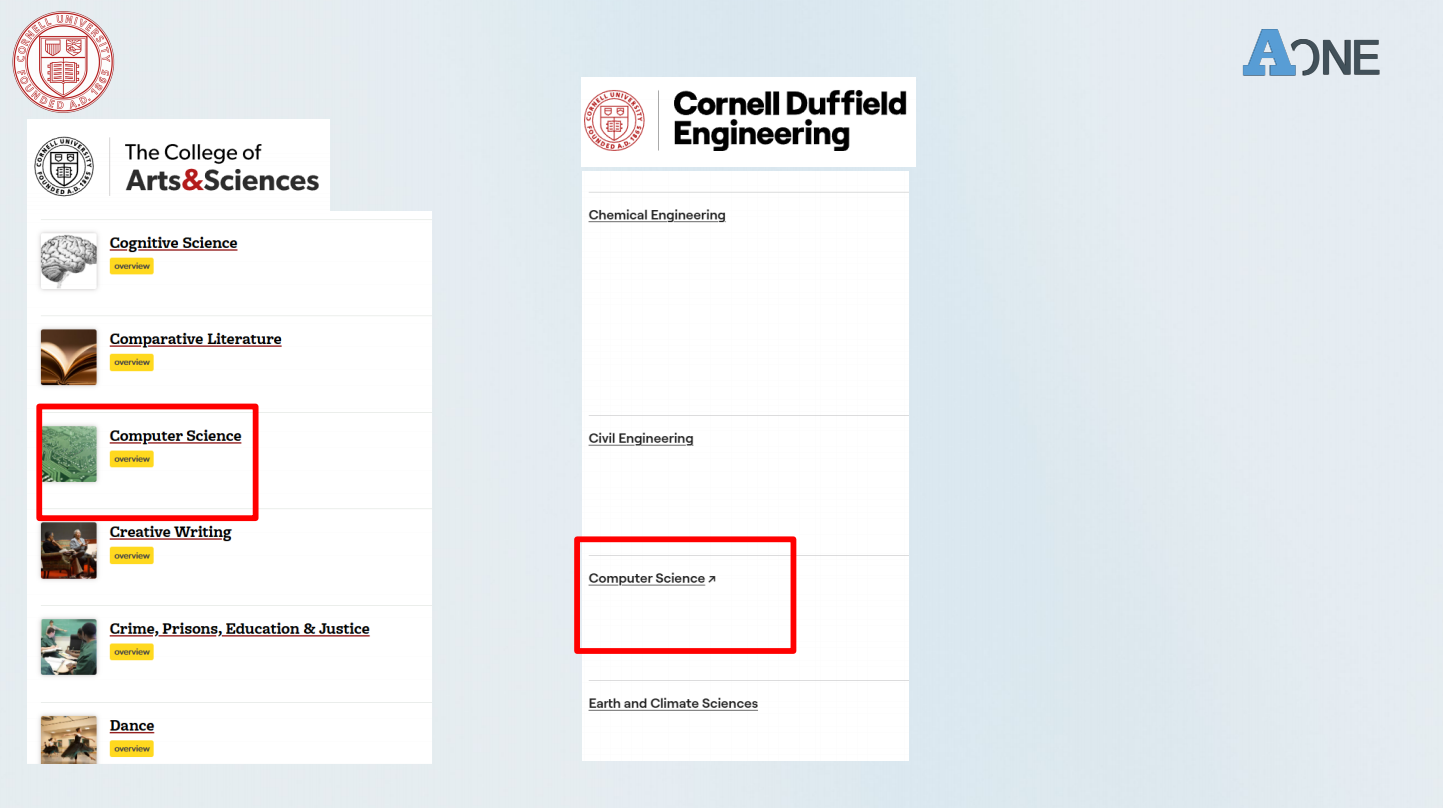
Cornell also offers Computer Science in multiple colleges — both through Arts and Sciences and through the College of Engineering.
Engineering at Cornell is among the more competitive colleges on campus. For a student whose primary goal is studying computer science — rather than engineering as a discipline — applying through Arts and Sciences may offer a slightly better admission outcome while providing a very similar academic track.
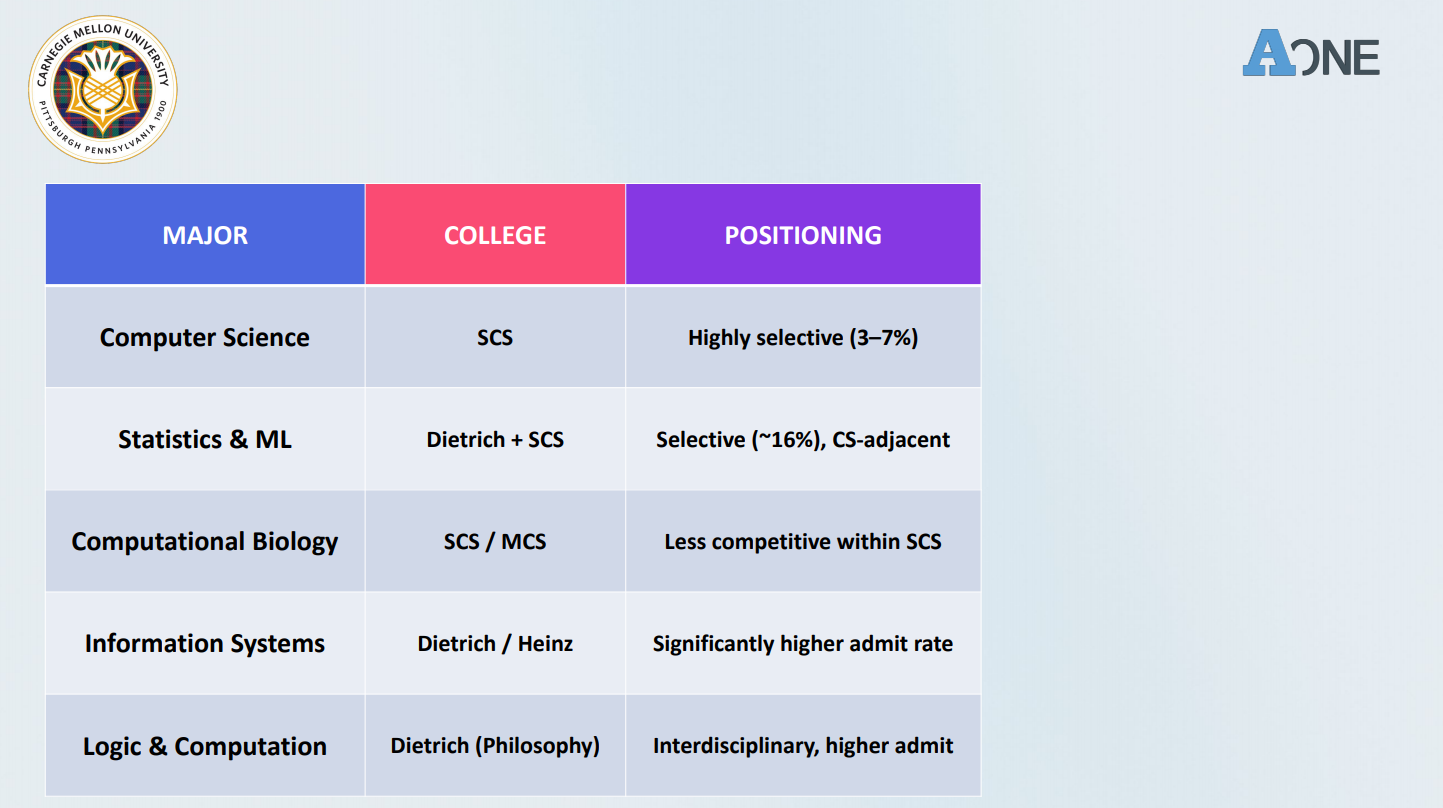
Carnegie Mellon: Computer Science Adjacent

Carnegie Mellon's School of Computer Science is among the most competitive programs in the country. But CMU also offers Logic and Computation within the College of Humanities and Social Sciences (Dietrich College) — the college with the highest admission rate on campus.
This program draws on much of the same faculty and intellectual territory as CS. A student admitted through this pathway would receive a degree with a different title, but would be learning in close proximity to the same academic environment. For students with strong CS interests who want to maximize their chances of gaining admission to CMU, this kind of alternative pathway is worth evaluating carefully.
Major-Neutral Schools: Where Selection Has Little Impact
Finally, there are schools where the intended major — or even the college within the university — has minimal practical effect on admission odds. These are primarily the most selective institutions, where the holistic evaluation process is broad enough that no single structural variable like major selection drives outcomes in a predictable way.
Schools in this category include: MIT, Harvard, Princeton, University of Chicago, Stanford, Yale, Dartmouth, Brown, and Caltech.
That said, it would be an overstatement to claim that major selection has zero influence in every conceivable scenario at these schools. Universities do think about building a class with academic balance. If 79 out of 80 admitted students within a given admissions pool all listed Biology or Neuroscience as their intended major, that extreme skew might create at least some internal pressure to diversify — even at the most holistically-focused institutions. Nothing in admissions is absolute.
But in practical terms, for the schools listed above, attempting to gain an edge through strategic major selection the way you might at Berkeley, Cornell, or Carnegie Mellon is not a reliable approach. These schools evaluate applicants through a different lens.
What This Means When You're Filling Out Your Application
The three-category framework — Major-Sensitive, College-Sensitive, and Major-Neutral — gives families a practical way to approach the major selection field on the Common App.
Before selecting a major or college, it's worth asking:
1. What kind of school is this?
Is it a school where the specific major matters, where the college matters, or where neither has a meaningful effect? That starting point shapes everything else.
2. Does this major or college honestly fit the student's background, interests, and activities?
Strategic choices that feel misaligned with the rest of an application can raise questions with admissions readers. The most defensible strategy is usually the one that's also honest.
3. If the same field appears in multiple colleges at the same university, is there a more favorable pathway that still makes sense academically?
This is where the real strategic opportunity often lies — not in picking an unrelated major, but in identifying an alternative college pathway that leads to essentially the same academic experience with better admission odds.
Major selection isn't everything — but it isn't a formality either. At the right schools, understanding the structure can make a real difference. And if you're unsure how to approach this decision for your specific target schools, that's exactly the kind of question worth working through carefully.
Frequently Asked Questions
Does the major you list on the Common App affect your chances at all top schools?
No — it depends entirely on the school's structure. Schools like MIT, Harvard, Stanford, and Yale are considered major-neutral, meaning major selection has minimal practical effect on admission odds. Schools like UC Berkeley, Cornell, and Carnegie Mellon have specific majors or colleges where selection matters significantly. Understanding which category your target school falls into is the essential first step.
Is it ever a good strategy to list a "less competitive" major at UC Berkeley to improve your odds?
At UC Berkeley, some students deliberately avoid high-demand majors like Computer Science or Economics within Letters and Science, thinking a different major is safer. In some cases, however, directly selecting the major that genuinely fits your profile may actually be just as viable — or slightly better — than choosing a detour. The key is honest alignment between your major selection, your activities, and your academic interests. Misdirection that doesn't match the rest of your application tends to raise questions rather than help.
How do I know which college to apply to if the same major appears in multiple colleges at Cornell or Carnegie Mellon?
Start by comparing typical admit rate ranges for each college — Cornell's CALS, for instance, has historically shown higher admit rates than Arts and Sciences for overlapping fields. Then evaluate whether the academic experience and degree program in each college genuinely fits what the student wants to study. The goal is finding a pathway that improves your admission odds while still making sense for the student's actual academic goals — not just optimizing the number on paper.
At A ONE Institute, we help students navigate major and college selection as part of a complete application strategy — starting from wherever they are. If you have questions about how to approach this decision for your specific target schools, we're here to help.
intended major
college admissions strategy
major selection
admit rate
