
The Reports Are In. The Picture Is Uncomfortable.
At A ONE Institute, we don't usually open with macroeconomic research. But the conversation families need to have about why studying matters right now can't be separated from what's actually happening in the labor market — and several major reports have laid out a picture that's difficult to argue with.
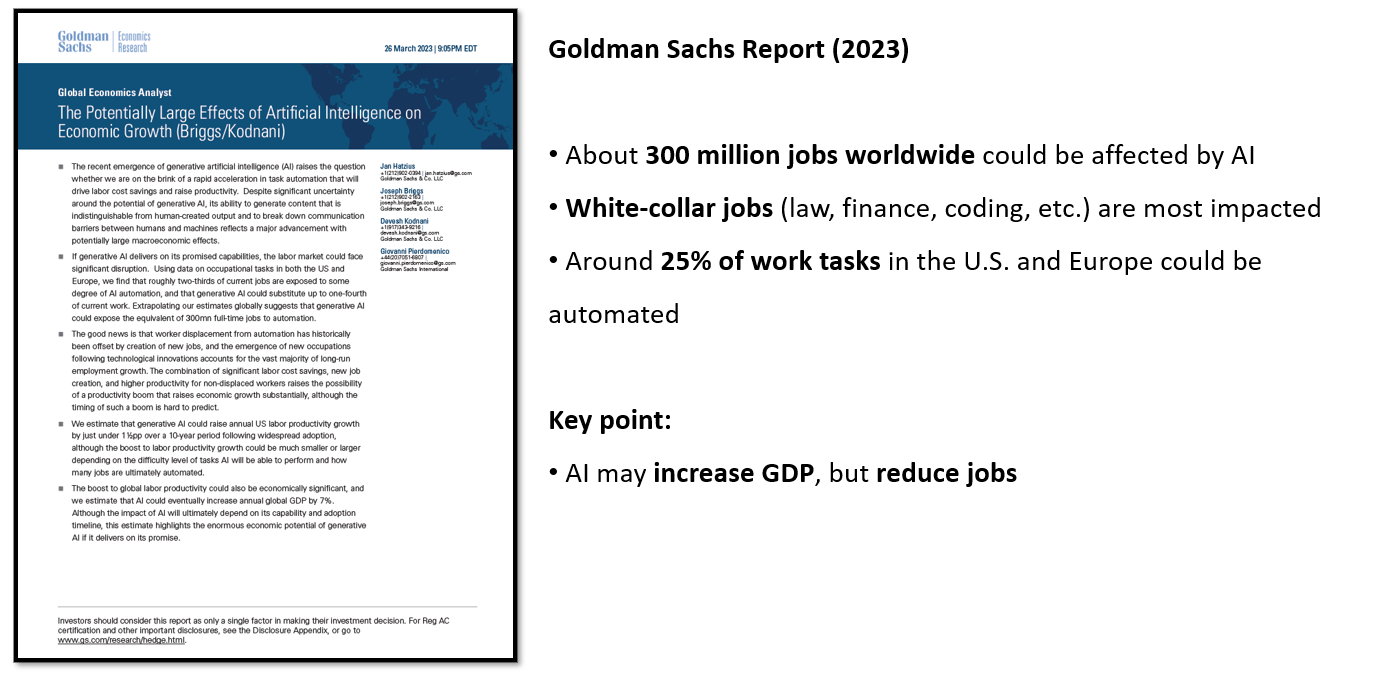
Goldman Sachs (2023): AI could affect up to 300 million jobs globally. White-collar occupations are the most exposed. Approximately 25% of the labor in the US and Europe could be automated. The likely outcome is a scenario where employment falls while GDP rises — a decoupling that would be historically unprecedented.
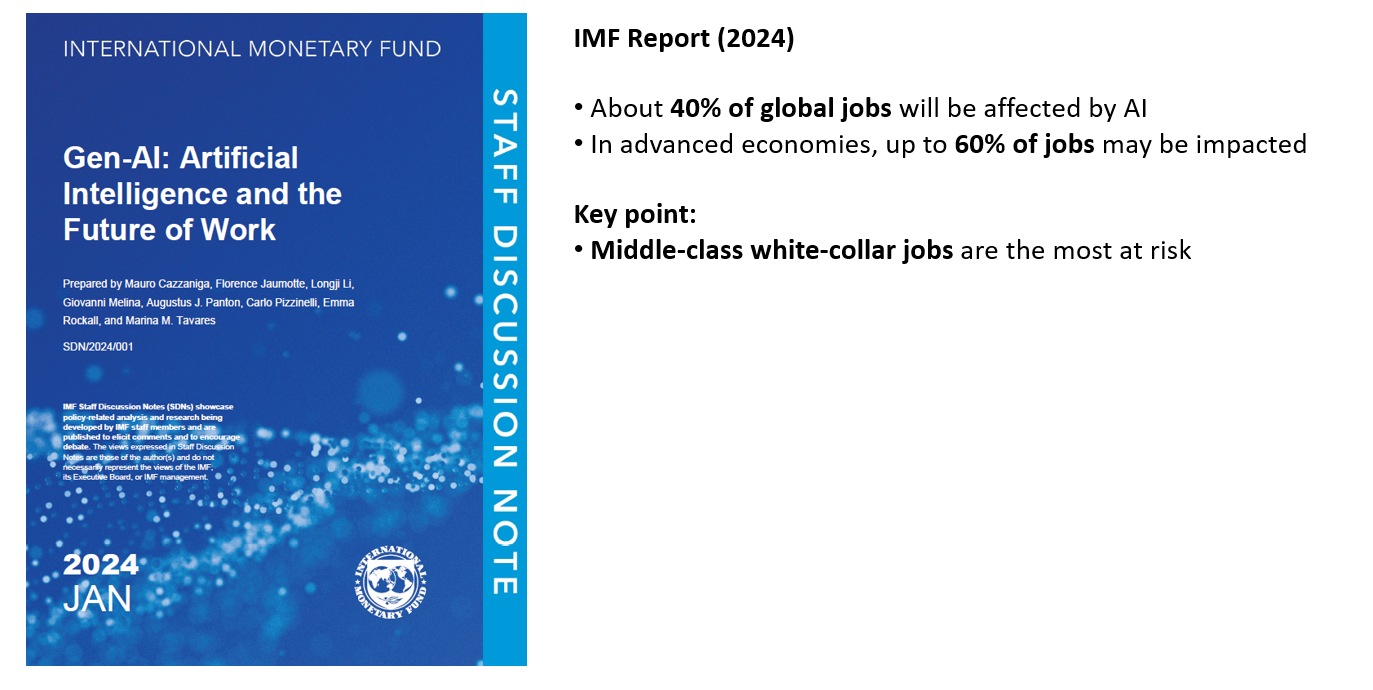
IMF: Globally, roughly 40% of jobs face meaningful AI-related disruption. In advanced economies, that figure climbs to approximately 60%. The group at greatest risk: white-collar middle-class workers.
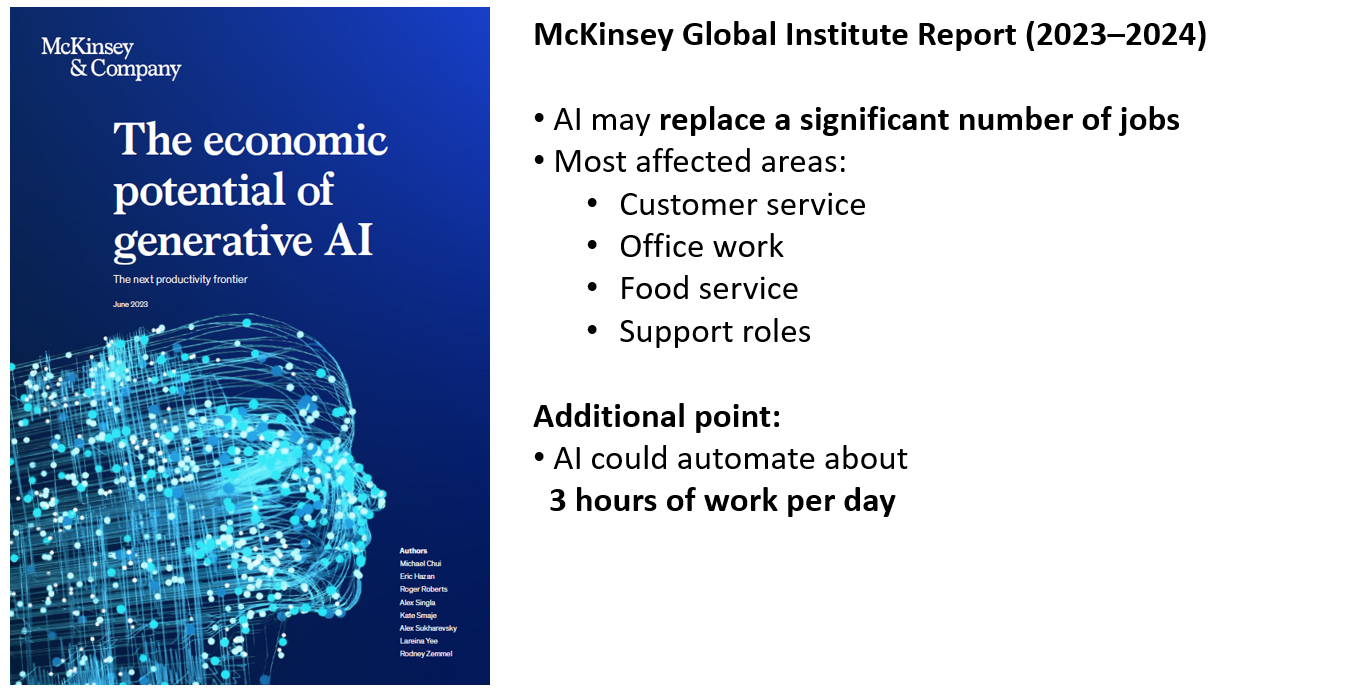
McKinsey: Large-scale job displacement is coming, concentrated in customer service, administrative work, food service, and support roles. A scenario of three-hour average working days — because productivity per hour increases so dramatically — is presented as plausible.
Citron Research (February 2026): AI-driven productivity will explode corporate output. Systems that don't take sick days, don't need health insurance, don't require breaks, and work continuously will dramatically reduce per-unit labor costs. The projection: US unemployment above 10%, the S&P 500 declining roughly 38%, mass layoffs in white-collar sectors, and widespread conversion of traditional employment into gig-structure work. Fields at acute risk include travel booking, financial advisory, tax services, and legal services. The projected timeline centers around 2028.
The Citron report is contested within economics — there are credible arguments that specific projections are too aggressive or too precise. But the directional consensus across all four reports is essentially the same: white-collar middle-class employment is the most vulnerable segment of the labor market to AI disruption, and the disruption is already underway.
The Chain That's Breaking
For most of modern economic history, a basic logic held: labor — including knowledge labor — reliably produced income. Work, and you get paid. The harder and smarter you worked, the more you got paid. This chain between labor and income was the engine of the middle class.
AI is severing that chain for a specific and important reason: it can perform knowledge labor faster, cheaper, and at greater scale than humans can, without the costs — time, salary, benefits, fatigue — that make human knowledge labor expensive. The work still gets done. The income stops flowing to the same people.
What happens to an economy when the middle of the income distribution shrinks? The people who were in the middle mostly shift downward. A small minority shift upward. The gap between the top and the bottom widens sharply. This is what economists and political theorists are calling techno-feudalism — a new version of the old feudal structure, where access to the tools of production (in this case AI systems, robotics, compute power, data, and energy) functions like land once did: it determines who has power and who works for those who do.
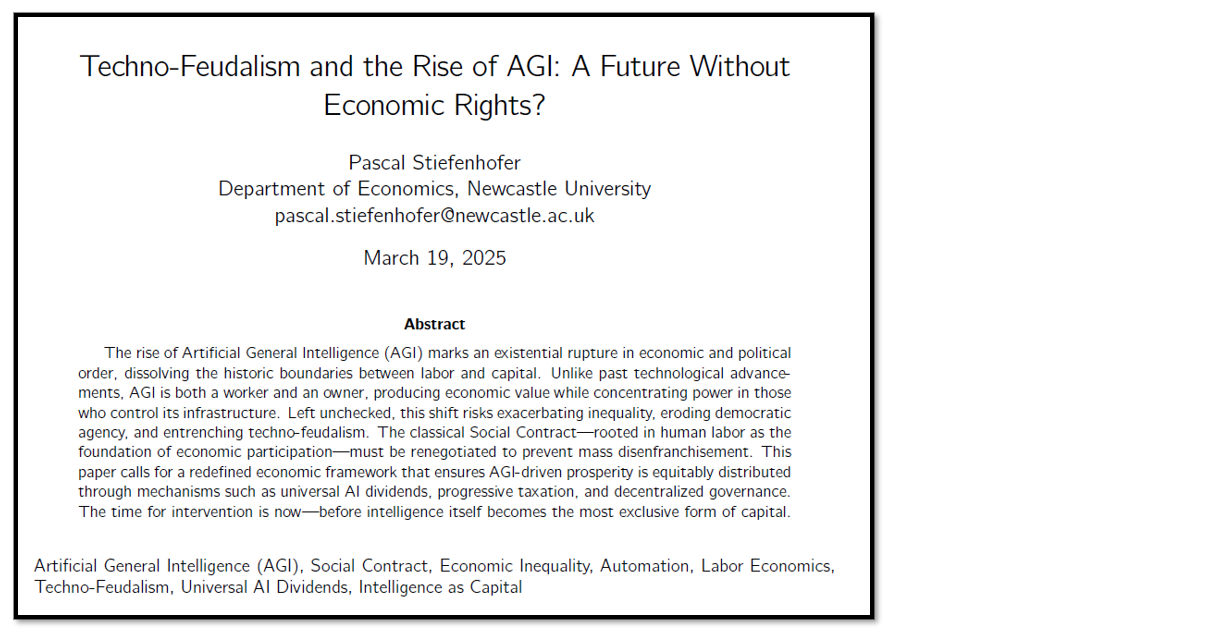
This isn't a fringe concern. It's the mainstream projection across Goldman Sachs, the IMF, McKinsey, and a growing body of economic analysis.
The US Income Picture Right Now
To understand what's at stake, it helps to see where the income distribution currently stands.
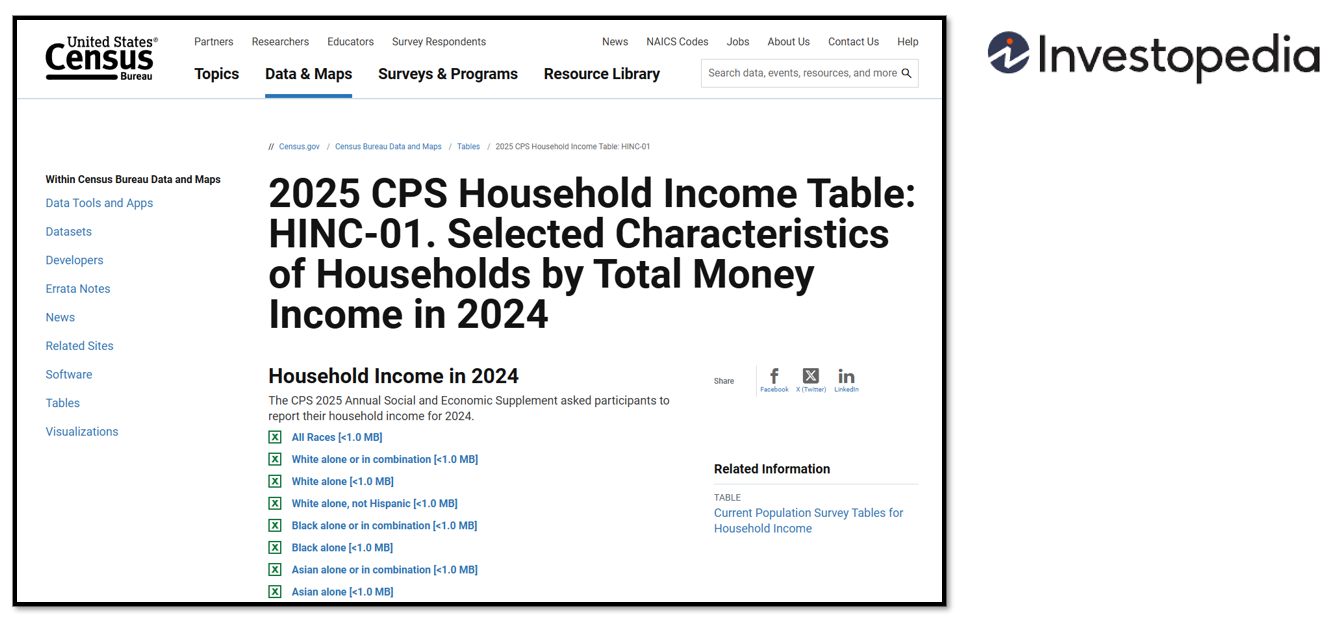
Based on US Census and Investopedia data for 2024-2025:
The average US household income is approximately $121,000 — which translates to roughly 181 million Korean won at a 1,500 exchange rate. That figure is high because the distribution is heavily skewed upward by very high earners pulling the average.
The median household income is approximately $83,592 — meaningfully lower than the average, which tells you that the top end is pulling the average up sharply.
57 million households earn more than $100,000 annually, out of approximately 130 million total US households.
The top 10% threshold is approximately $251,000 in household income. The top 5% threshold is approximately $330,000. The top 1% threshold is approximately $659,000.
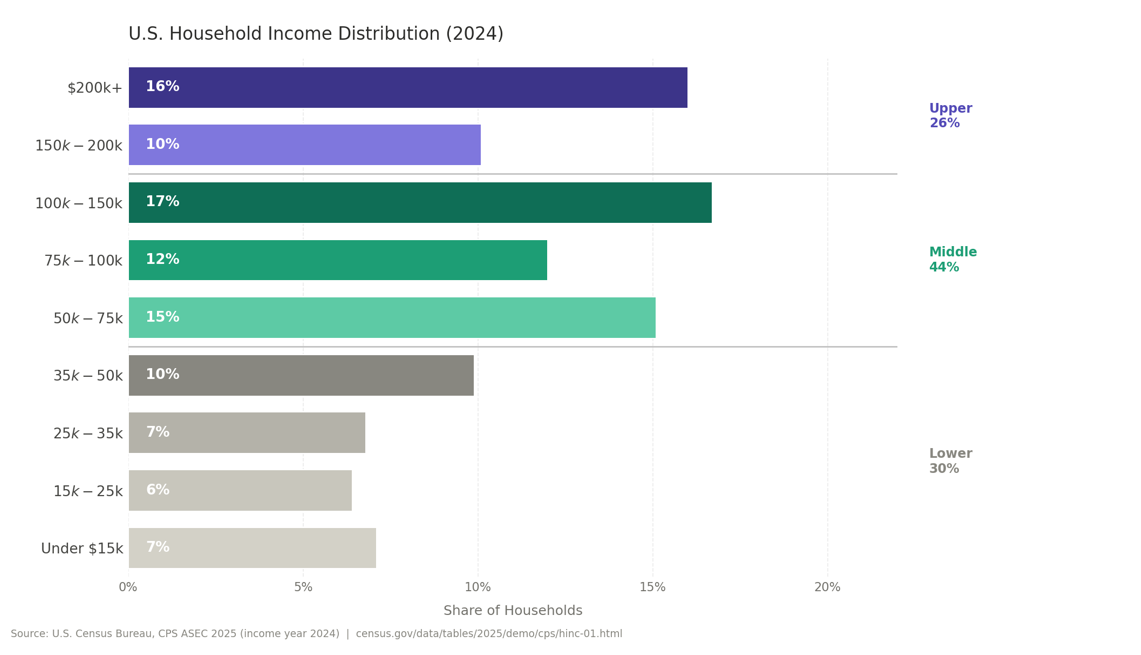
The segment that every major AI-impact report identifies as most at risk — the white-collar middle class — sits in the income band that's hardest to define precisely but roughly spans $60,000 to $200,000 in household income. That's the segment projected to contract most significantly as AI displacement accelerates.
The movement is not symmetric. Going down from the middle is easy — jobs disappear, incomes compress, the slide is rapid. Going up from the middle is hard — and getting harder. The number of people who successfully make that upward transition from a standard middle-class position to genuine economic security in the upper tier will be small, and the path will require capabilities that are increasingly demanding.
Three Paths to the Upper Tier — And Why All of Them Require Intensive Academic Preparation
The question worth asking isn't just "what's going wrong" — it's "what actually gets a student from the middle of the income distribution to the upper tier in an AI-disrupted economy?" There are three realistic paths, and they all have one thing in common.
Path 1: Scarcity — Enter Fields Where AI Can't Replace You
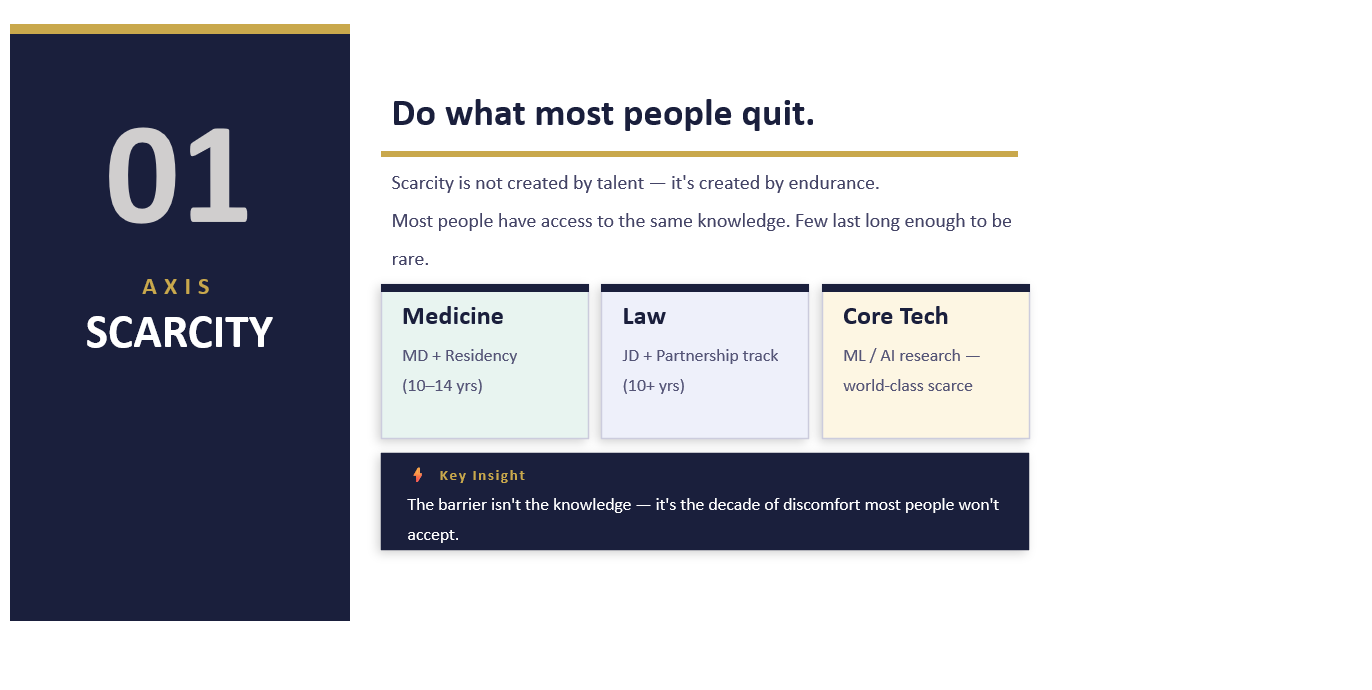
The most reliable protection against AI displacement is developing capabilities that AI cannot replicate at the level required. This means extreme depth in fields with very high barriers to entry — where the credential, the experience, or the judgment required to function at the top level takes a decade or more of genuine work to develop.
Medical specialization is one example — not general practice, where a significant amount of work is already being handled more efficiently by AI-assisted diagnostics, but the level of clinical judgment, technical skill, and domain expertise that comes from years of residency and specialized training in a field where AI is a tool rather than a replacement.
Senior legal practice is another — not the document review and legal research that AI is already handling more efficiently than junior associates, but the partner-level judgment, client relationship management, and strategic legal reasoning that clients actually pay premium rates for.
AI research itself is a third — not general software development or basic data science, but genuine ML research, model development, and the kind of deep technical expertise that builds and advances the systems doing the disrupting.
The common thread: each of these paths requires roughly a decade of sustained high-level preparation, starting in college and extending through graduate or professional training. The vast majority of people who begin these paths don't finish them. That's exactly what makes completion valuable. Scarcity, in a world where AI handles an increasing share of cognitive work, is the most durable form of economic protection.
Path 2: Leverage — Multiply What You Already Have
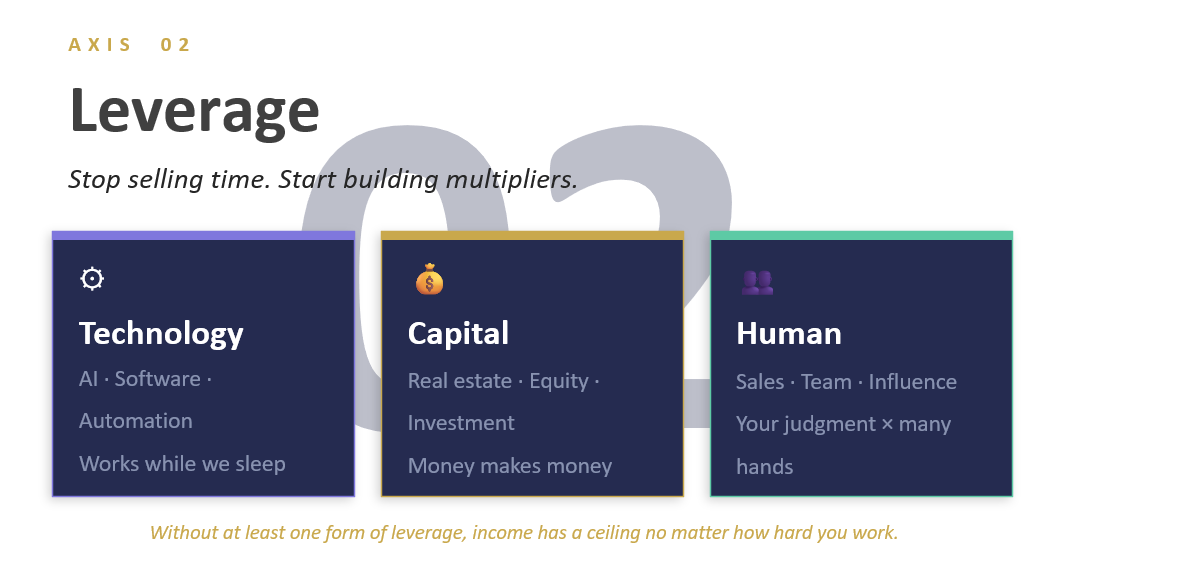
Leverage is what allows you to produce output that exceeds what your direct labor hours would generate. There are three forms worth understanding:
Technology leverage — building systems, products, or processes that continue generating value while you sleep. Software is the canonical example, but any automated system that runs without continuous direct input qualifies. Using AI tools to scale your own capabilities — generating outputs in an hour that would previously take a week — is the most accessible current form of this.
Capital leverage — deploying financial resources so that money generates more money without proportional labor input. As AI increasingly handles work that was previously labor-dependent, capital-based income will become a larger share of total economic output. Understanding how capital works, how to build it, and how to deploy it effectively becomes more valuable as the return to raw labor declines.
People leverage — building the leadership capacity to direct and coordinate the work of others at scale. This doesn't require large numbers of direct reports. It requires the ability to communicate persuasively, to build trust, to align groups around shared goals, and to get genuine effort from people who could choose to disengage. These capabilities compound: a person who directs ten people effectively produces ten times the output of someone working alone, holding individual capability constant.
All three forms of leverage require a substantial foundation of knowledge, analytical skill, and judgment. Technology leverage requires technical depth. Capital leverage requires financial understanding and analytical sophistication. People leverage requires the communication skills, intellectual breadth, and credibility that come from real academic development. None of these are accessible without serious preparation.
Path 3: Combine Depth and Leverage
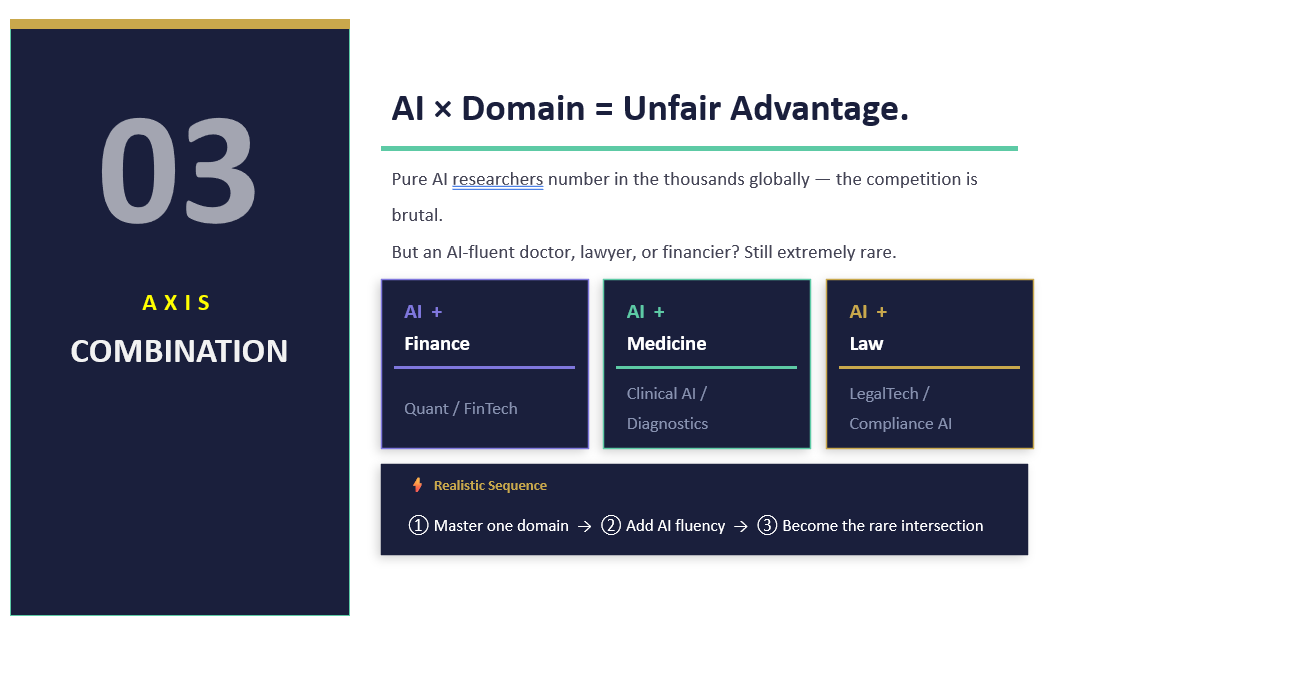
The third path is the synthesis that's most accessible to students who are currently in middle or high school: develop genuine expertise in one domain, and then layer in the technology leverage to multiply it.
The combinations that look most powerful in the current environment:
A finance professional with genuine depth in AI and machine learning — not just a user of financial software, but someone who can build and customize tools that give them a fundamental productivity advantage over peers.
A physician who deeply understands AI-assisted diagnostics, genomics, or robotic surgery — not just as a user of these tools, but as someone with enough technical understanding to evaluate, adopt, and eventually direct their development in a clinical context.
A lawyer who can deploy AI-powered legal research and document analysis tools at a level of sophistication that dramatically increases the quality and speed of their work — making them significantly more productive than peers who are using the same tools at a surface level.
The insight here is that depth alone is increasingly insufficient at the standard level, and AI literacy alone is insufficient without domain knowledge. The combination — near-expert domain knowledge plus genuine technical leverage capability — is where real economic security in the coming decade will live.
Why This Matters Now, For Students Who Are Currently in School
The uncomfortable truth is this: the window for making the transition from middle-tier income to upper-tier income is narrowing. The difficulty of that transition is increasing. And the amount of preparation required to achieve genuine depth or meaningful leverage capability is substantial — it starts in middle and high school, continues through college, and extends into the decade after graduation.
This isn't an argument for anxious, joyless studying. It's an argument for understanding what studying is actually for, at a moment when that clarity matters more than usual.
The families in the current upper tier of income distribution have advantages that compound. Capital begets capital. Networks open doors that are closed to those outside them. The starting position matters enormously. For students who don't begin from that position — who don't have capital leverage or established networks to fall back on — the path to genuine economic security runs through one thing: the depth of knowledge and capability that only comes from sustained, serious academic preparation.
There's no softer version of this that's honest. The reports are consistent. The direction of travel is clear. The time to build the foundation is now, while the window is still open and the options are still on the table.
At A ONE Institute, we help students build the academic foundation that makes every one of these paths accessible. If you want to think through what this means specifically for your student's trajectory, we're here.
AI and jobs
economic disruption
academic preparation
future of work
