
Why the Published SAT Ranges Aren't Enough
At A ONE Institute, one of the most common research tasks families do on their own is pulling up the Common Data Set for their target schools. It's a reasonable starting point — every college publishes 25th and 75th percentile SAT and ACT scores, and that data is publicly available.
The problem is that those ranges reflect the entire admitted class. When you're an Asian or Korean applicant competing in a pool where test scores carry significant weight, the published 25th percentile score is not your floor. In practice, the competitive threshold for Asian students tends to run meaningfully higher than what the Common Data Set suggests.
There's no official published data that breaks out SAT scores by ethnicity for admitted students — colleges don't release that. So what we're sharing here is a different kind of data: the lowest SAT score among A ONE Institute students admitted to each school over the past three years. Not the average. Not the range. The floor — the lowest score among students who actually got in, across all admission types and all student profiles.
This isn't a universal standard. Every student's situation is different, and variables like application round, student background, essay quality, and extracurricular profile all matter. But as a reference point for understanding where the bar actually sits for competitive Asian applicants, this data is more useful than the published averages.
A Note on the Data
Before getting into the numbers, a few important caveats.
These are minimum scores — not averages, not targets. The students behind these numbers had full application profiles that supported their admission. A score at the floor doesn't mean a score at the floor is sufficient.
The data covers the past three years, which includes cycles when test-optional policies were in effect. The scores listed reflect students who submitted test scores regardless of whether submission was required.
Student-specific variables — domestic vs. international status, gender, early vs. regular vs. QuestBridge admission — are deliberately excluded to keep the data readable. Factoring those in would add complexity without adding clarity.
With that context, here's what the data shows.
SAT Score Floors by School: A ONE Institute Admitted Students
The Highest-Tier Schools — Minimum 1550 Required
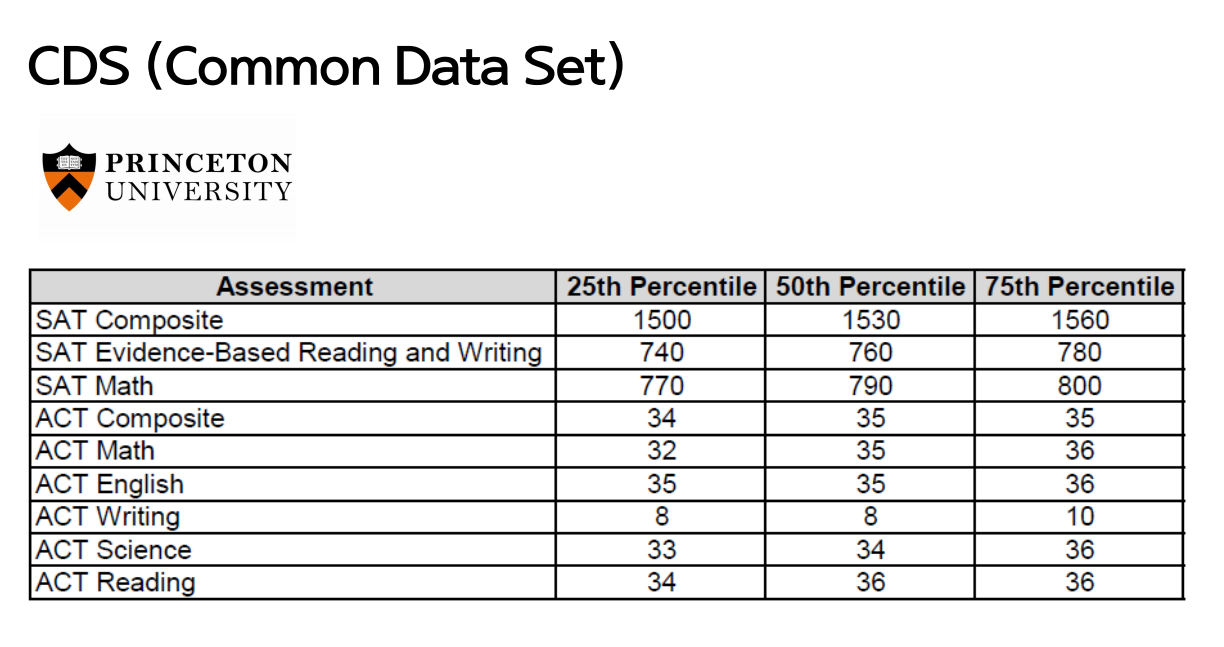
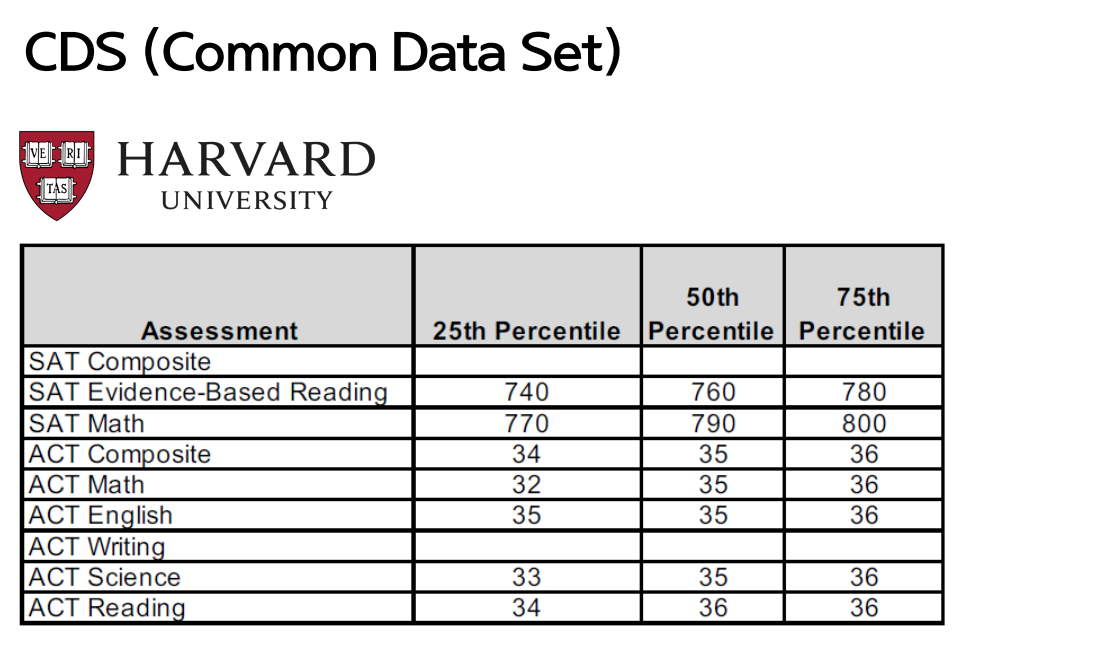
For Harvard, Yale, Princeton, MIT, Stanford, and Columbia, no A ONE Institute student with a score below 1550 has been admitted in the past three years. More specifically:
- Harvard: 1580 (lowest admitted score)
- Princeton: 1580
- Yale: 1560
- MIT: 1560
- Stanford: 1550
- Columbia: 1550 (Columbia should be grouped with Harvard and Yale in terms of score expectations, despite where it sometimes appears in rankings)
The practical read: for these schools, 1550 is a floor, not a target. The students admitted at these scores had other application elements — essays, research, extracurriculars — that were exceptionally strong. For most competitive Asian applicants, thinking about 1560–1580 as the realistic working range is more accurate.
Strong Selective Schools — Generally 1500–1540
- UPenn: 1550 (minimum submitted score among admitted students)
- Duke: 1550
- Northwestern: 1520
- Brown: 1530
- Cornell: 1520
- Dartmouth: 1550
- University of Chicago: 1530 (essay quality can compensate somewhat at UChicago specifically)
- Rice: 1500
- Vanderbilt: 1520
- Carnegie Mellon: 1500 (minimum over the past three years; older data shows slightly lower floors)
- Johns Hopkins: 1480
Johns Hopkins stands out here — at 1480, it's the lowest floor among schools in this tier at A ONE Institute, reflecting the volume of JHU admits we work with and the range of profiles that get in. That said, 1480 is still a single data point representing a student with exceptional other qualifications.
High-Caliber Schools — 1450–1500 Range
- Notre Dame: 1480
- Washington University in St. Louis: 1500
- Emory: 1510
- Georgetown: 1500
- University of Michigan: 1450
For these schools, students in the 1450–1500 range have been admitted — but again, these are outliers with strong profiles elsewhere, not typical cases.
UC Schools — A Different Calculation
UC Berkeley and UCLA are officially test-blind for admissions decisions. Submitted scores aren't used in admission evaluation.
That said, many applicants to these schools do take and submit SAT scores — and among A ONE Institute students who submitted scores and were admitted:
- UC Berkeley: lowest submitted score was 1450
- UCLA: lowest submitted score was 1380
The 1380 UCLA case is notable. That student would almost certainly have been better served by not submitting their score at all — and under UC's test-blind policy, the score had no formal bearing on the outcome. For UC applicants scoring below 1500, the strategic question isn't "how do I improve my score" but "should I submit at all."
Two Common Misconceptions — Answered Directly
"Is SAT better to submit than ACT?"
No. This is a myth that circulates persistently, and it has no basis in how colleges actually evaluate applications.
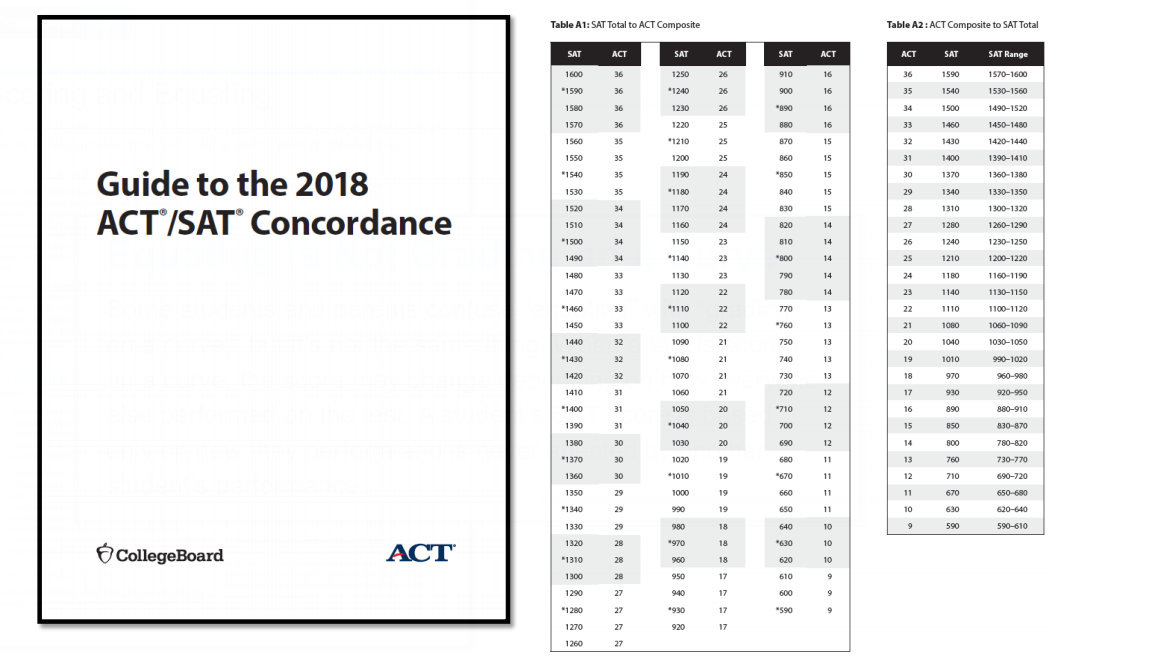
Admissions offices use a conversion table — largely based on the concordance table jointly developed by College Board and ACT — to evaluate SAT and ACT scores on equivalent terms. A 35 on the ACT and a 1540 on the SAT are treated as comparable. Neither test carries a structural advantage over the other.
The right test for any student is whichever one produces a higher score given their strengths. If you perform better on SAT-style math and reading, prepare for the SAT. If ACT's format and pacing suit you better, prepare for the ACT. Splitting preparation time between both tests is almost always a mistake — it dilutes effort without meaningfully improving outcomes on either.
Pick one. Prepare seriously. Submit your best score.
"Is the December SAT easier because seniors aren't taking it?"
No — and understanding why this misconception exists is worth a minute.
The reasoning goes like this: seniors who've already submitted Early applications are largely done testing by December. So the December test pool skews younger and less experienced. If the high-scorers aren't there, doesn't that create a curve that benefits everyone else?
College Board addresses this directly with something called score equating — and it's important to understand what this actually means.
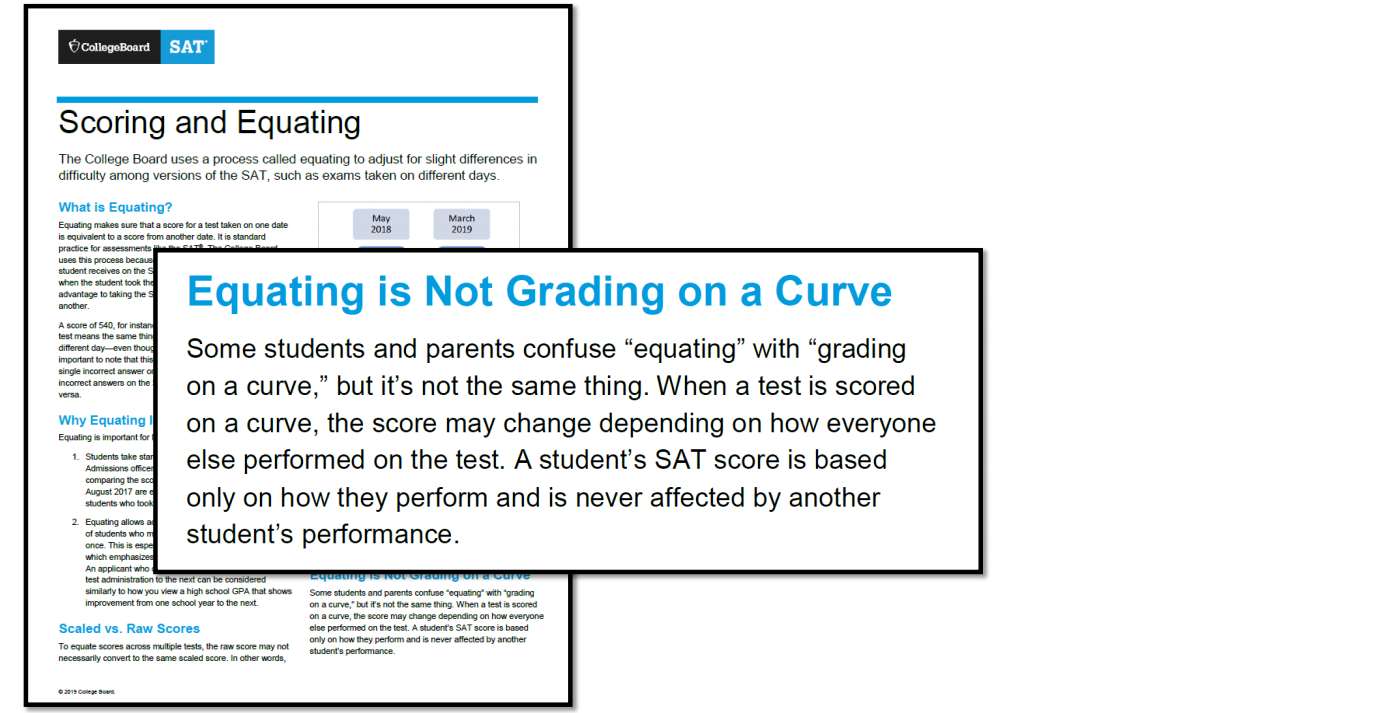
Equating is not a post-test curve. It's not College Board looking at the results after students take the test and adjusting scores based on how everyone performed. That would be a curve, and College Board explicitly states they don't do that.
What equating actually is: College Board calibrates each test before it's administered. They pre-test questions, assess difficulty levels, and set the score conversion table in advance so that a 540 in math on one exam represents the same level of achievement as a 540 in math on any other exam — regardless of when it was taken or who took it.
The practical example: on a harder math section, you might be able to miss two questions and still score 770. On an easier section, missing one question might land you at 770. This isn't a post-hoc adjustment — the conversion is built into the test design from the start.
What this means for test timing: the month you take the SAT has no structural impact on your score. December isn't easier. June isn't harder. August isn't a disadvantage. College Board's equating process is designed specifically to make all of those equal.
The right time to take the SAT is when you're best prepared. That's it. Don't chase a testing window based on theories about who else will be in the room.
How to Use This Data
These numbers are reference points, not requirements. A few ways to think about them:
If your score is well above the floor for your target schools, test scores are likely not your limiting factor. Energy is better spent on application components where you have more room to differentiate.
If your score is near or below the floor, that's a signal worth taking seriously. It doesn't mean admission is impossible — but it means other elements of the application need to be especially strong, and continuing to improve your score before application deadlines is worth prioritizing.
If you're applying to UC schools and your score is below 1500, seriously consider whether submitting is strategically wise. UC Berkeley and UCLA are test-blind — a low submitted score can only hurt the perception of your application even if it's not formally evaluated.
If you're debating SAT vs. ACT, take a full-length practice test of each, compare results, and commit to the one where your performance is higher. Then prepare seriously for that test alone.
The data here reflects what has actually happened — not theoretical ranges, not published averages. Use it as a calibration tool, not a ceiling.
At A ONE Institute, we work with students on both SAT and ACT preparation through ETT (ett-test.com), and on building the full application profile that makes test scores matter less at the margin. If you have questions about score strategy for specific schools, leave them in the comments and we'll address them in a future video or directly.
SAT
SAT scores
college admissions
test prep
Ivy League requirements
