
The Surface-Level Answers Are All Wrong
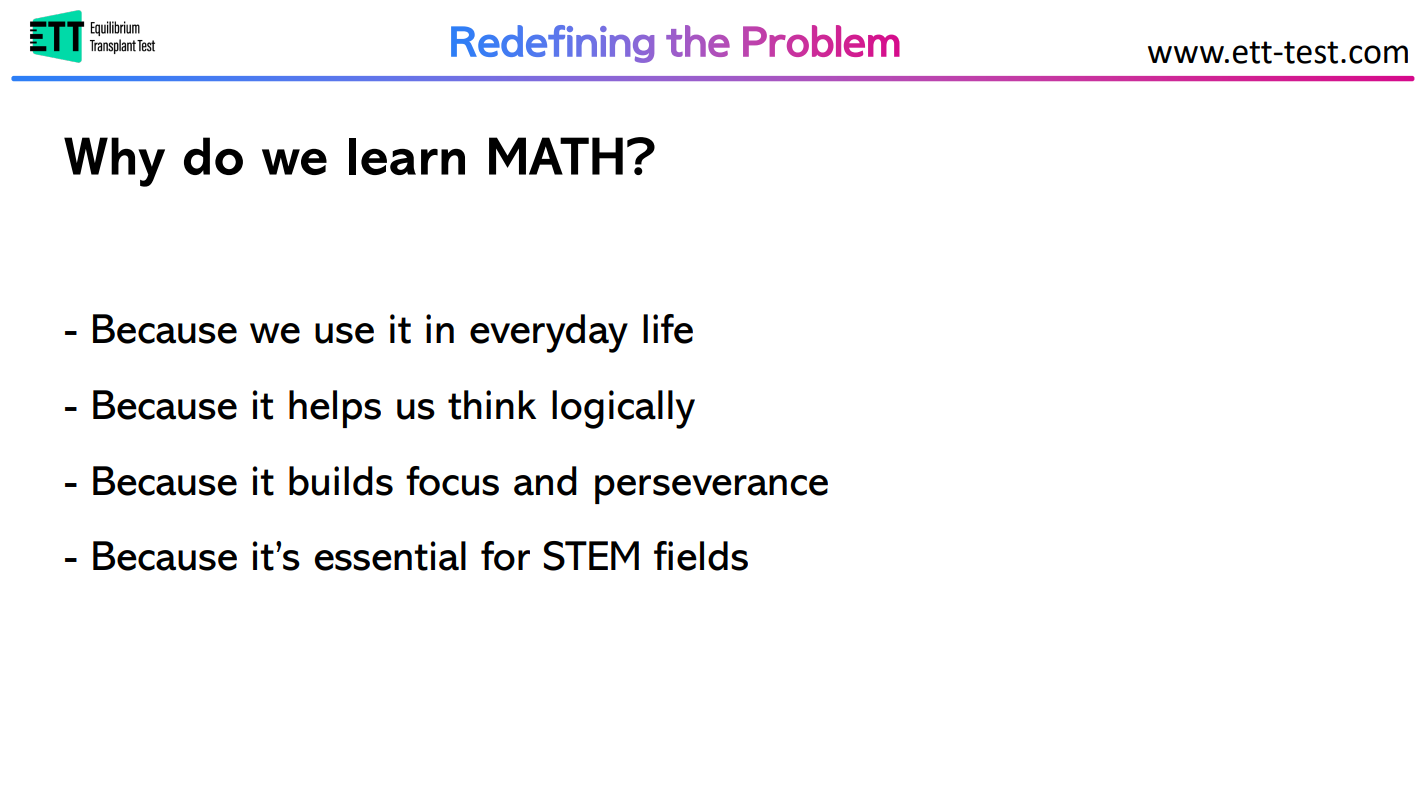
At A ONE Institute, when we talk about why students should study math seriously, the standard answers come up almost immediately: it helps with everyday finances, it builds logical thinking, it develops concentration and persistence, it's essential for STEM fields.
All of that is true. None of it is the point.
There's a deeper reason — one that sits above all of those justifications and explains something more fundamental about what mathematical training actually develops in a student. And in the age of AI, that deeper reason has become more important than it's ever been.
To explain it, let me start with a math problem.
A Simple Equation With a Surprising Answer
Here's a basic equation: ax = b
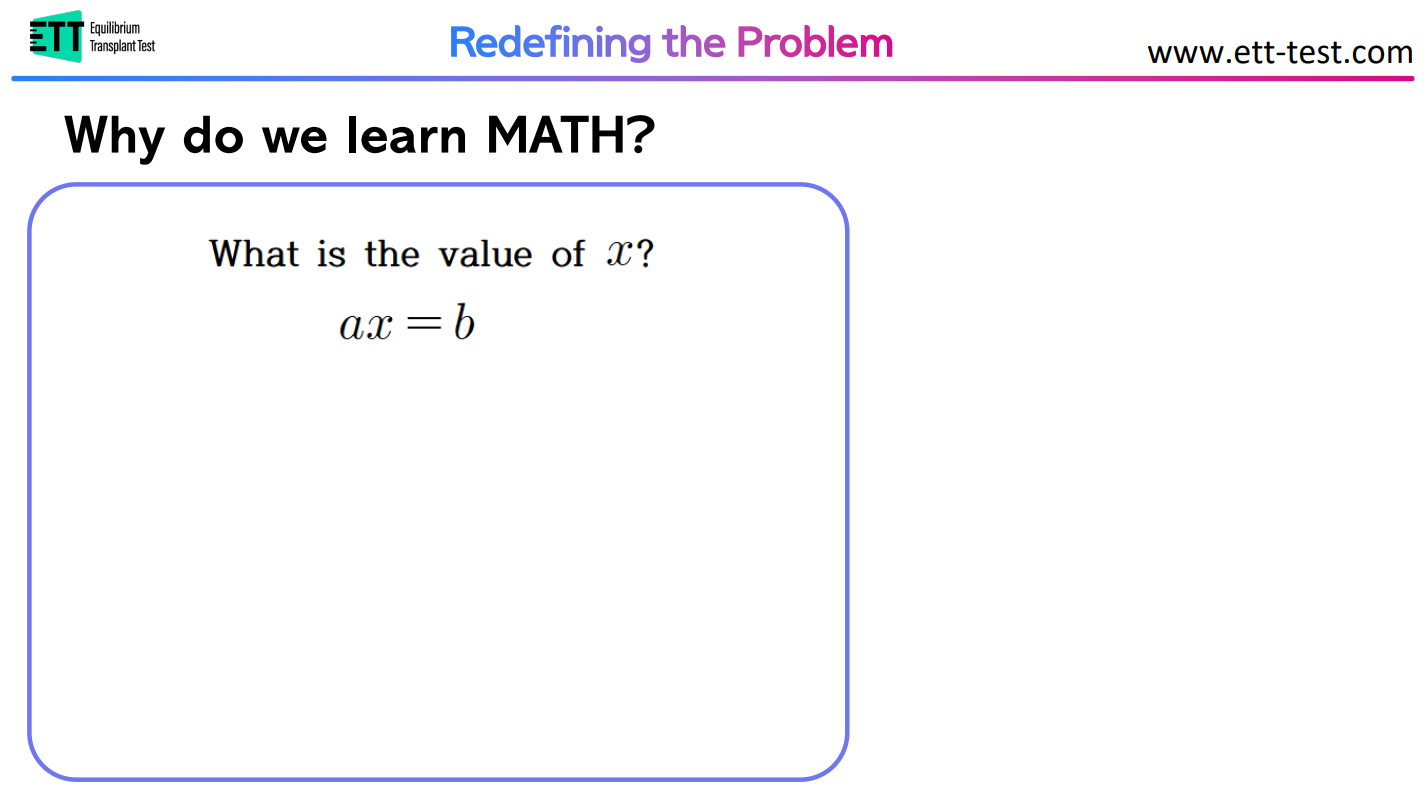
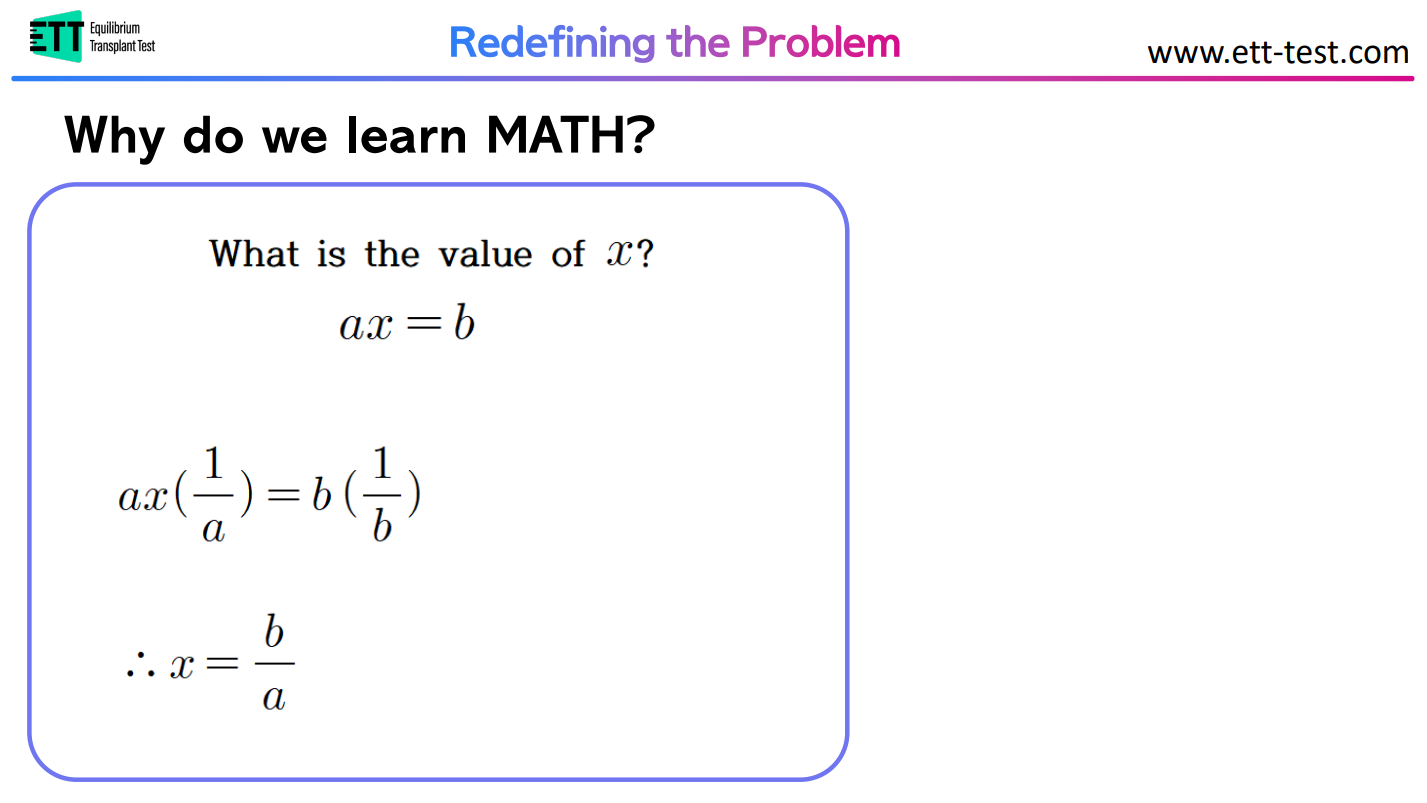
Ask a strong math student to solve it, and they'll look at you like you're wasting their time. Two seconds later: x = b/a. Done.
Except that's not the full answer.
That solution only works when a ≠ 0. The moment you allow a to equal zero, the problem splits into two completely different cases:
Case 2: a = 0 and b = 0 The equation becomes 0x = 0, which is true for any value of x. The answer is infinitely many solutions.
Case 3: a = 0 and b ≠ 0 The equation becomes 0x = b, where b is some non-zero number. That's impossible. The answer is no solution.
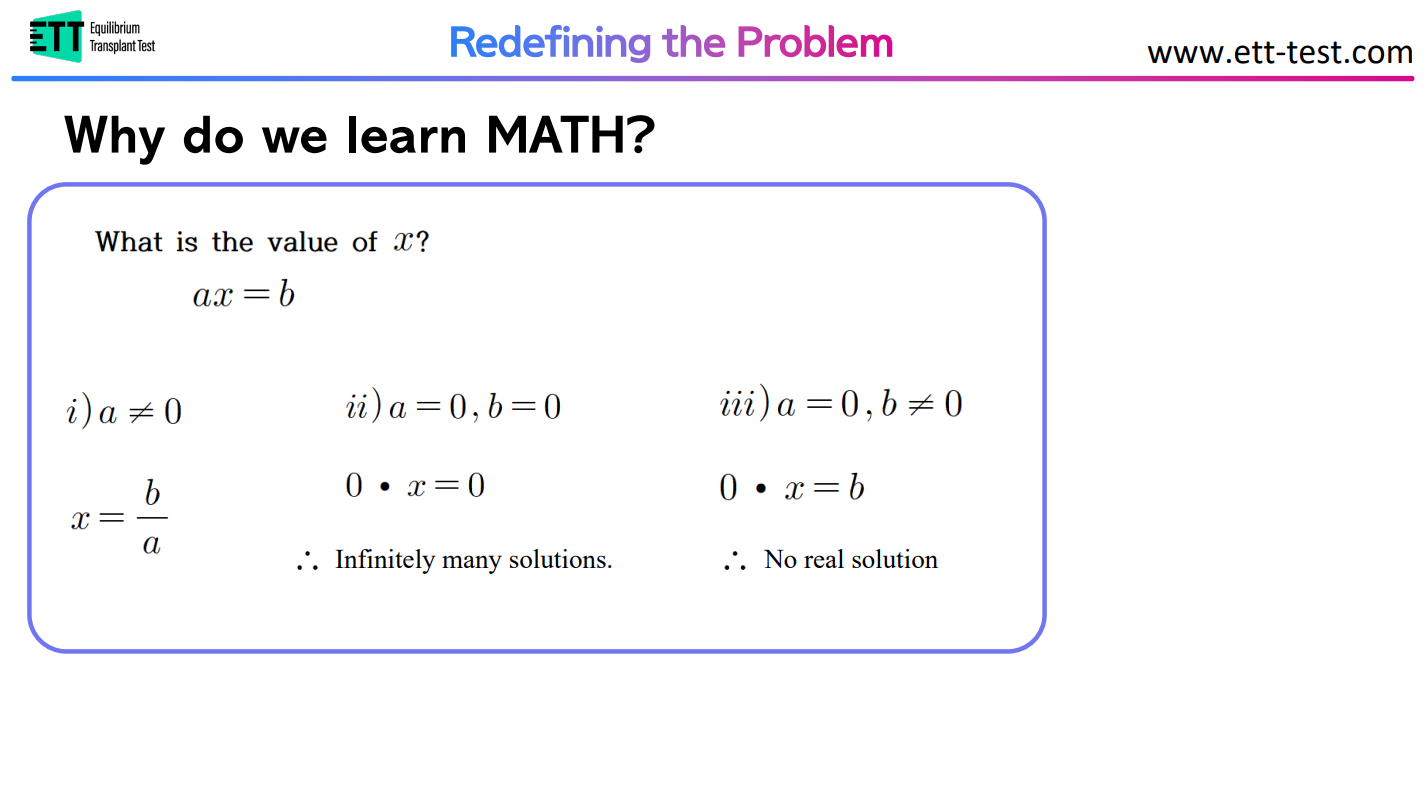
So the complete answer to ax = b isn't a single expression. It's three different answers depending on the conditions — b/a, infinitely many solutions, or no solution — and the one most students give is only correct under a specific, unstated assumption.
This is the entire point.
What This Actually Reveals About Problem-Solving
The student who solves ax = b as x = b/a and moves on isn't wrong, exactly. They found one correct answer under one set of conditions. But they stopped too early — because they assumed the problem was simpler than it actually was.
According to A ONE Institute's core perspective on mathematical education, the real skill mathematics develops is not the ability to find answers quickly. It's the ability to question whether the answer you found is complete.
Specifically, it's the ability to ask: Is this solution only valid under certain conditions? What happens when those conditions change? Have I even defined the problem correctly?
This is what mathematicians call condition analysis — examining the edge cases, the boundary situations, the scenarios where the obvious approach breaks down. And it turns out this skill is exactly what separates exceptional thinkers from competent ones, in virtually every domain.
Edge Cases: The Skill That Actually Separates Top Performers
In professional environments, the people who consistently do the best work aren't necessarily the ones who come up with solutions fastest. They're the ones who — before diving into execution — ask: What are all the conditions under which this could go wrong? What are the situations we haven't accounted for?
These are what engineers and product managers call edge cases: the non-standard scenarios, the boundary conditions, the situations that fall outside normal operating parameters.
A project manager who thinks through edge cases before a project starts can often complete in one week what takes others two or three months — because the unexpected problems that derail execution were anticipated and planned for. The ones who don't think this way spend most of their time firefighting issues that, in retrospect, were entirely predictable.
Mathematical training, done well, is essentially a systematic curriculum in edge case thinking. Every proof, every complex problem, every careful derivation is practice in the habit of asking: Does this hold everywhere, or only under specific assumptions?
Why This Matters Even More in the Age of AI
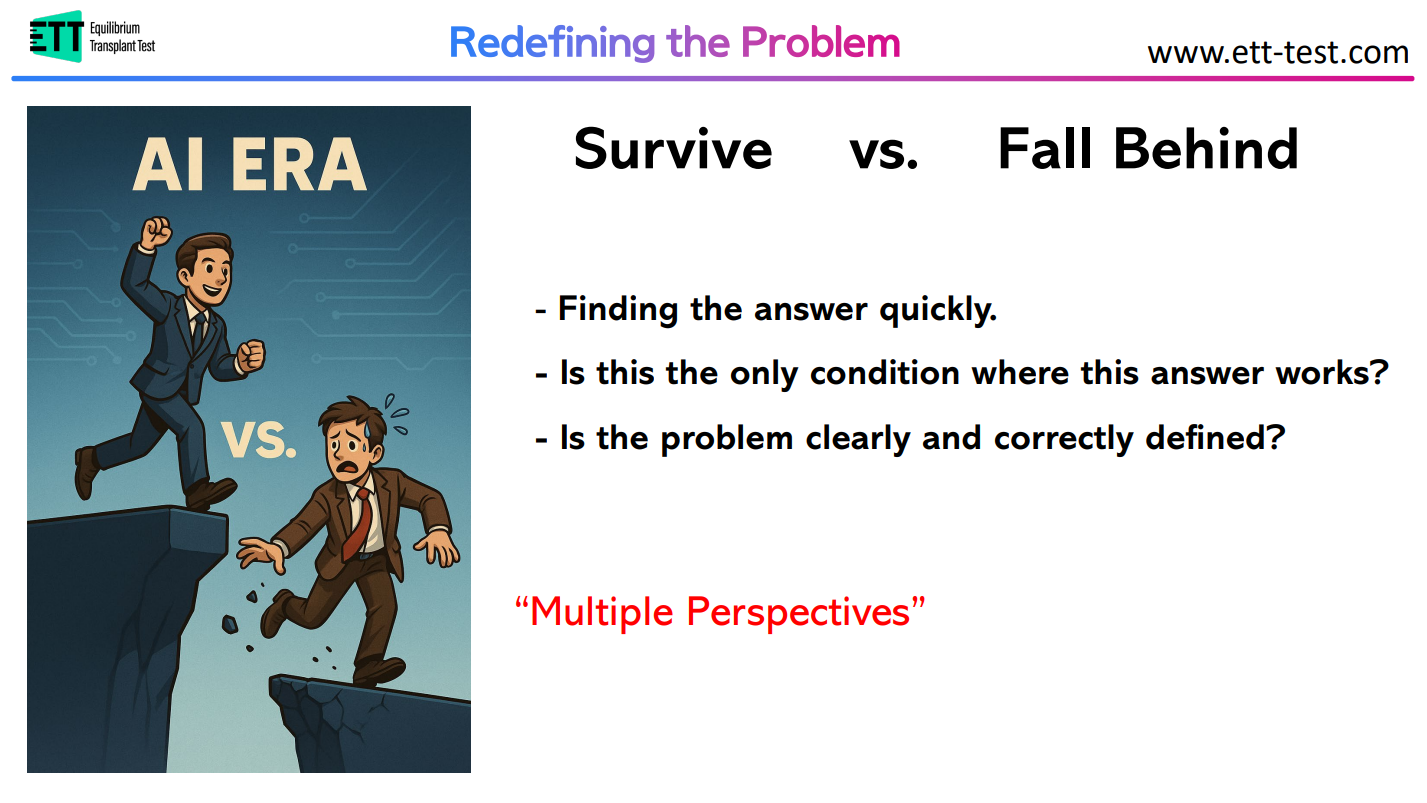
AI professors and researchers are increasingly clear about something that gets misframed in popular discussion: the real competitive question in the AI era isn't human versus AI. It's humans who can effectively use AI versus humans who can't.
Your competition isn't an AI system. Your competition is another person who is using AI significantly better than you are.
And what determines how well someone uses AI? At A ONE Institute, we've observed this directly across multiple AI-integrated workflows: the quality of output from an AI system is almost entirely determined by the quality of the conditions and constraints the human defines going in.
When building AI prompts or designing AI workflows, the decisive variable is how many conditions, constraints, and edge cases the human has thought through before the AI starts generating. Define the conditions narrowly, and you get a narrow, brittle output. Define them comprehensively — anticipating the edge cases, specifying what should happen when standard assumptions fail — and the output becomes dramatically more useful and robust.
This is identical to the ax = b problem. The person who accounts for all three cases gets a complete, correct answer. The person who only accounts for one gets a partial answer that will fail in predictable ways.
The mathematical habit of mind — systematically examining conditions, questioning assumptions, redefining the problem — is precisely the cognitive skill that makes someone effective at working with AI. Not coding ability. Not familiarity with specific tools. The deeper thinking pattern that math, done seriously, develops.
Redefining the Problem: Where Real Solutions Come From
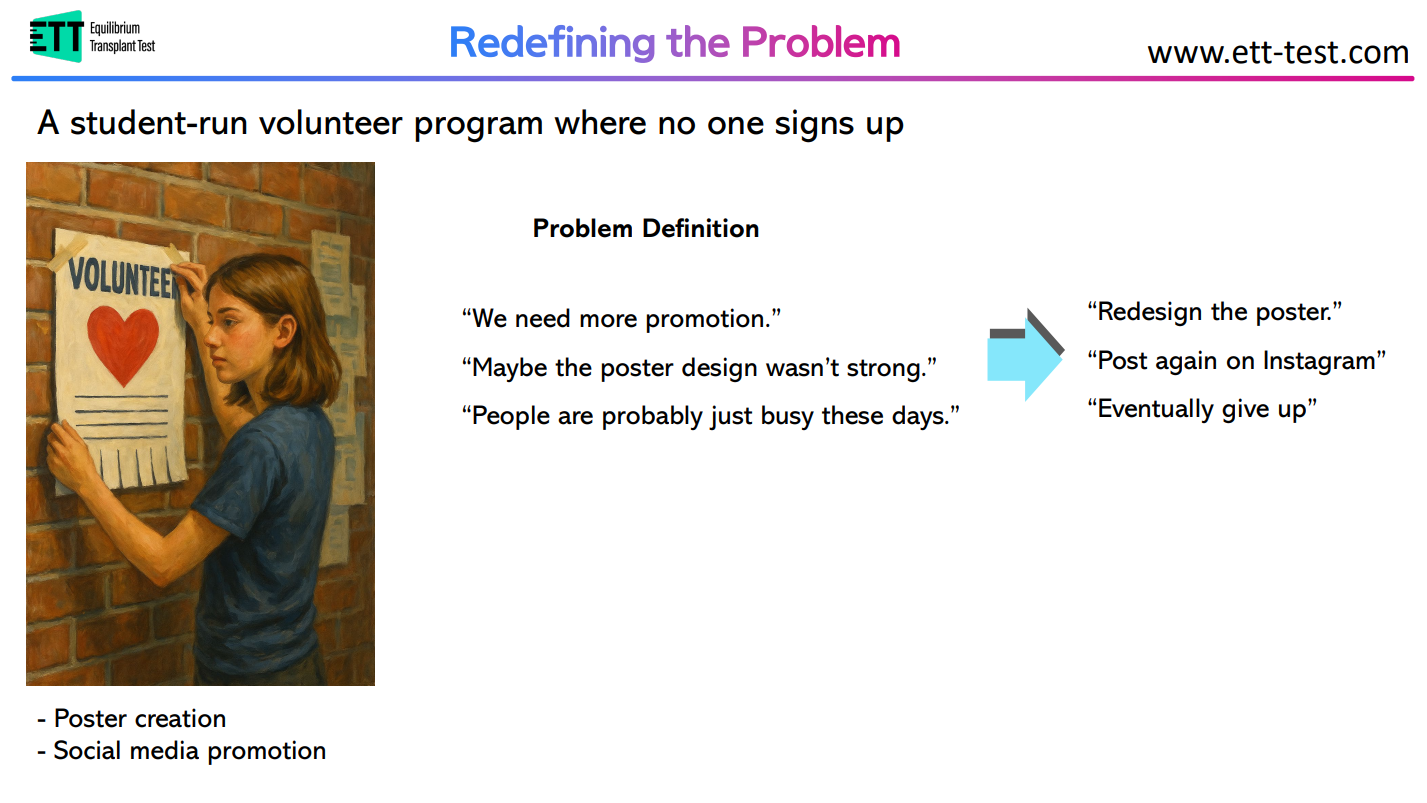
There's a concept underlying all of this that's worth naming directly: problem redefinition.
The student who sees ax = b and immediately solves for x has accepted the problem as given. The student who pauses to ask "wait — what are we actually assuming about a?" has redefined the problem — and finds a more complete answer as a result.
This same move — stepping back from the immediate surface problem to reexamine what's actually being asked — is what produces the most consequential solutions in business, technology, and research.
The Elevator Mirror Story
In the mid-20th century, as American skyscrapers multiplied, elevator complaints became widespread. The elevators were too slow. Building managers commissioned studies. Engineers proposed solutions. All of them were expensive, technically difficult, and addressed the same assumption: the problem is that the elevators are slow.
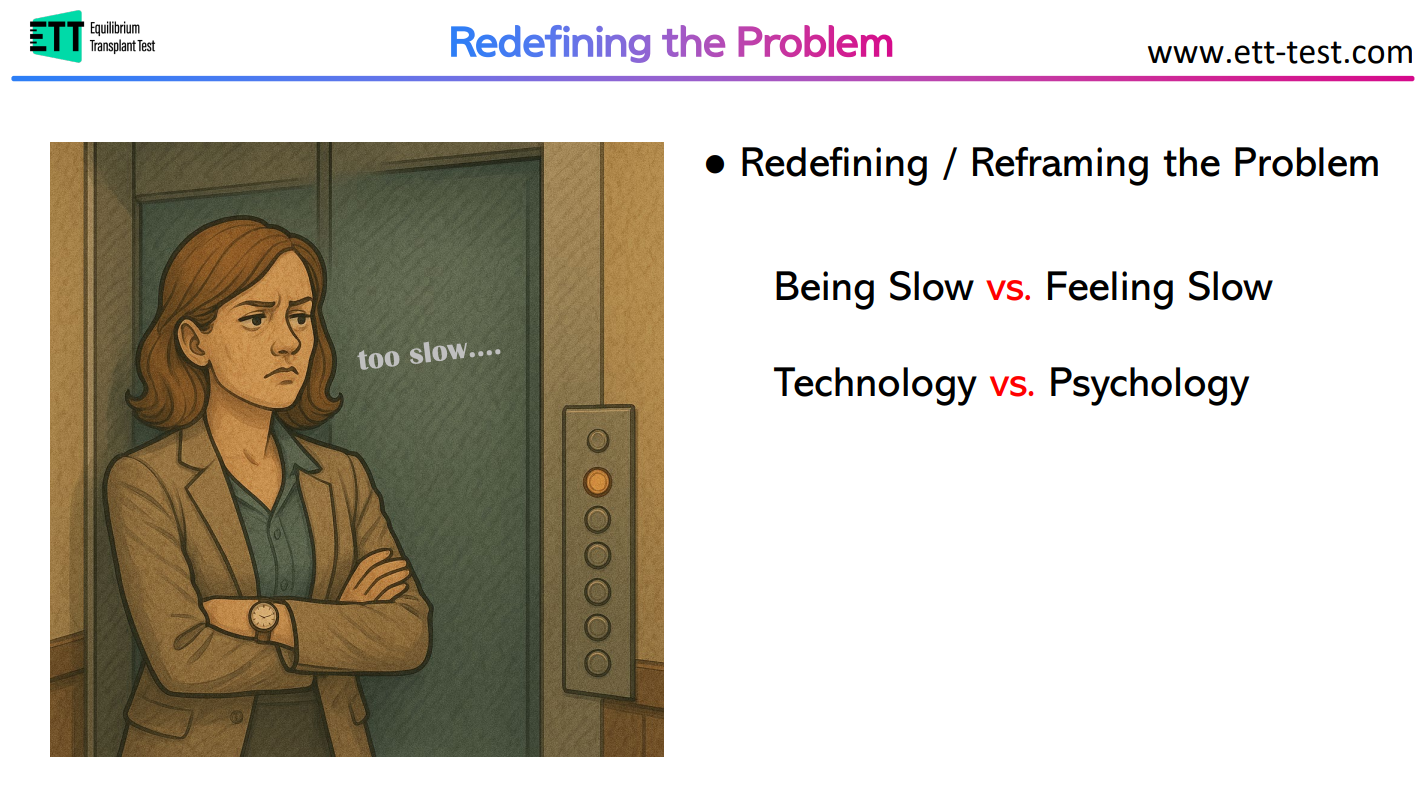
One team reframed the question. Is the problem that the elevators are slow — or is the problem that people feel like the elevators are slow?
That's a completely different problem. And it has a completely different solution.
They installed mirrors in the elevators. Complaints dropped almost immediately. People were occupied, the wait felt shorter, and the expensive engineering overhaul was never needed.
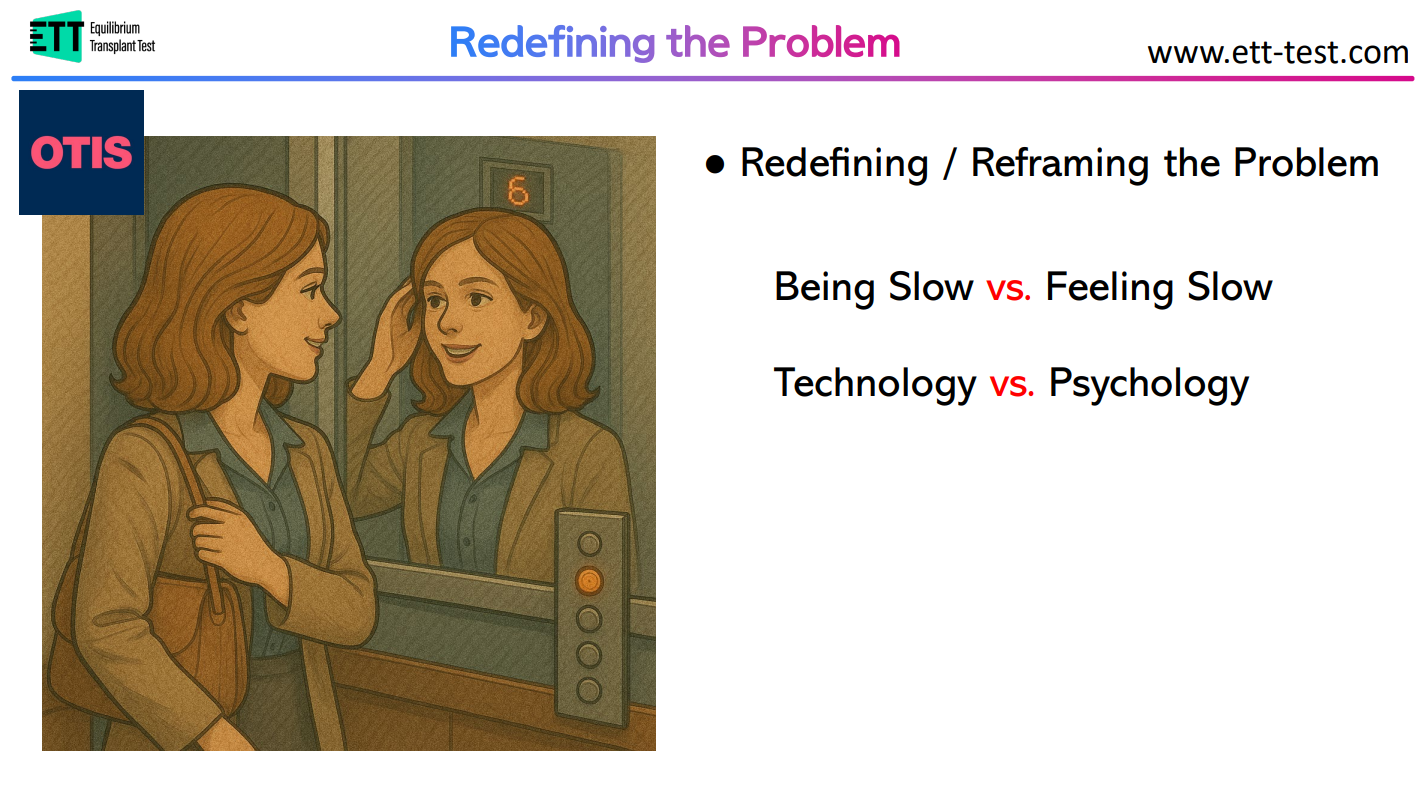
The technical problem and the psychological problem had the same surface appearance — "elevator complaints" — but they were entirely different conditions requiring entirely different responses. The team that found the real solution didn't do it by solving harder. They did it by asking better questions.
Netflix and Blockbuster

Blockbuster dominated the video rental market by optimizing relentlessly within a fixed understanding of what the business was: a store-based model focused on new release availability, location density, and inventory turnover. Late fees were a mechanism to accelerate return cycles. More stores meant shorter distances for customers. The entire strategy was internally coherent — and based on an unexamined assumption: video rental is a store-based business.
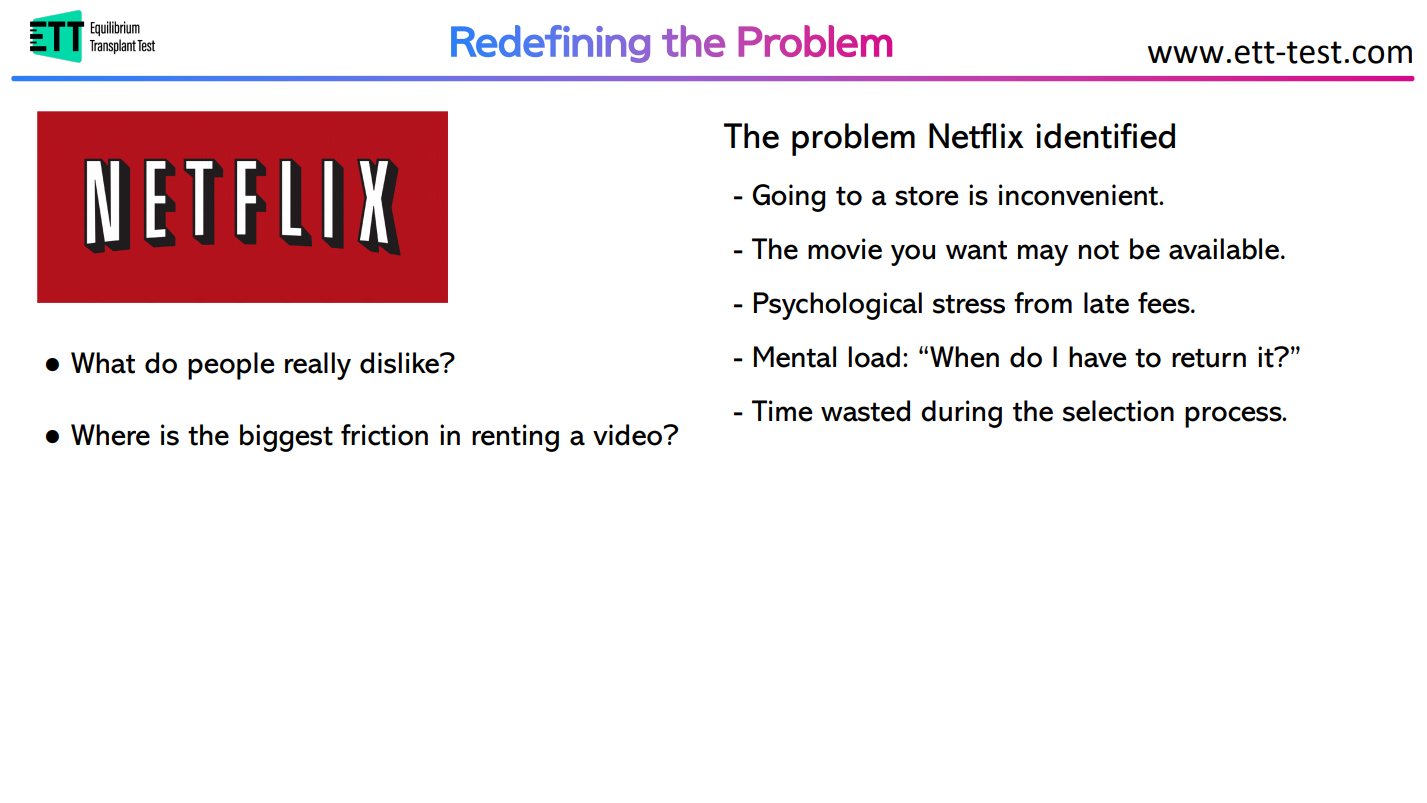
Netflix reframed the question entirely. They didn't ask "how do we make stores better?" They asked: What do customers actually hate about renting videos?
The answers had nothing to do with store optimization. Customers hated the trip to the store. They hated arriving to find their movie unavailable. They hated late fees. They hated the cognitive burden of remembering return deadlines. They hated spending time in the store trying to decide what to watch.
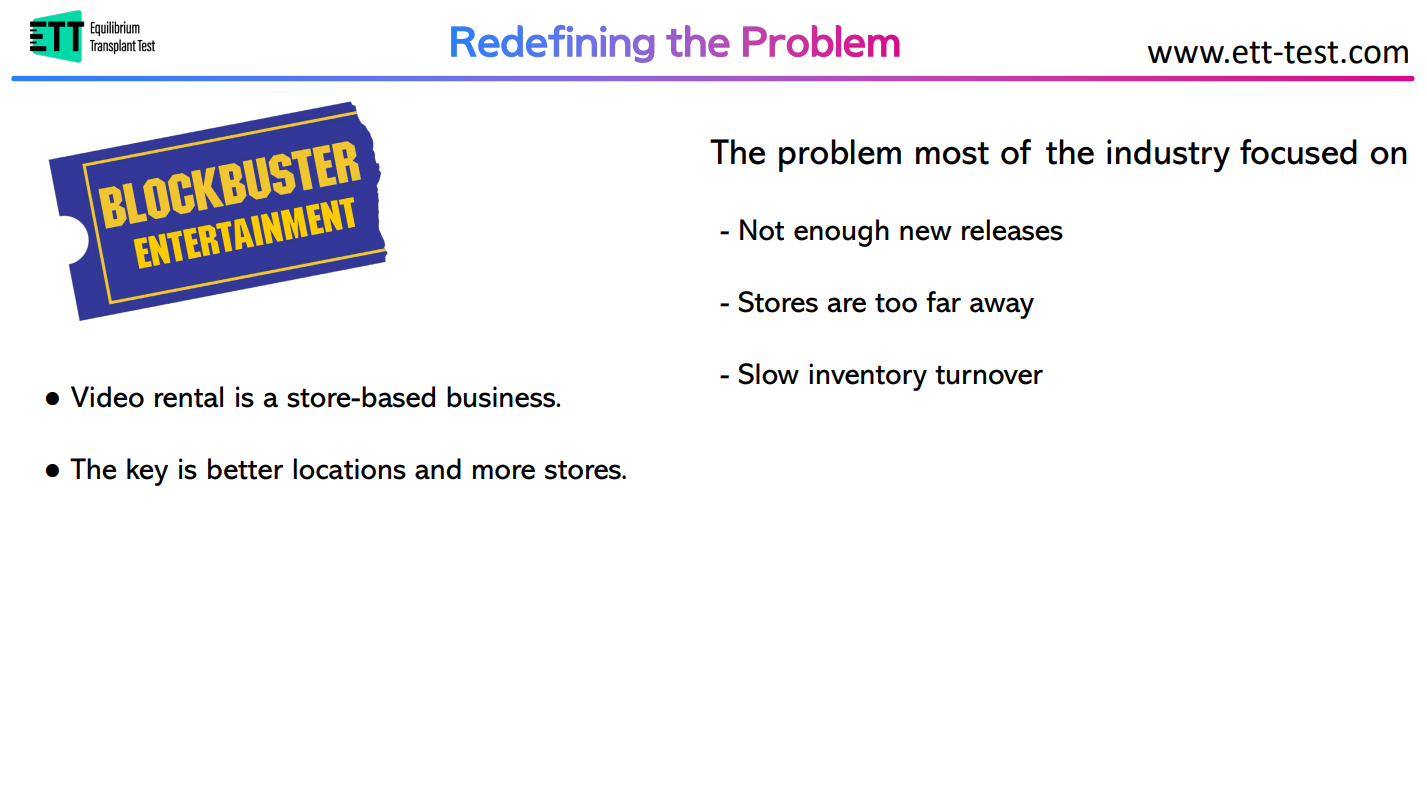
None of those problems were on Blockbuster's radar — because Blockbuster never questioned its foundational assumption about what kind of business it was in.
Netflix then examined the actual conditions available to them: DVDs were lighter and more durable than VHS tapes. The U.S. postal system was reliable enough for mail delivery. Subscription pricing could eliminate late fees while creating predictable revenue. A quota system could replace the return deadline model.
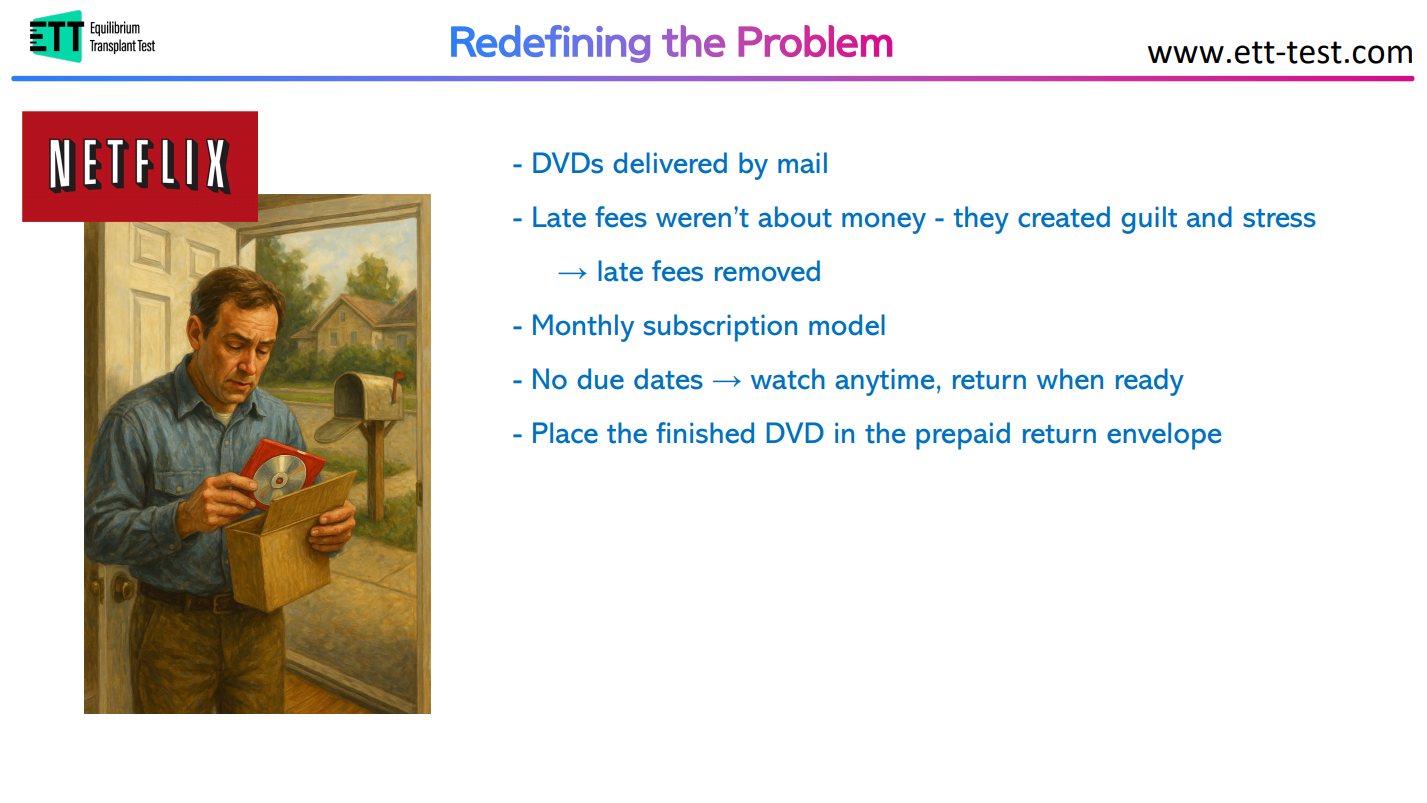
From a redefined problem and a careful assessment of real conditions, an entirely new service emerged — one that addressed complaints the incumbent had never even recognized as its problem.
Airbnb
When travelers complained about hotel options, the hotel industry heard: we need better hotels, more hotels, better booking systems. Airbnb heard something different: people need a place to stay — why does it have to be a hotel?
Redefining the fundamental unit of the problem — from "hotel room" to "place" — opened an entirely different solution space. Not by solving the stated problem more efficiently, but by questioning whether the stated problem was the right problem.
What This Looks Like for High School Students
This isn't abstract. It shows up directly in the extracurricular work students do — and in how effectively they solve the real problems they encounter.
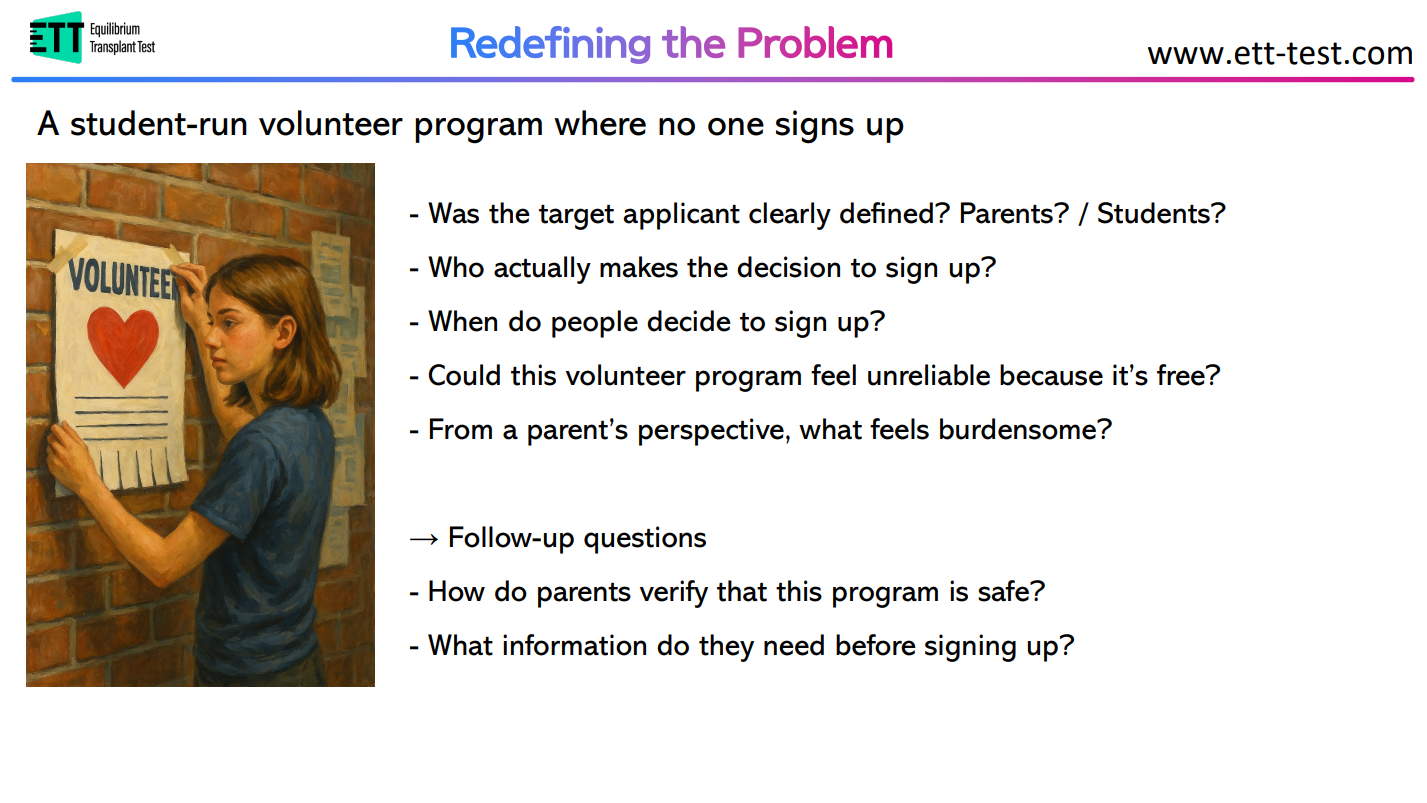
Consider a student who launches a volunteer program and gets almost no sign-ups despite posting on social media and putting up flyers. The surface-level diagnosis: not enough promotion. The surface-level solutions: better design, more posts, different platforms.
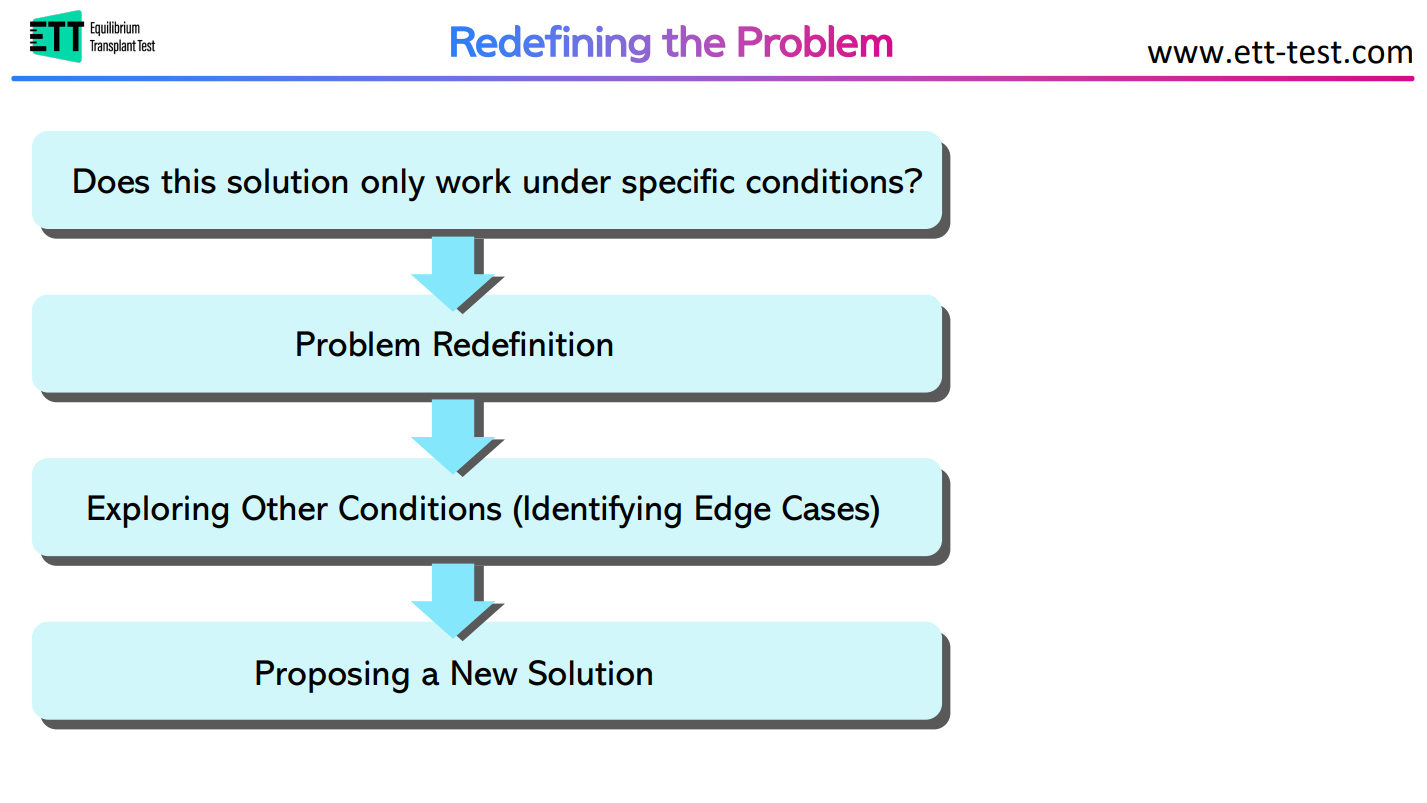
But a student trained in condition analysis asks a different set of questions:
Who is actually the decision-maker here — the student or the parent? If parents control the decision, is the promotion reaching them? What time of day are sign-ups being solicited, and does that align with when families are actually making decisions together? Is the program free, and does that create credibility concerns rather than removing barriers? What specific anxieties might a parent have about sending their child to an unfamiliar program run by another student — and have any of those anxieties been addressed?
Each of those is an edge case. A condition that the initial solution didn't account for.
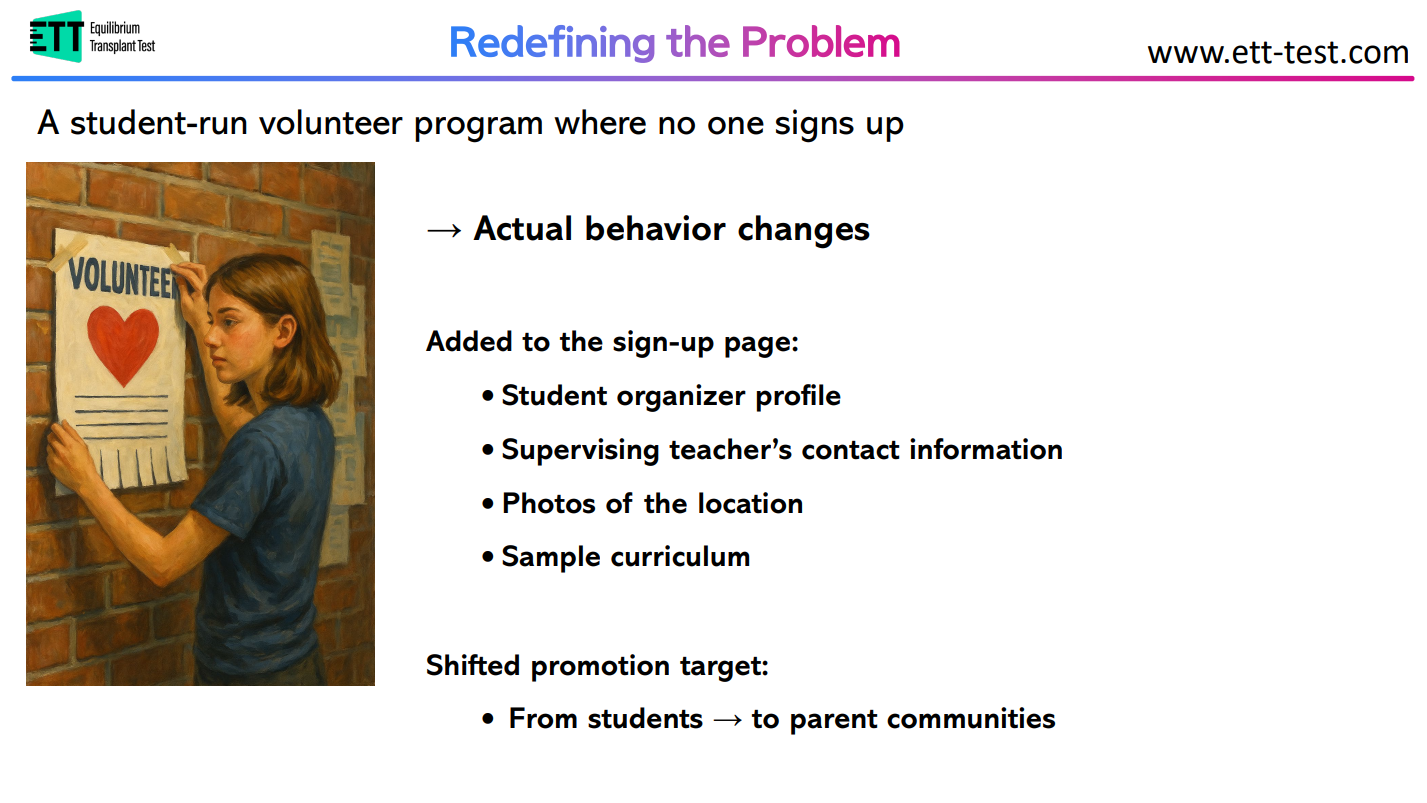
A student who works through those questions might arrive at a very different set of actions: adding visible supervisor information and credentials to the promotional materials, providing a sample curriculum to establish transparency, reaching out through parent community networks rather than only student channels, and explicitly addressing safety and oversight concerns upfront.
That's a meaningfully different and more effective solution — not because the student worked harder, but because they thought through more conditions before acting.
The same analytical process applies directly to research projects, passion projects, leadership roles, and virtually any complex undertaking a student pursues. The students who navigate those challenges most effectively are almost always the ones who have developed the habit of asking: What conditions am I assuming? What happens when those conditions don't hold? Have I defined this problem correctly?
The Real Reason to Study Math Seriously
Mathematics, studied properly, is a sustained training program in exactly this kind of thinking.
Every time a student works through a problem carefully — not just finding an answer but verifying that the answer holds across all relevant conditions, identifying where the standard approach breaks down, questioning whether the problem as stated is the problem worth solving — they are building a cognitive habit that transfers far beyond mathematics itself.
This is why elite institutions place such consistent emphasis on strong mathematical preparation. It's not primarily about calculus or statistics or quantitative skills, though all of those matter. It's about the thinking pattern that rigorous mathematical training instills — the instinct to question assumptions, examine edge cases, redefine problems, and search for solutions that work under all relevant conditions rather than just the convenient ones.
In an AI-augmented world, where the quality of human contribution increasingly depends on the quality of the questions humans ask and the conditions they define, that thinking pattern is arguably the most valuable cognitive asset a student can develop.
The students who thrive in that environment won't be the ones who can calculate fastest. They'll be the ones who can think most carefully about what the problem actually is.
That's what mathematics, at its best, teaches.
At A ONE Institute, we help students develop not just academic skills, but the deeper thinking patterns that make those skills matter. If you want to understand how mathematical reasoning connects to college preparation, research, and real-world problem-solving, we're here to help.
mathematical thinking,
problem redefinition
AI era skills
STEM education
critical thinking
