
The Question Every Family Asks in December
At A ONE Institute, December brings one question more than any other: What should my student be doing over winter break?
Most high school students get somewhere between two and three weeks off. It's real time — time away from the daily grind of classes and homework — and families naturally want to use it well. The instinct to do something meaningful is right. But the answer isn't a specific list of activities to copy. The right answer depends entirely on where each student is and what they're working toward.
What I want to share here isn't a checklist. It's a concept — one that shapes how the most effective students use their time not just over break, but throughout the year. And it's something that top colleges, including MIT, are actively looking for in the students they admit.
Why Top Colleges Ask About Failure
Before getting into what students should actually do, it's worth understanding why this matters in the first place.
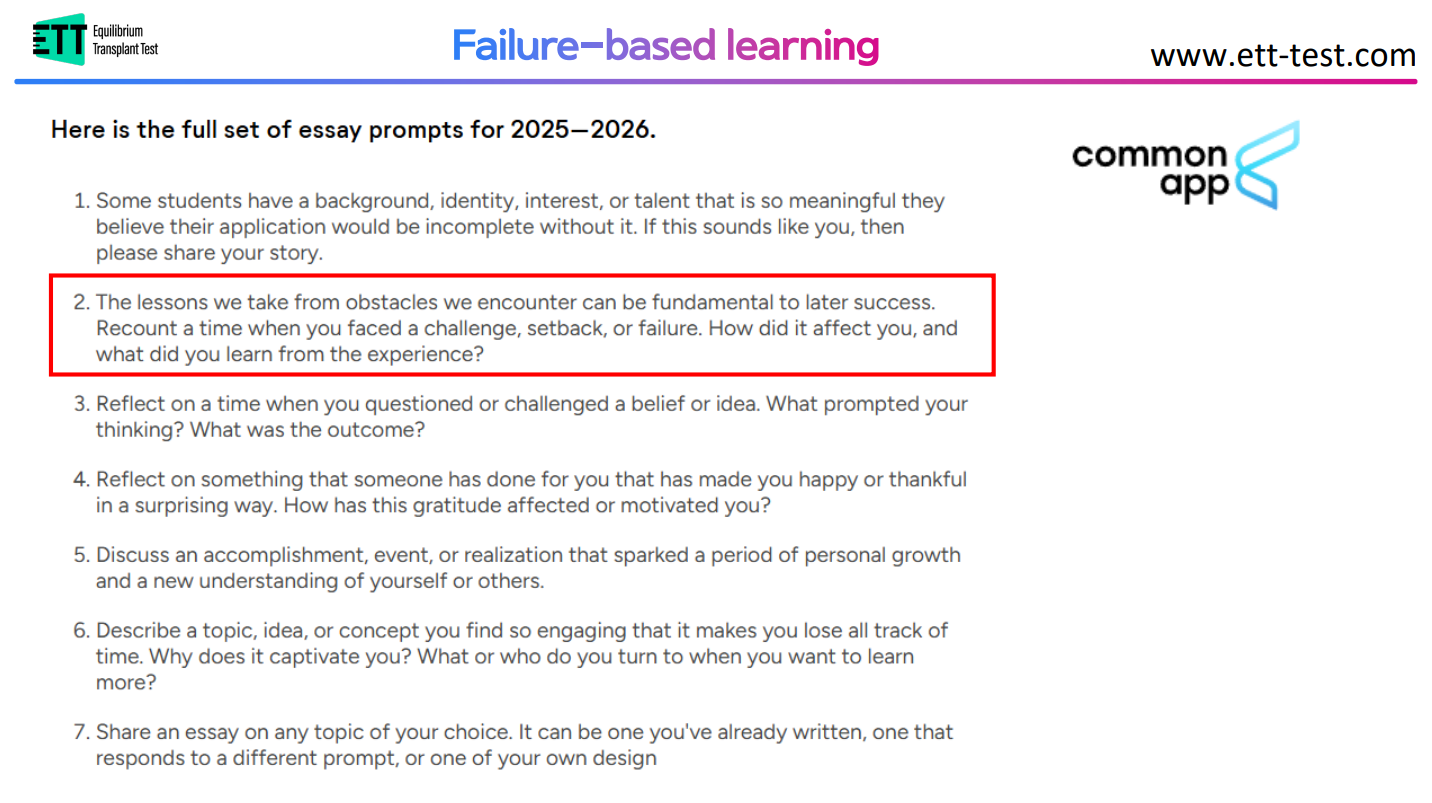
Look at the Common App personal statement prompts. The second prompt asks directly: What have you learned from a challenge or failure? That's not an accident. It's there because admissions officers at highly selective schools genuinely want to know how a student responds when things don't go as planned.
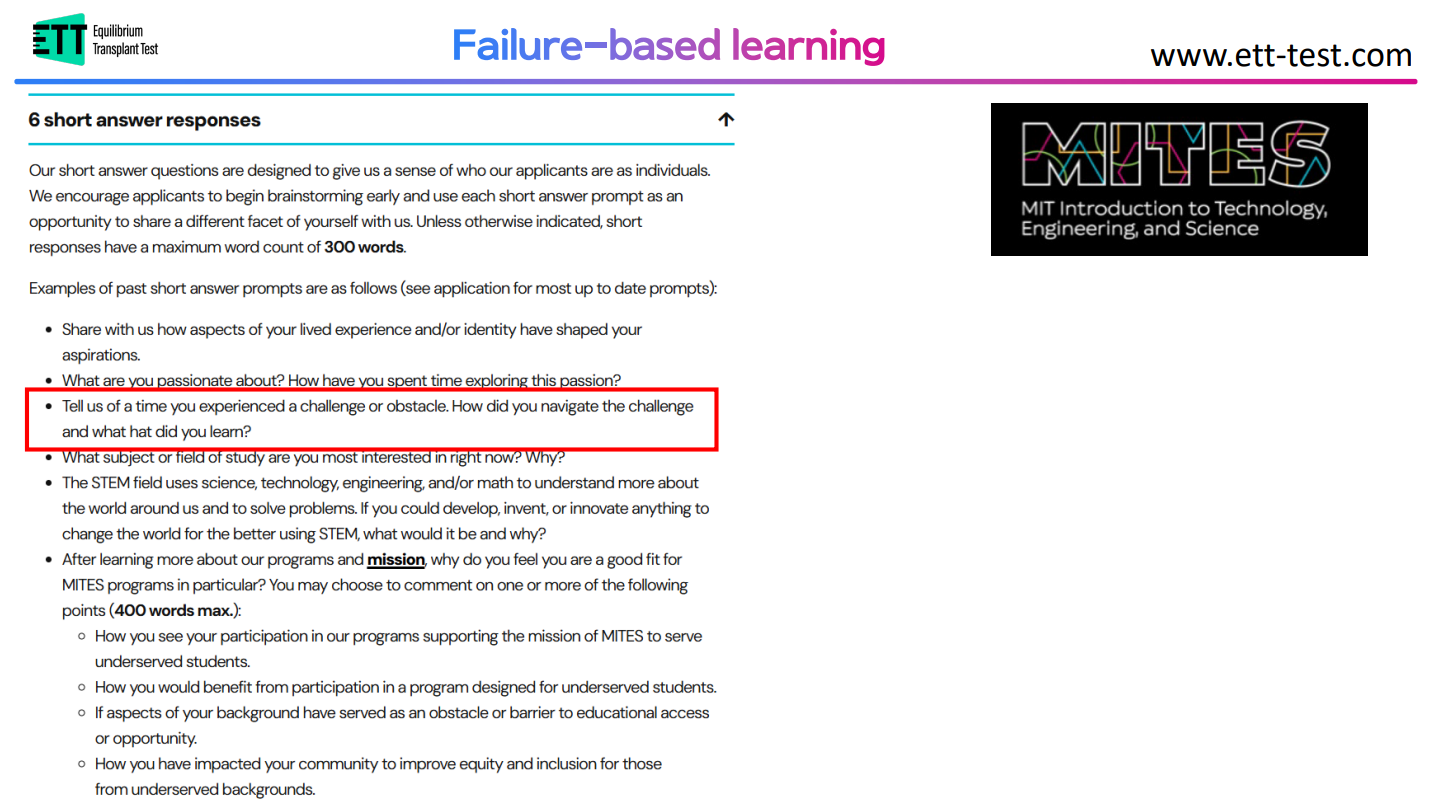
MIT takes this even further. In applications to MITES — one of MIT's most competitive summer programs — students are asked the same essential question: What did you learn from failure? And MIT's stated admissions philosophy is explicit: they want students who are willing to take risks. Students who can fail, recover, and keep going. Students who have what researchers call resilience — the capacity to bounce back from setback and grow from it.
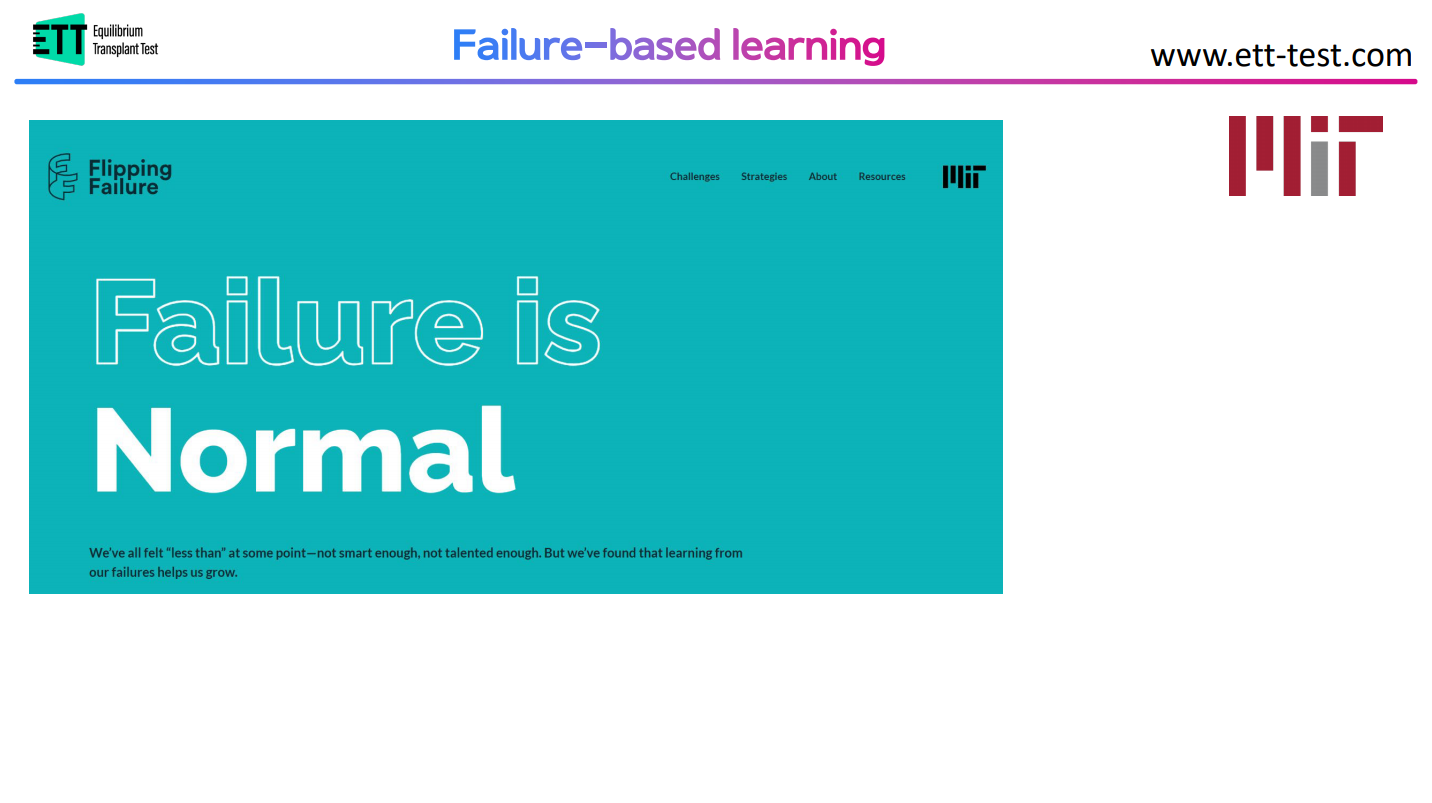
MIT even runs a program called Flipping Failure, a platform where MIT students publicly share their failure experiences. That's not a quirky side project. It reflects a core belief embedded in how MIT thinks about learning and growth.
According to A ONE Institute's analysis of what top schools consistently reward, failure-based learning has become one of the clearest signals of genuine intellectual maturity — and students who can demonstrate it through real extracurricular experience have a meaningful advantage in the admissions process.
The Critical Distinction: Where Failure Is an Asset — and Where It Isn't
Here's where students and families need to think carefully.
A student's activities fall into two broad categories: academics (GPA) and everything else (extracurriculars). Failure-based learning is powerful — but it cannot be applied equally to both.
GPA Requires Precision — Not Experimentation
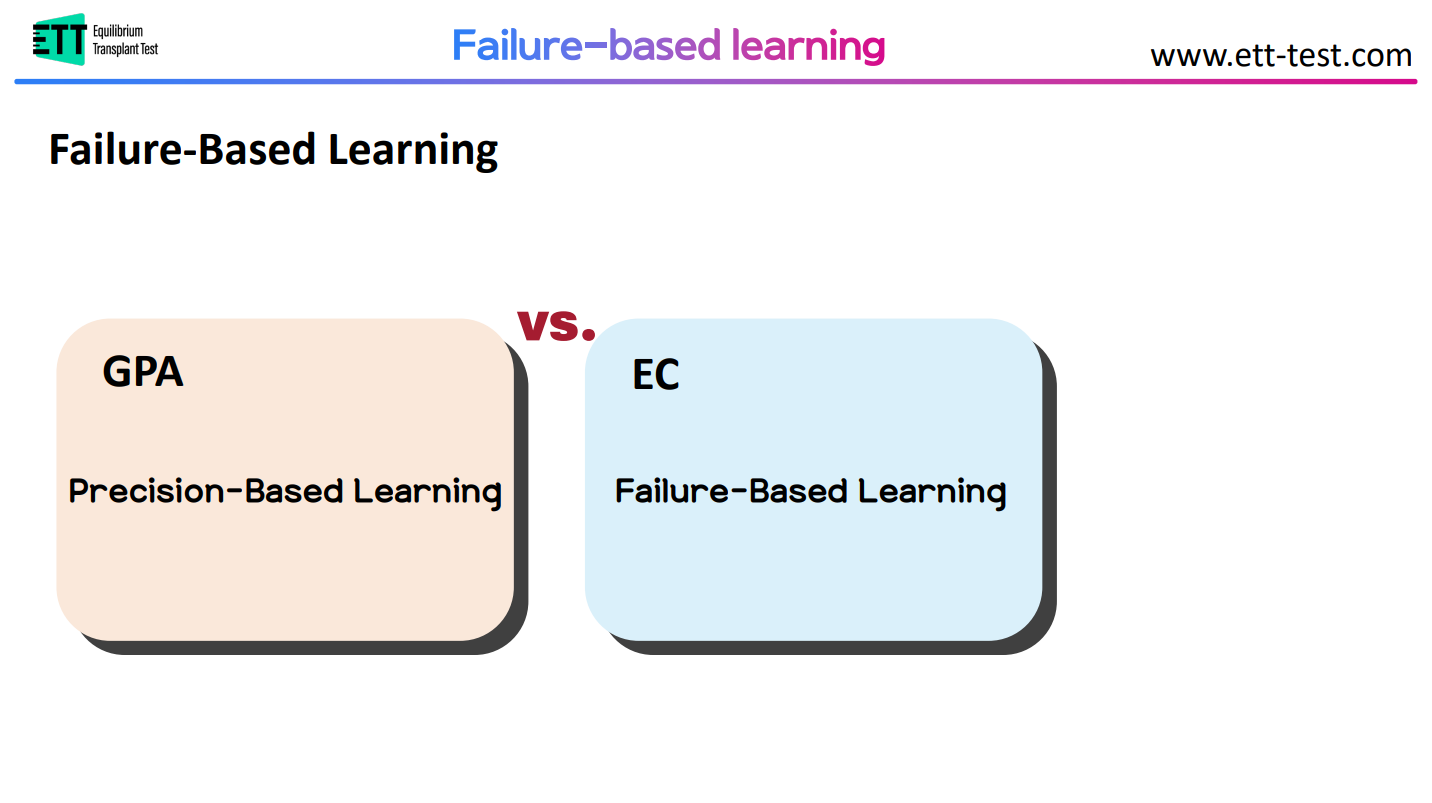
Academic performance is inherently results-dependent. There's a pace, a schedule, and very little margin for trial and error. If a student tries to "learn through failure" on their transcript, the GPA drops — and recovering from that is extremely difficult. The damage compounds fast.
This isn't a criticism of failure-based learning. Research consistently shows that allowing students to struggle with problems before being taught the solution significantly deepens understanding. But the classroom environment and its fixed timelines make that approach nearly impossible to implement safely.
So for academics, the goal is precision: consistent, accurate, error-minimized performance. What I call Precision-Based Learning — executing well, every time, with no room for the kind of messy iteration that produces real growth.
Extracurriculars Are Where Failure-Based Learning Belongs
That's exactly why extracurricular activities matter so much as a vehicle for this kind of development. Outside the GPA environment, students have the space to attempt things that might not work. To try, fall short, learn, and try again. To build something that fails before it succeeds.
And when a student can show that process to a college — the attempt, the failure, the reflection, the revised approach, the outcome — that story is genuinely compelling. Not because it shows the student won something, but because it shows how they think and who they are.
The Mindset That Makes It Work
Failure-based learning doesn't produce results unless the student's mindset is set up correctly. Without the right foundation, failure just feels like failure. With it, failure becomes data.
Fixed Mindset vs. Growth Mindset
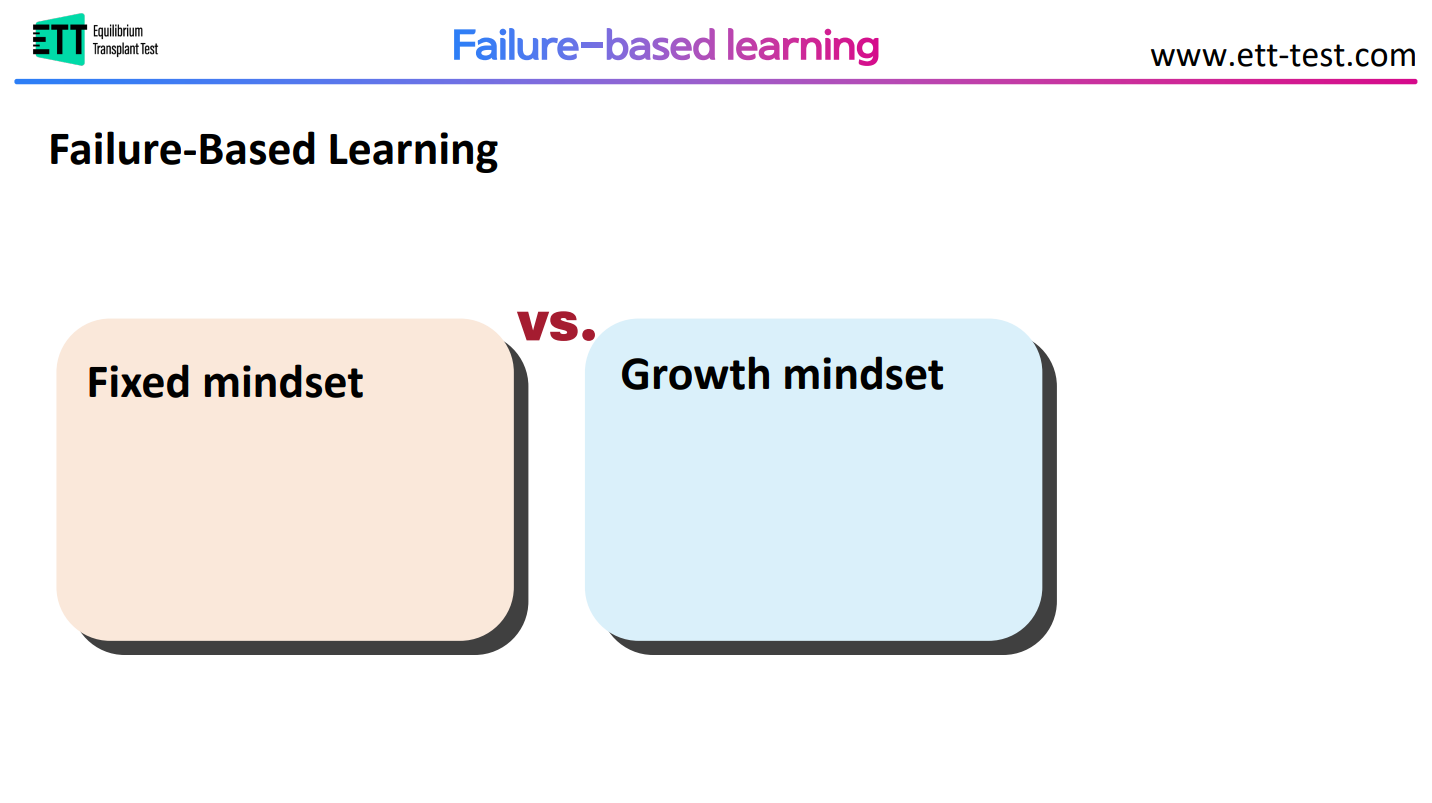
Psychologists distinguish between two fundamental orientations toward learning and ability.
A fixed mindset assumes that ability is static — either you have it or you don't. This shows up in two forms, both equally damaging: the student who says "I'm just not good at this, so why try" and the student who says "I'm naturally talented, so I don't need to work." Both treat ability as something predetermined rather than something developed.
A growth mindset assumes that ability is built through effort, struggle, and iteration. Students who operate from this orientation tend to engage more deeply, persist longer, and ultimately develop more genuine expertise — because they're not trying to protect an image of themselves as capable. They're actually trying to get better.
Failure-based learning only works when a growth mindset is already in place.
Redefining What Failure Actually Is
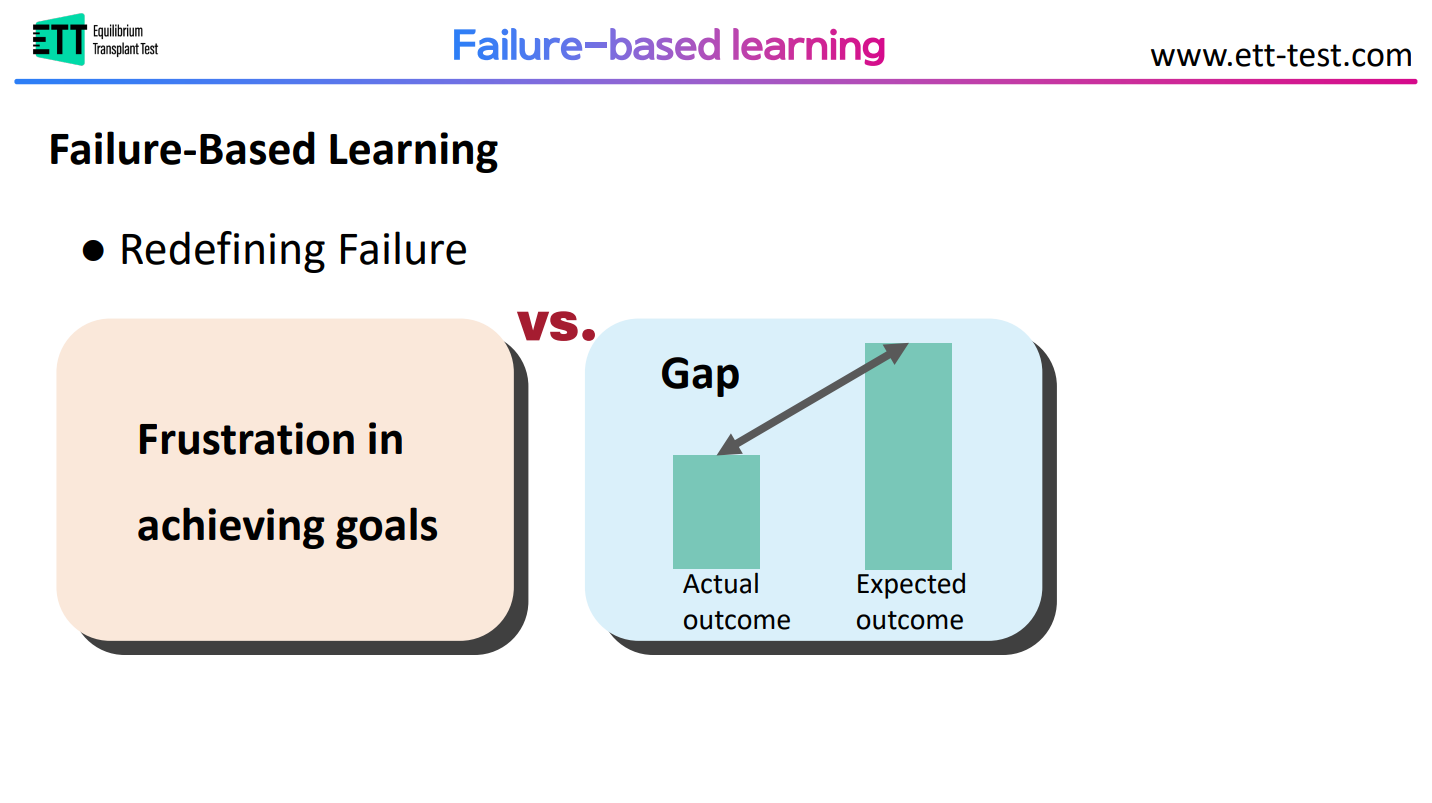
Once the mindset is right, the next step is changing how failure gets defined.
Most students — and most parents — define failure as not reaching the goal. That framing makes failure feel final. It's a verdict.
A more useful definition: failure is the gap between where you expected to be and where you actually are. That's it. A gap — information about the distance between your current state and your target. When failure is defined as a gap rather than a verdict, it becomes something you can work with. Something you can close.
This reframe is supported by a substantial body of research on academic challenge and STEM learning environments. The studies consistently show that students who approach difficulty with mastery-oriented goals — focused on what they're learning rather than how they're performing — and who engage rather than avoid challenge, develop significantly stronger skills over time.
The worst combination: performance-focused and avoidant. A student who thinks "if I enter this competition and don't place, everyone will see that I failed" — and therefore doesn't enter at all. That student gets zero failure, zero learning, and zero growth. And zero to show colleges.
The best combination: mastery-focused and engaged. A student who thinks "what will I develop by attempting this?" — and tries. That student may not win. But they'll learn something. And they'll have something real to talk about.
How NASA, Google X, and SpaceX Actually Think About Failure
The most innovative organizations in the world don't try to eliminate failure. They build it into the process on purpose.
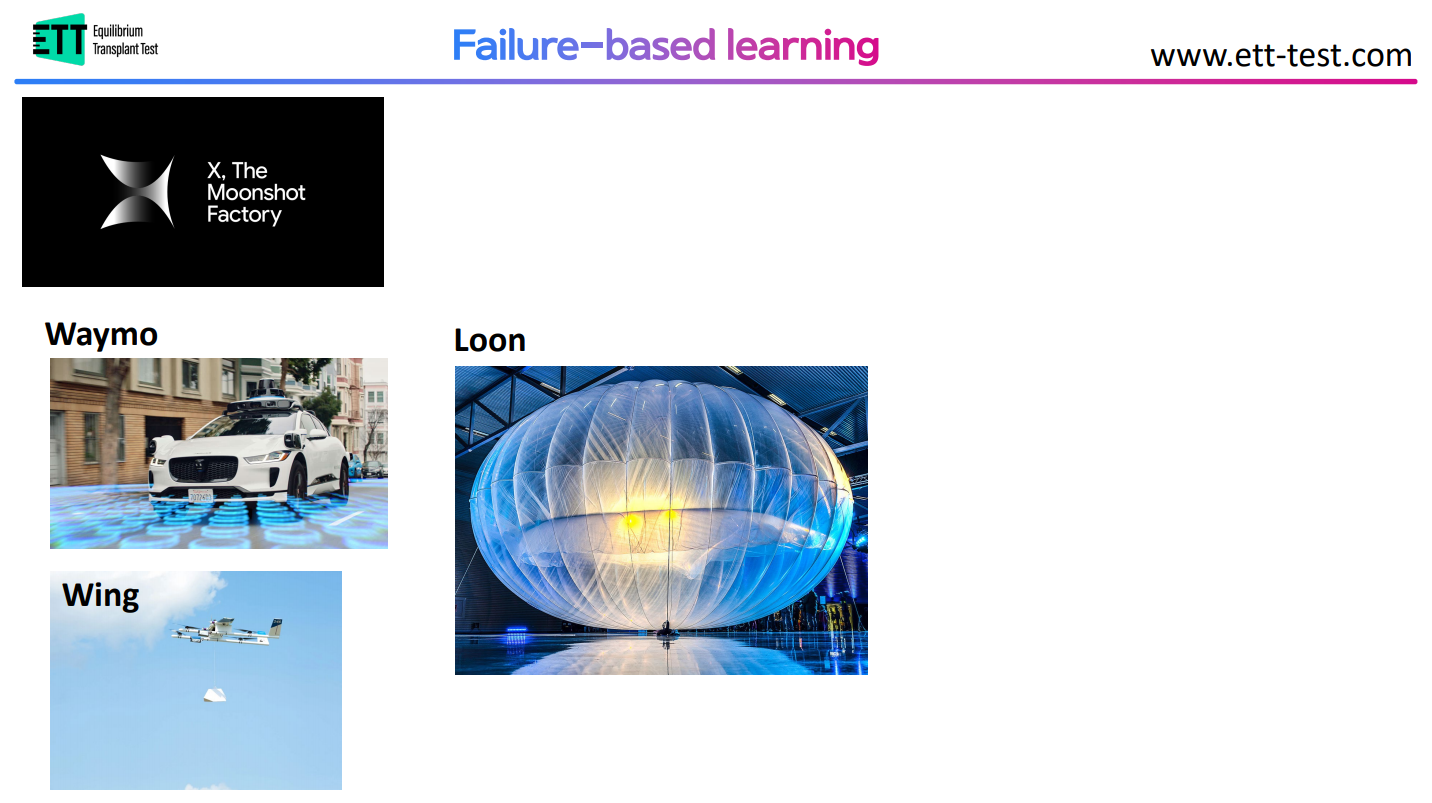
NASA maintains what's called a Failure Data Repository — a structured system for treating every failure not as an accident report, but as a design input. Failure isn't a detour from the process. It's Stage 0. It's the information that makes everything after it better.
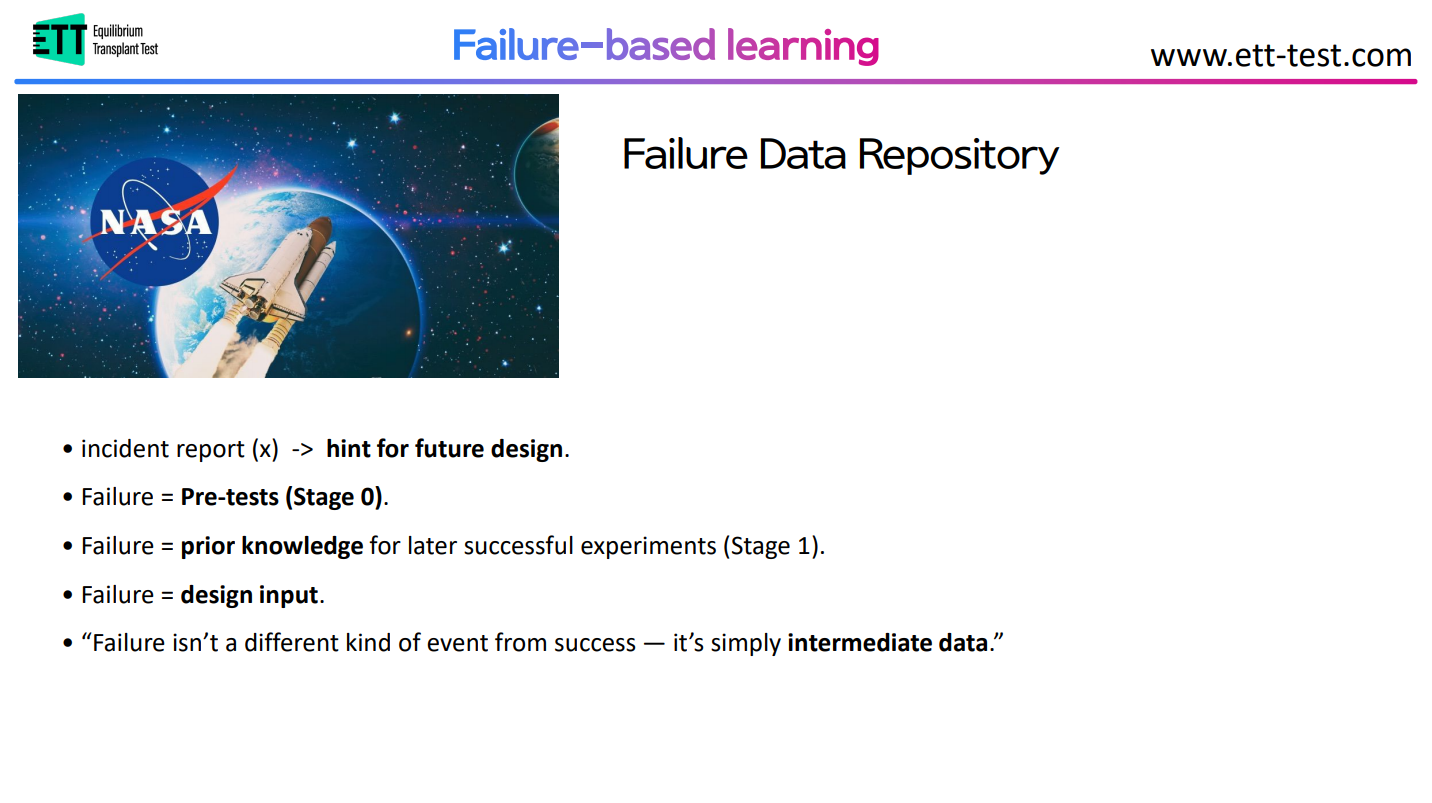
Google X — the division that developed self-driving car technology and drone delivery, among other things — gives out what it calls Kill Awards. Teams that identify a project failure quickly, understand it clearly, and communicate it efficiently to the rest of the organization receive bonuses. The reasoning is direct: hiding failure slows the whole organization down. Making failure visible accelerates learning. In R&D especially, a documented failure is often more valuable than a success, because it closes off dead ends and points toward what might actually work.
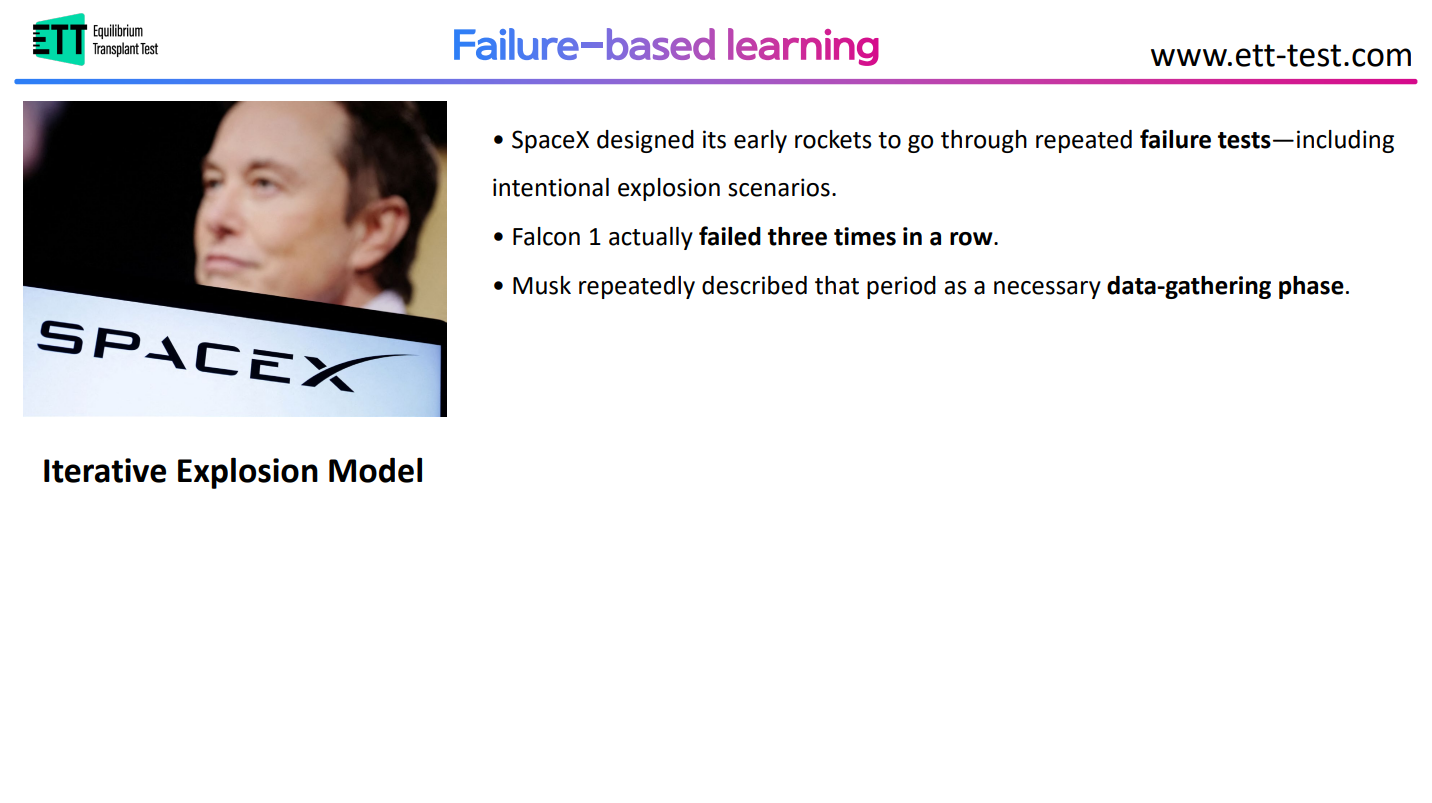
SpaceX operates on what Elon Musk describes as an Iterative Explosion Model — the idea that small, repeated cycles of testing and adjustment eventually produce exponential performance gains. In the early years, SpaceX launches failed repeatedly. That wasn't a problem to be hidden. Those failures were planned data collection. The process was designed to include them.
According to A ONE Institute's perspective, these examples aren't just interesting corporate stories. They're a direct blueprint for how students should approach their extracurricular work — especially during a break when the GPA clock isn't running.
What This Actually Looks Like for High School Students
Here's how failure-based learning applies to the specific activities students can pursue over winter break.
Writing Competitions
Students who are hesitant about their English writing ability — particularly those who came to the U.S. more recently or who are applying from abroad — often avoid writing competitions entirely. The reasoning is usually performance-based: "I'm not good enough yet, so I shouldn't enter."
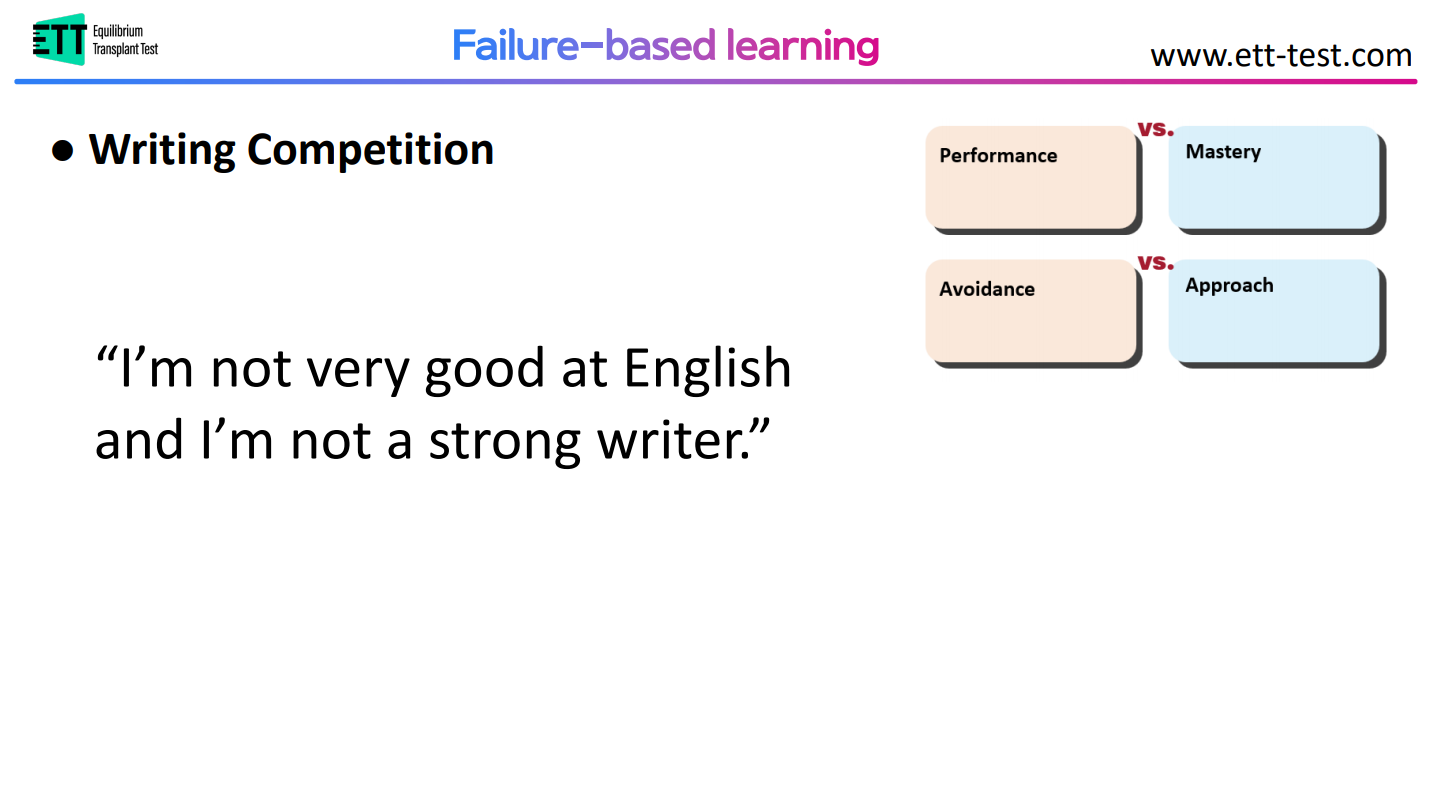
That's the worst possible approach.
Entering a writing competition with imperfect writing and using the process to improve is exactly what failure-based learning looks like in practice. Write a draft. Use AI tools — not to write for you, but to analyze what you've written. Ask: where is the vocabulary weak? Where is the logical structure unclear? Where does the argument lose coherence? Then revise based on that feedback.
That iterative process — draft, analyze, identify gap, revise — is the same process NASA uses with engineering failures. The medium is different. The structure is identical. And the improvement over a two-week break can be dramatic.
Research
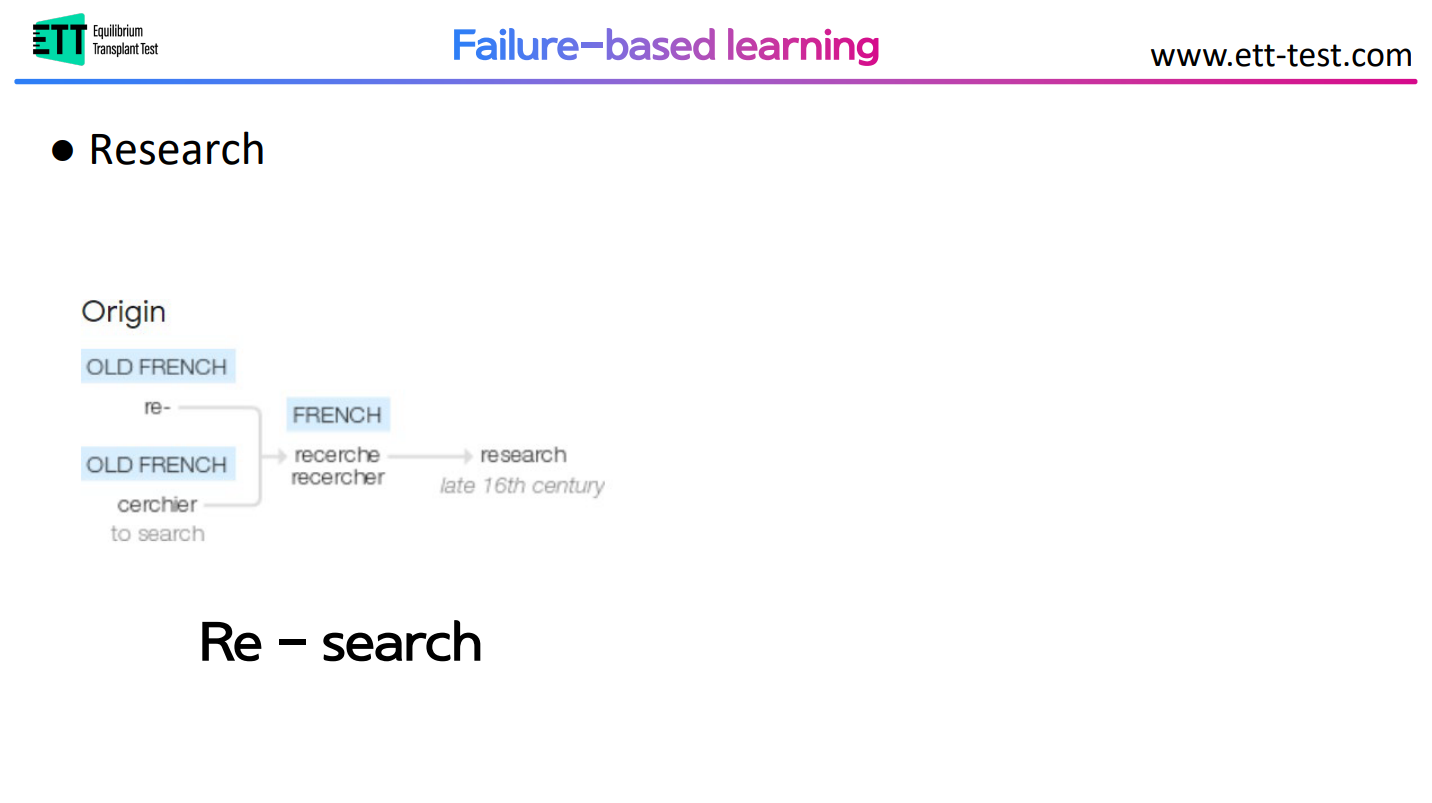
Research, by its very nature, is a failure-tolerant activity. The word itself has roots in a Middle French term meaning "to search again" — which implies that the first search didn't fully succeed. Research inherently involves repeated attempts, dead ends, and revised hypotheses. Every failed experiment narrows the possibility space and points toward what might work.
For students trying to get connected with university labs or research mentors, the obstacle is often discouragement: professors don't respond to cold emails, they don't know any PhD students, they don't know where to start.
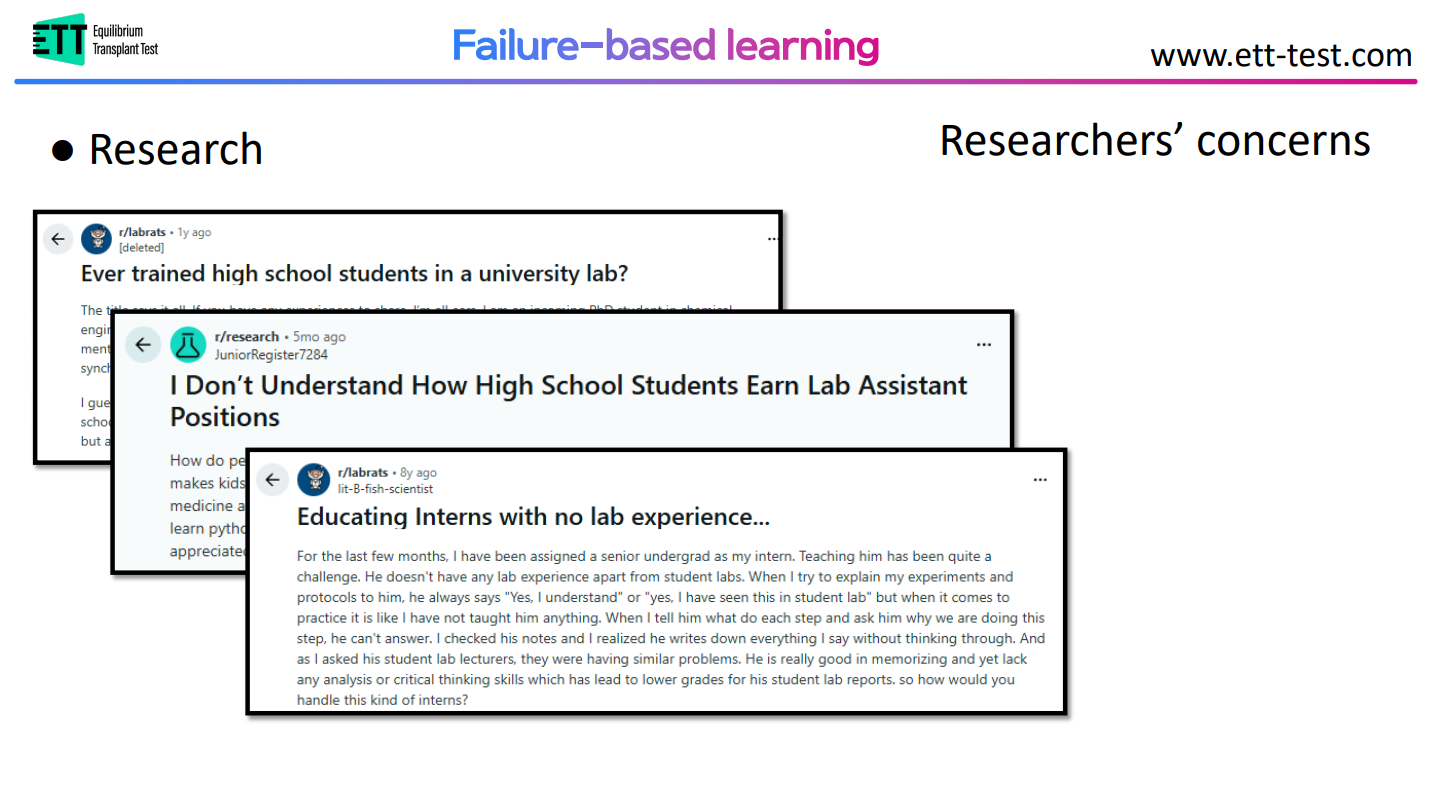
The difference between students who break through and students who don't is almost never access. It's commitment level.
Researchers and lab personnel have real concerns about working with high school students — particularly around basic skill gaps that waste supervision time, and safety risks that create liability. Students who proactively address those concerns in their outreach dramatically increase their response rate. That means showing evidence of lab safety training, demonstrating specific technical skills (even self-taught ones from video resources), and making a concrete case for what they can contribute rather than what they hope to receive.
That kind of proactive, failure-informed outreach — where the student anticipates the objections and addresses them before being asked — is itself a demonstration of the growth mindset that top schools are looking for.
Passion Projects and Entrepreneurial Work
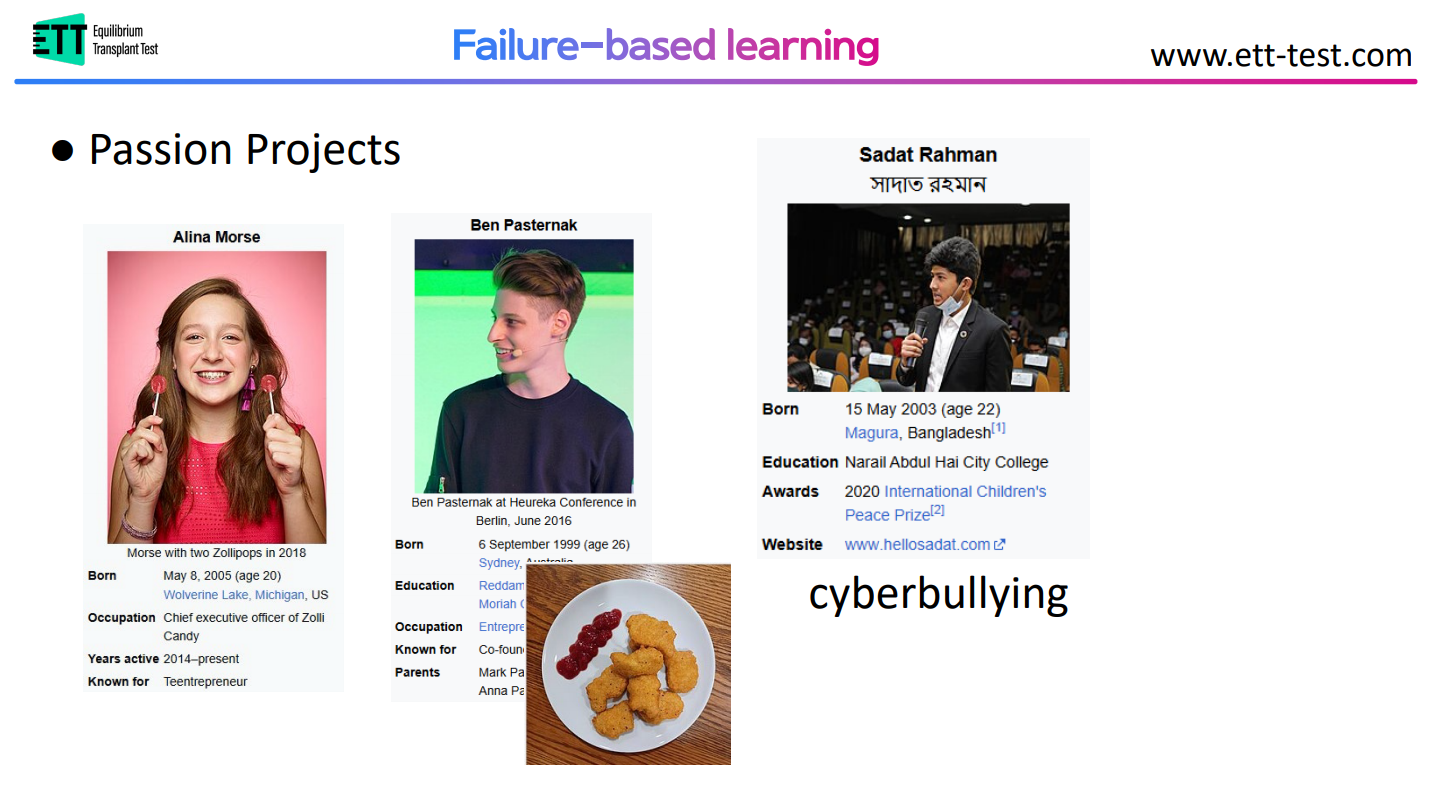
Some of the most compelling extracurricular profiles at A ONE Institute have involved students who built something from scratch — not because they were certain it would work, but because they were curious enough to try.
Students have developed dental-health-conscious candy formulations, plant-based food products, and apps designed to combat cyberbullying. What makes these profiles compelling isn't that the products are perfect or that they generated significant revenue. It's the visible process: repeated prototyping, documented failures, specific lessons learned at each stage, and a final output that reflects everything the student absorbed along the way.
A student who can walk an admissions reader through that journey — who attempted something, encountered specific obstacles, made adjustments, and produced something real — doesn't need a major award to stand out. The process itself is the evidence.
The Bottom Line for Winter Break
Winter break is a window. It's two or three weeks during which the daily pressure of GPA management lifts — and students have the space to try something that might not work on the first attempt.
That's the point.
Use writing competitions not to win, but to iterate. Use research outreach not to land an immediate position, but to learn how to make a compelling case and improve it. Use passion projects not to produce a finished product, but to work through the process of building one — failures included.
According to A ONE Institute's approach across multiple admissions cycles, students who enter this kind of work with a growth mindset, treat failure as a gap to close rather than a verdict to avoid, and build their extracurricular profile around genuine iterative effort are consistently more compelling to top colleges than students who pursued only safe, outcome-guaranteed activities.
The first step in any ambitious process is almost always a failure. The students who understand that — and plan for it — are the ones who end up with something real to show.
If you're a student reading this: go try something. It's okay if it doesn't work the first time. That's the whole point.
At A ONE Institute, we help students build extracurricular profiles that reflect genuine effort, real learning, and authentic growth — the kind of story that holds up in any admissions room. If you want to think through how to structure your student's break activities strategically, we're here to help.
winter break
failure-based learning
growth mindset
passion project
extracurricular activities
