
Everyone's Submitting Research Now. That's Exactly the Problem.
At A ONE Institute, we've watched a clear shift play out over the last several admissions cycles: research has gone from being a differentiator to being a baseline expectation at the most selective colleges in the country.
And that changes everything about how students need to think about it.
Research is still a powerful part of a competitive application. It can demonstrate intellectual curiosity in a direct, concrete way. It shows whether a student knows how to analyze data, take ownership of a project, and push through the uncertainty and failure that real inquiry always involves. Those qualities matter — and colleges know it.
The numbers reflect that.
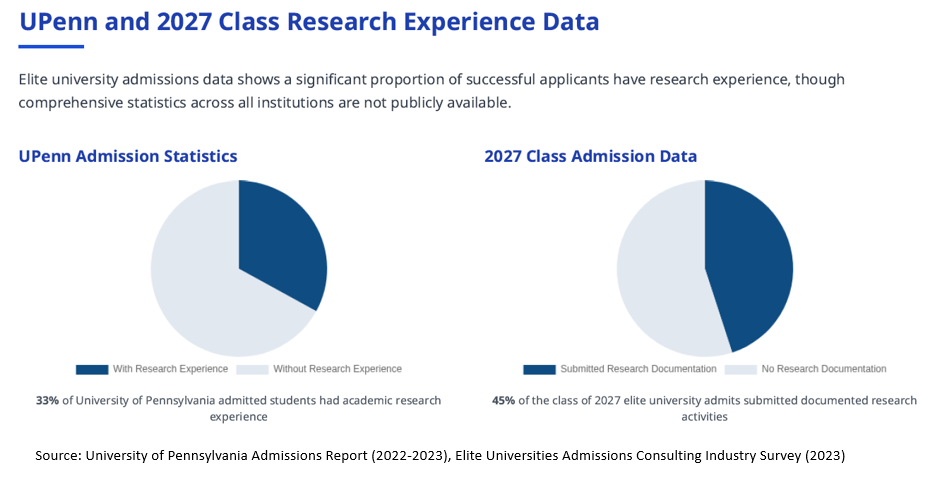
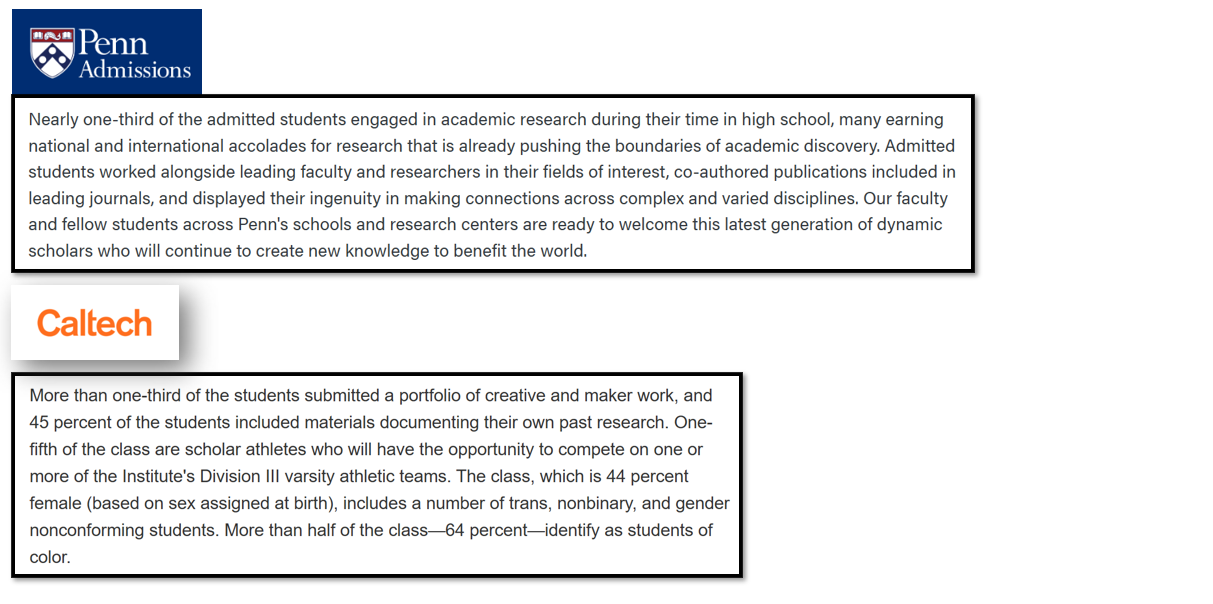
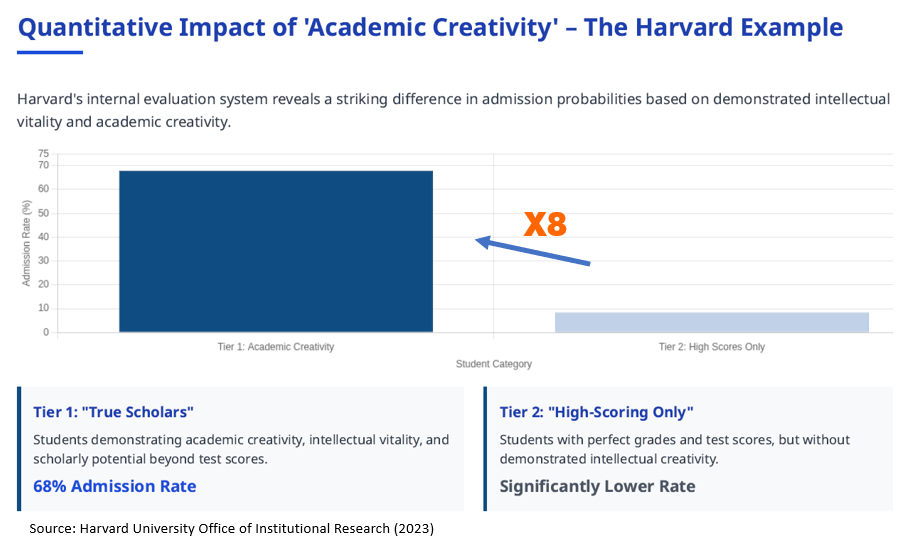
At Penn, roughly one-third of admitted students reportedly arrive with research experience, often alongside national or international recognition. At Caltech, that figure is said to be closer to 45%. At Harvard, students who demonstrate genuine academic creativity are admitted at dramatically higher rates than those who don't — and research is one of the clearest ways to show that kind of creativity.
So yes, research matters.
But here's the problem: because so many students now submit research, simply having done it is no longer enough. Colleges aren't asking whether you did research anymore. They're asking what kind, how serious it was, and — most importantly — what happened after.
Why Top Schools Are Asking Harder Questions About Research
The shift in how schools structure their research supplements is itself a signal worth paying attention to.
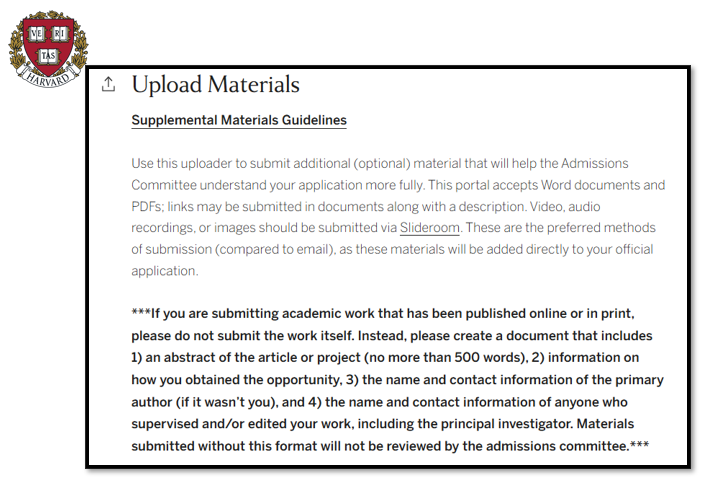
Harvard now asks for an abstract rather than a full paper as the standard first submission. Princeton has a similar abstract requirement. Yale goes further — it asks what field the research belongs to, whether the work was conducted independently or as part of a larger project, how much guidance the student received, and whether a mentor was involved.
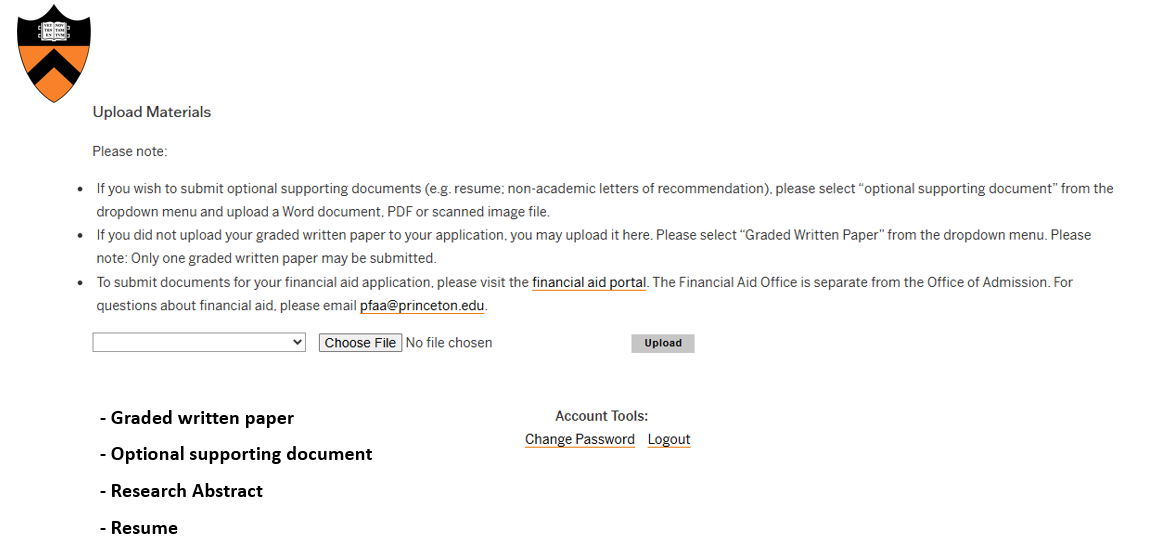
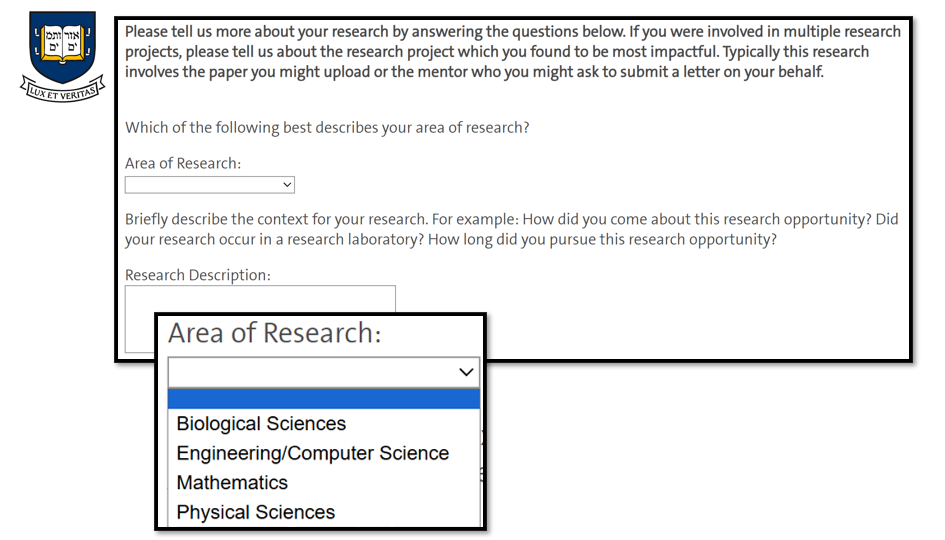
According to A ONE Institute's analysis of how elite admissions has evolved, these aren't bureaucratic changes. They reflect a straightforward reality: research has become common enough at this level that schools are actively redesigning their review process to evaluate it more carefully — not just confirm that it exists.
The question has changed. It used to be: Did this student do research? Now it's: What did the student actually do, how serious was it, and what does it reveal about who they really are?
The Difference Between Research That Counts and Research That Doesn't
There are plenty of short programs today that let students say they "did research." But if the project was rushed, superficial, or completed in just a few sessions, it rarely carries meaningful weight in an application.
What actually matters is whether the student spent enough time to go through a real cycle — identifying a problem, struggling through uncertainty, connecting information across sources, refining the question, and reaching a conclusion that took genuine effort to arrive at. That experience is qualitatively different from finishing something quickly and converting it to a PDF.
Yale's own admissions guidance around its STEM supplement makes this explicit. The admissions office isn't trying to determine whether a student's project aligns with Yale's current research agenda. They already understand that students change topics, pivot interests, and pursue very different work in college.
What Yale actually wants to know is what the student has genuinely done so far — in real detail. The supplement exists to help them understand the depth and authenticity of the work. It's not an invitation to panic, rush into a project, and submit something just because the portal has a STEM research field.
MIT's messaging points in the same direction. A research portfolio is meant to be a place where students share serious, meaningful work. Uploading a paper doesn't automatically become a plus. Just attaching a PDF creates no value on its own.
The combined message from Yale and MIT is clear: research doesn't help because it exists. It helps when it reflects real seriousness, real quality, and real authenticity.
And if the research doesn't meet that bar? In many cases, it may actually be better not to submit it at all.
The Real Question: What Did You Do After the Research?
This is where most students get it wrong — and where the strongest applications separate themselves from the rest.
If a student finishes a research project and then moves on to a completely unrelated set of activities, the impression admissions readers are likely to form is: this student added research as one more credential. It looks like résumé-building, not genuine intellectual investment.
But if the research becomes the starting point for connected work that follows — if it grows into something — then it starts to look like something much more meaningful. That's what colleges are actually trying to find.
Research should not be the ending point of a strong application. It should be the beginning.
Two Students, Same Research Topic — Completely Different Applications
Here's a concrete example of what this looks like in practice.
Imagine two students who both completed the same research project: a machine learning model designed to predict bird strikes and help prevent wild-bird collisions — sitting at the intersection of AI and environmental science.
Student B: Research Without Direction
After finishing the project, Student B moved into a set of unrelated activities:
- Became a presentation leader in a school public-speaking club
- Joined a Kaggle competition on bicycle-demand forecasting
- Attended an online seminar on international relations
- Volunteered at a local food bank
None of these are bad activities. Some are genuinely strong in isolation. But none of them connect back to the research. There's no coherence. It becomes very difficult for an admissions reader to identify what this student actually cares about — or whether the research reflected a real interest at all.
Student A: Research as the Foundation of Everything Else
Student A completed the same research — and then built outward from it:
- Ran a Bird Safe Campus campaign at school
- Created data-based signage educating students about bird-collision risk zones
- Continued refining the model using additional bird-observation data
- Presented findings to local community members on glass buildings and ecological preservation
- Organized workshops connected to those same issues
- Volunteered in bird-collision monitoring directly related to the original project
Now the picture looks completely different.
The research is no longer one isolated project among many. It's the center of a larger structure — touching leadership, communication, data analysis, public engagement, and community service, all tied to the same underlying concern. That's what creates genuine specialty inside an application. That's what makes one student feel distinctly different from another, even when both technically "did research."
What Colleges Are Really Looking At
According to A ONE Institute's work with students across multiple admissions cycles, the questions elite admissions offices are actually asking when they review a research-based application are these:
- What problem did this student care about?
- How did they approach it?
- What did they build or learn from it?
- And what did they do afterward to keep developing that line of work?
That last question is the one most students aren't prepared for.
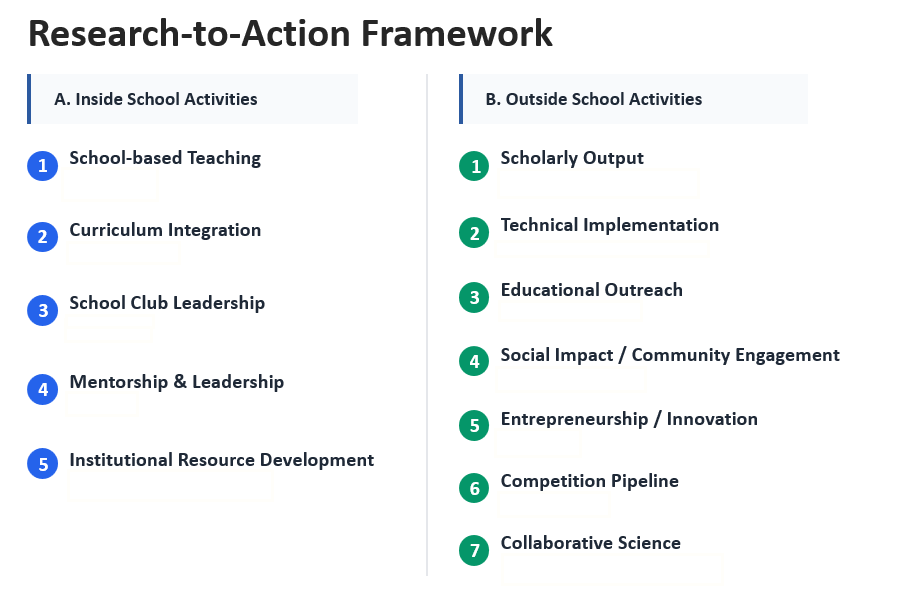
The flow colleges want to see looks something like this: research leads to more advanced coursework, or a follow-up project, or a real-world community application, or advocacy and education work — and those things connect back to the original research in a way that feels organic, not manufactured.
When that coherence is present, the application doesn't read as a list of credentials. It reads as a student who genuinely cares about something and has been developing that interest with real consistency over time.
Why Depth Beats Breadth — Every Time
There's another pattern worth naming directly: many students are choosing research topics that are too broad.
Environment. AI. Social issues. Public health. Policy. All at once, all in one project. The thinking is that wider coverage signals more capability. But if the work never becomes genuinely deep, none of that range carries real weight.
Depth is what gives research its value in an admissions context.
Colleges aren't just evaluating short-term achievements. They're evaluating trajectory — how a student's thinking and work have developed over time. A student who becomes interested in something in 9th grade, explores it more seriously in 10th, deepens it in 11th, and expands it into connected action in 12th — that student presents a persuasive intellectual arc. That kind of trajectory is far more convincing than a wide collection of disconnected activities, no matter how impressive each one looks individually.
This is why coherence matters as much as it does. It's not the number of activities that creates a strong application. It's the connectedness of those activities. As connectedness increases, specialty becomes clearer. As specialty becomes clearer, the student becomes genuinely distinguishable — not just on paper, but in the way an admissions reader experiences the application.
The Four Things Students Need to Understand About Research in Admissions
If there's a single framework to take away from everything above, it's this:
1. Many students now do research. It's no longer unusual. At the most selective schools, it's increasingly common. That changes the baseline.
2. Quality matters — a lot. Superficial research submitted in portfolio form doesn't impress admissions readers. In some cases, it can actually work against the student. Real depth, real process, and real conclusions are what carry weight.
3. What happens after the research matters even more. The follow-up action — the connected work, the community application, the continued development — is often what determines whether the research reads as authentic investment or credential-chasing.
4. The strongest applications build multiple activities toward one clear direction. Coherence is the variable that turns a collection of activities into a compelling story. And that story is what admissions offices at schools like Harvard, Princeton, Yale, Stanford, and MIT are ultimately trying to find.
The Question Students Should Actually Be Asking
Most students approach this with the wrong question. They ask: Should I do research?
The better question — the one that actually shapes a strong application — is: If I do this research, what kind of structure can I build around it afterward?
That reframe changes everything. It shifts the thinking from "research as a credential to collect" to "research as the foundation of a larger, coherent body of work." And that shift is exactly what separates the applications that stand out from the ones that don't.
Research can be a genuinely powerful foundation. But colleges are not just asking whether a student has a paper. They're asking whether that paper grew out of real interest, reflects meaningful quality, and became part of a larger pattern of serious, connected work.
That's what makes research count.
At A ONE Institute, we help students build application profiles where research isn't just an attachment — it's the foundation of a coherent, compelling body of work. If you're trying to figure out how to position existing research or how to build a meaningful structure around a new project, we're here to help.
research
