
At A ONE Institute, this is one of the questions we hear most often — and it deserves a straight answer.
Yes, you can get in without major competition awards.
But here's the honest version: if you don't have standout prizes, the rest of your application has to carry significantly more weight. That's not a knock on anyone. It's just the reality of how highly selective admissions works — and understanding it is the first step toward building a strategy that actually gives you a shot.
Why Awards Matter — And Why They're Not Everything
In top college admissions, visible achievements get a lot of attention — national competition wins, prestigious recognitions, that kind of thing. And honestly? They help. Awards give admissions officers objective, verifiable proof that you outperformed peers in a competitive setting. That can meaningfully boost your score in both the academic and extracurricular categories.
So let's be clear about one thing upfront: if you have a genuine shot at earning a major award in your field, go for it. There's no reason not to.
But that's not where most students are. Most students won't walk away with a top prize. So the real question becomes: without those awards, how do you still become a competitive applicant?
That's what this breakdown is for.
How Admissions Actually Works: Think in Categories
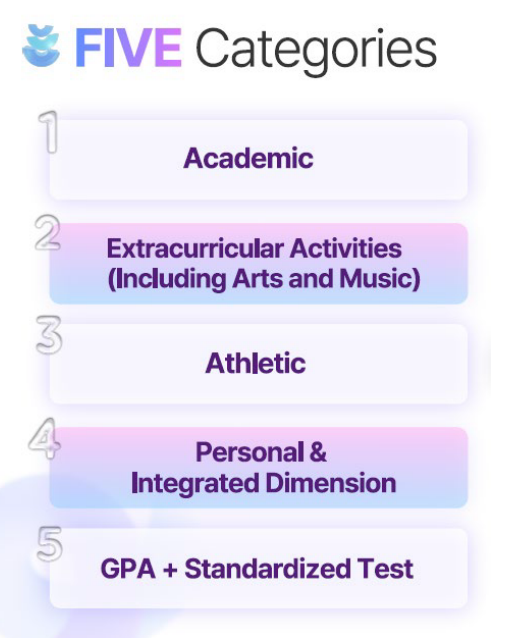
Different schools use different language, but the evaluation framework is largely consistent across highly selective colleges. Think of it in buckets:
- Academics (GPA, course rigor, test scores)
- Extracurricular achievement
- Personal qualities
- Recommendations
- Coherence — how integrated, sincere, and sustained your overall profile feels
If you're missing a major award in one category, the strategy is twofold:
- Score as high as possible in every other category
- Within the award-free category, build the strongest possible version of achievement you can — even without a prize
That's the foundation. Everything else builds from there.
Step 1: Your Academic Profile Has to Be Airtight
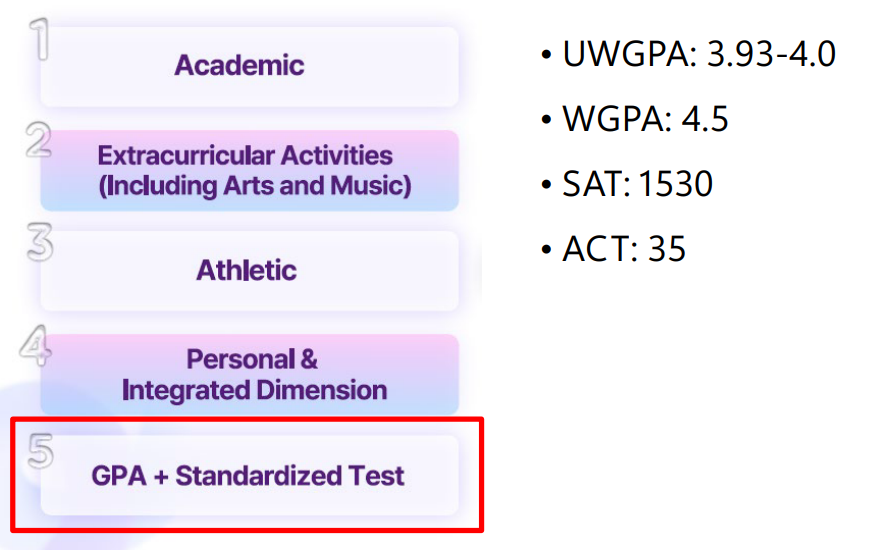
This one isn't negotiable. If you don't have standout awards, your academic indicators need to be genuinely strong — not just "pretty good."
We're talking:
- A high unweighted GPA
- A strong weighted GPA
- Standardized test scores in the competitive range — ideally 1530+ on the SAT or 35+ on the ACT
And here's the part students sometimes miss: it's not either/or. You can't offset a weak test score with a great GPA, or vice versa — not at this level. Without the advantage of major awards, you need your academic profile to hold up across the board. The goal is to remove as much doubt as possible before admissions officers even get to your extracurriculars.
Step 2: Depth and Sincerity Matter More Than You Think
Once the academic baseline is solid, the next question is: what creates distinction when awards aren't in the picture?
This is where something harder to quantify comes in — what admissions officers often call genuine seriousness. In practice, that means two things:
- You're pursuing one meaningful goal through multiple different forms of effort
- You're doing it over time — not in a single burst, but sustained over at least two years
This is not a checklist of disconnected activities. It's a pattern. A throughline. Something that makes an admissions reader think, this student really cares about this — and has the receipts to prove it.
The strongest award-free applications don't rely on one isolated activity. They show a student pursuing a single purpose through multiple channels: academic work, leadership, writing, service, technical skill, community engagement. That kind of integrated profile is hard to fake — and that's exactly why it works.
Why Research Is One of the Most Powerful Tools Available
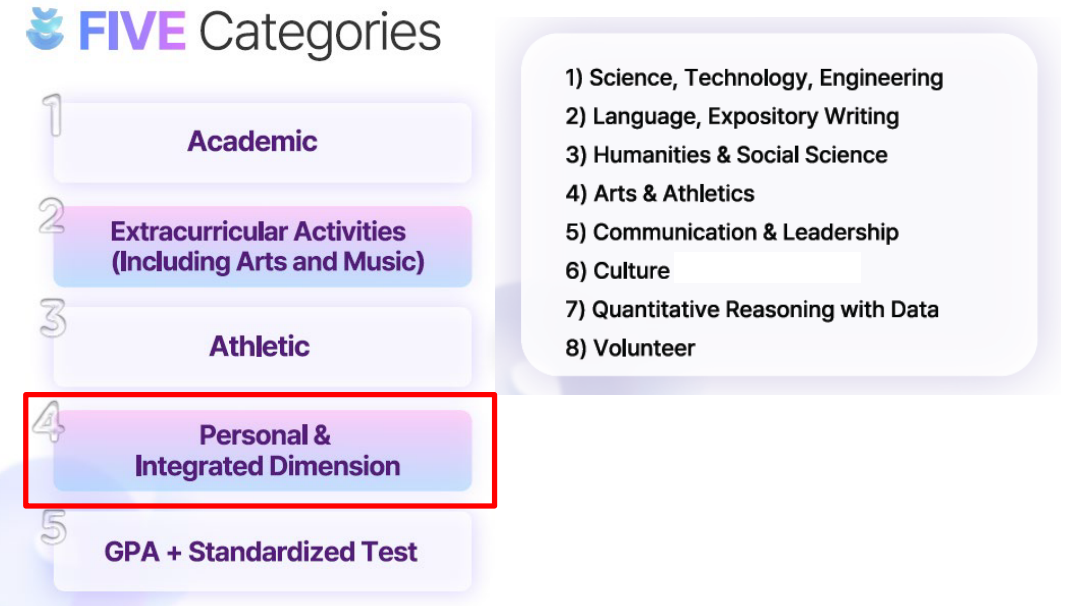
If there's one strategy that consistently helps students without major awards, it's research — and the reason is simple: research lets you strengthen multiple application categories at once.
A well-developed research project can demonstrate:
- Academic curiosity and intellectual initiative
- Extracurricular depth and self-direction
- Writing and communication skills
- Leadership and project ownership
- Technical or quantitative ability
- Opportunities for service, publication, or community engagement
That kind of multi-category reach is rare, and it's why research comes up so often in conversations about competitive applications — especially for students without prize credentials.
That said, research isn't the only path. If another activity can genuinely hit multiple categories and build real depth, there's no need to force it. But for many students, research is simply one of the most flexible and effective ways to build a compelling profile from the ground up.
A Real Example: Urban Heat Islands and Inequality
Here's what this looks like in practice.
Say a student starts with a research topic on the urban heat island effect. Solid topic. But now connect it to social and economic inequality — suddenly, the project becomes a lot more powerful.
Now the student isn't just mapping temperature patterns. They're examining how environmental burden falls unevenly across neighborhoods, and how lower-income communities often face greater climate vulnerability due to building materials, infrastructure gaps, and limited environmental protections. There's real data here, and real social stakes.
To explore it, the student collects satellite temperature data across neighborhoods, layers it against income distribution data, and analyzes the correlation. That's a quantitative dimension, right there.
From there, the same idea can expand outward:
- Writing — the student contributes essays to a school newspaper about how climate vulnerability maps onto economic inequality
- Leadership and service — they partner with a local nonprofit to organize a Cool Roof Paint initiative in lower-income neighborhoods
- Community and diversity — if those neighborhoods include multilingual or immigrant populations, that dimension enters naturally
- Technical skills — data visualization, mapping tools, and analysis methods support a quantitative thread throughout
- Art — if the student is creatively inclined, heat-map data becomes the basis for a science-meets-art visual project exploring environmental injustice
One research topic. Five or six meaningful categories touched. That's the kind of integration that makes an application compelling — with or without a trophy.
Building Strong "Partial Scores" Without a Big Award
Even if this student never wins a major prize for that work, the application can still be genuinely competitive — as long as the academic foundation is strong and the profile is built with intention.
The strategy here is what we'd call dense partial scoring: instead of one huge boost from a major award, you raise the overall application by stacking strong evidence across multiple areas.
In practice, if a student can do three or more of the following well, colleges may still view that profile as highly attractive:
1. Take advanced coursework beyond the standard high school level Dual enrollment or college-level courses signal intellectual initiative and add credibility to a strong GPA.
2. Conduct meaningful research and connect it to other activities The research itself matters — but the bigger value often comes from how it links to writing, leadership, service, or communication.
3. Show academic leadership Leading a research team, presenting findings, mentoring peers, or taking visible ownership of a project all count here.
4. Publish or present through school platforms Contributing articles, essays, or research summaries to a school journal, magazine, or newspaper shows that you're not just learning privately — you're putting ideas into the world.
5. Keep submitting externally, even without winning Consistency of theme matters. Submitting work to competitions, journals, or selective programs — even without placing — can still demonstrate seriousness and sustained effort.
6. Stay committed to one organization for at least two years, with leadership Duration and growth within a single context is far more impressive than a string of short-term involvements. Admissions officers notice the difference.
7. Build continuity through internships, lab roles, or research assistant positions Real-world engagement connected to your stated interests strengthens both the narrative and the substance of your profile.
Not every item needs to be there. But the more of these layers a student builds, the more the overall application can compensate for the absence of a major award.
So Can You Actually Reach the Ivy League Without Special Awards?
Yes — but you have to understand what that actually requires.
It doesn't mean: no awards, but everything else is pretty solid.
It means: no awards, but the academic profile is strong across the board, the extracurricular work is serious and sustained, the student's interests are integrated across multiple forms, and the supporting categories are built up carefully enough to raise the total.
That's a genuinely different standard. And it takes intentional, strategic work to get there.
We've seen students gain admission to Ivy-level schools without major competition awards. It happens. But those students didn't leave the rest of their application underdeveloped — they compensated thoroughly, and they did it with a clear strategy.
Winning awards is one way to stand out. It's not the only way.
For students who don't have that path available, the answer isn't to give up — it's to build a profile with enough academic strength, depth, continuity, and coherence that the absence of awards stops being the defining feature of the application.
That is absolutely achievable.
And for students who are willing to put in that kind of intentional, sustained work — the door to the Ivy League is still open.
At A ONE Institute, we work with students to build exactly this kind of integrated, strategic profile — starting from wherever they are. If you have questions about your specific situation, we're here to help.
Ivyleague
Competitions
