
Hello, this is A ONE Institute.
These days, students are using AI so often in the writing process that schools and many other institutions have started relying heavily on AI detection tools to determine whether a piece of writing was generated by AI. At this point, we are clearly entering an ongoing arms race: students and writers are trying to avoid being flagged, while schools and institutions are trying to catch misuse more effectively.
The problem, however, is that AI detectors are far from perfect.
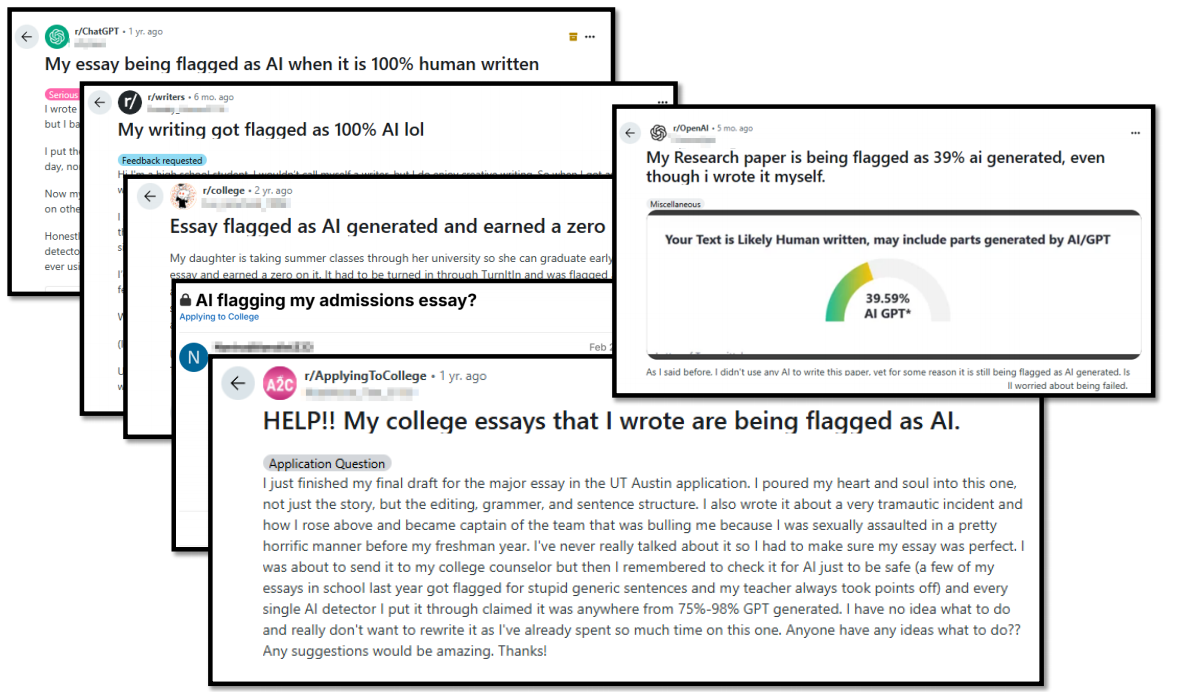
Because these systems are not fully reliable, even essays that were written entirely by a student can sometimes be flagged as AI-generated. That can lead to serious consequences. A school essay may receive a failing grade. In more serious cases, even a college application personal statement may be misread as AI-written, despite the fact that the student wrote it independently.
So today, I want to focus on one question: How can students write in a way that reduces the risk of being unfairly flagged by AI detectors?
And if I am being honest, this issue has made essay writing much harder than it used to be—especially for non-native English-speaking students.
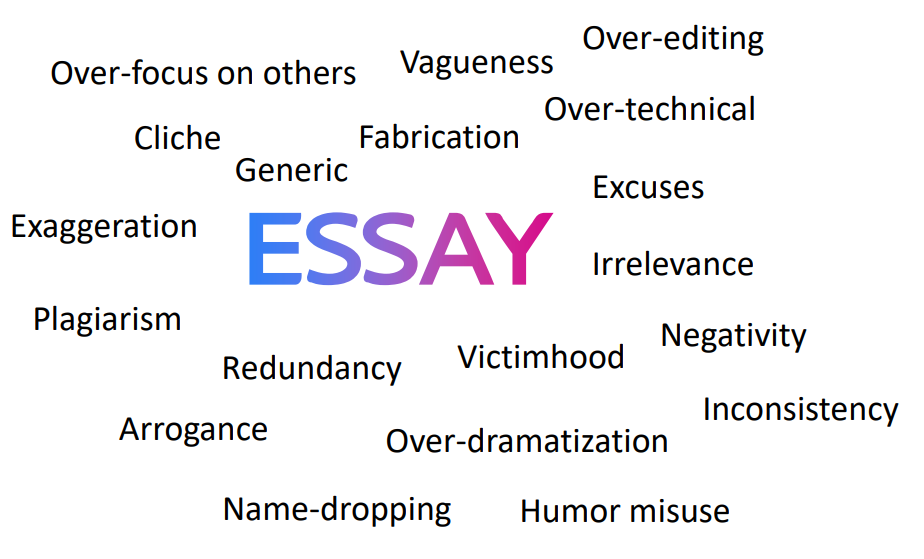
Even before AI became a major issue, students already had to be careful about a long list of writing problems: overused phrasing, exaggerated or fabricated storytelling, writing that felt too generic, vague ideas, awkward style, language that sounded artificially polished, writing that felt too dramatic, a victim-centered tone, repetition, arrogance, and so on. Students always had to watch for those problems in order to write a strong essay.
Now they have to do all of that and avoid being misidentified as AI-generated.
That is what makes this moment especially difficult.
For students like ours—students who are not native English speakers—the challenge is even greater. I looked through Reddit to see how people are reacting to this, and there are endless examples. Students write posts saying, “I wrote my essay myself, but the AI detector says the percentage is incredibly high—what am I supposed to do?” Then the comments fill up with responses like, “Same here. These detectors are broken. They are not accurate at all.”
That is why, if we want to avoid these unfair situations, we need to approach writing with two clear goals in mind:
- Make sure a genuinely student-written essay does not get flagged by an AI detector.
- If a student does use AI in a very limited way during the process, make sure the final writing still does not get flagged as AI-generated.
That is the framework for today’s discussion.
And just to be clear, what I am going to explain here is not based on my personal opinion. I am setting aside personal views and focusing instead on the published literature and research that discuss how AI detectors work and why they make mistakes.
How AI Detectors Basically Work
We may not know every technical detail of how these tools function, but we do need a basic understanding of the underlying logic. Otherwise, students may end up believing all kinds of internet “tricks” that do not actually work.
For example, people online sometimes claim things like this:
- If you let AI generate the essay and then retype it manually into a Word document, it will not get flagged.
- AI-generated writing supposedly contains hidden markers, invisible punctuation, or suspicious spacing patterns, so if you remove the spacing and reformat the text, it will fool the detector.
- If you rewrite the spacing, retype the paragraph, or strip formatting, the system will supposedly miss it.
Now, if AI detectors actually worked by scanning for hidden formatting marks or secret spacing patterns, then those kinds of tricks might matter. But if the system is not built that way at all, then those methods are pointless.
That is why it helps to understand the basic logic of how detectors actually make decisions.
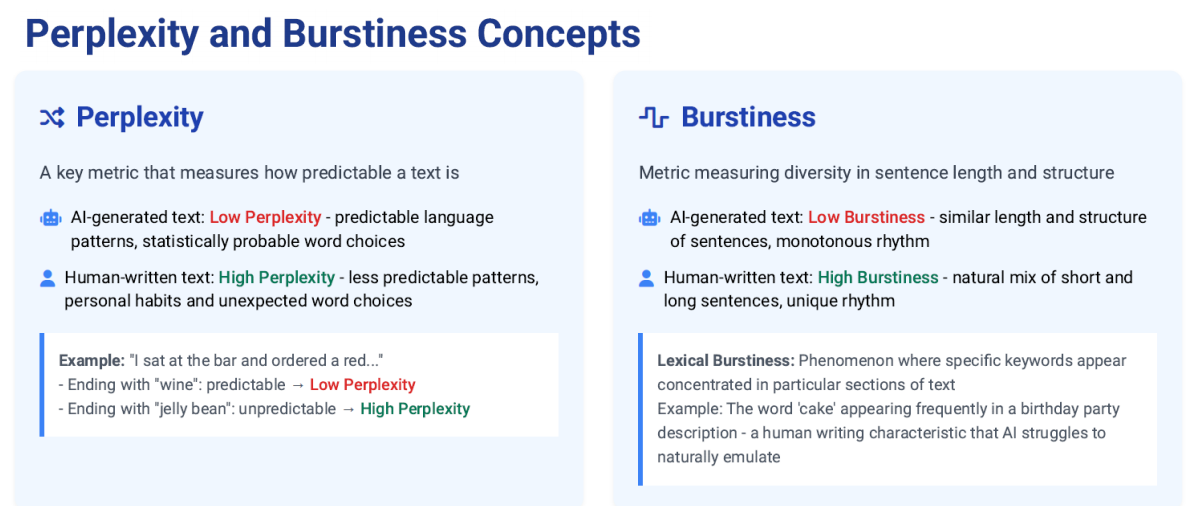
The two concepts students should understand most clearly are perplexity and burstiness.
Perplexity
AI-generated text tends to have low perplexity. That means the language is relatively predictable. The word choices follow patterns that are statistically likely and structurally expected. In other words, AI tends to choose the next word that most naturally fits what usually comes next.
Human writing, by contrast, tends to show higher perplexity. Human writers are more likely to introduce unexpected phrasing, surprising turns of thought, or unusual wording choices.
Now, that does not mean students should try to sound random or bizarre. If someone focused only on maximizing perplexity, the essay could become strange and unreadable. But it is still important to understand that AI detectors pay close attention to how predictable a text sounds.
Burstiness
The second concept is burstiness.
A simple way to understand burstiness is to think about how repetitive or uniform a piece of writing feels. Low burstiness means the sentences tend to be similar in length, the rhythm remains steady, and the same kinds of words appear at regular intervals. AI-generated writing often shows this kind of controlled, even distribution.
Human writing tends to be less uniform.
For example, if a human is describing a birthday party, the word “cake” might appear repeatedly in one specific section because that is where the memory is concentrated, and then disappear entirely in another section. Human writing clusters words unevenly. Sentence length also expands and contracts more naturally.
AI-generated writing, on the other hand, tends to spread vocabulary more evenly and maintain a more regular sentence rhythm.
So in very simple terms, if a student wants to reduce the likelihood of being flagged by an AI detector, the goal is to write with higher perplexity and higher burstiness.
A Little More of the Technical Side
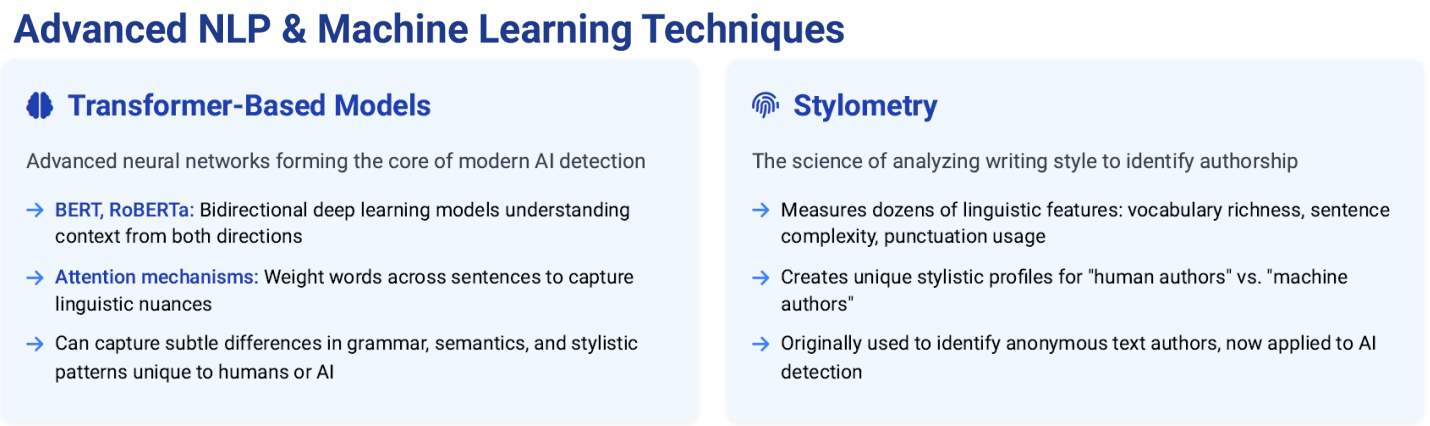
If we go one step further into the technical side, many AI detectors analyze text through a process that includes tokenization, embedding, n-grams, function-word patterns, contextual modeling, and style analysis.
You do not need to become an engineer to understand this, but knowing the general idea is helpful.
Tokenization and Embedding
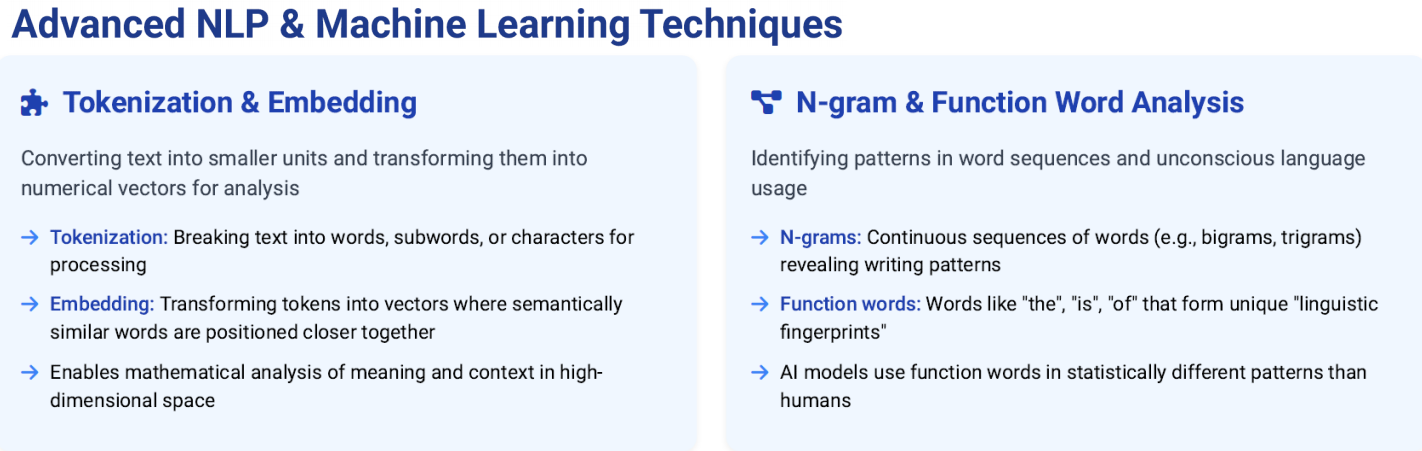
First, the text is broken into small units called tokens. These are not always full words. Sometimes the system breaks language into smaller parts, such as prefixes, roots, or partial word segments.
Once that happens, those tokens are assigned numerical values and represented in a way that allows the system to compare them with one another. Similar words or fragments are grouped in related ways. That broader numerical mapping process is often described in terms of embedding and vector representation.
N-grams
Another major concept is the n-gram.
An n-gram is simply a sequence of words considered in groups of two, three, four, and so on. For example, a bigram model would look at pairs such as:
- “The quick”
- “quick brown”
- “brown fox”
- “fox jumps”
A detector can learn which combinations appear frequently and which patterns tend to occur in AI-generated writing. If the text repeatedly aligns with highly common word-pair or word-sequence patterns, that can contribute to the impression that the writing is AI-generated.
Function Words
Then there are function words—common words like the, is, of, and similar structural words.
Humans often use these more loosely and unevenly. AI tends to use them in more regular, patterned ways. That pattern itself can become a signal.
Contextual Understanding
Modern detectors may also rely on transformer-based approaches, which means they do not just look at one word at a time. They evaluate context in both directions, considering what comes before and after a word in order to infer meaning more accurately.
So instead of looking at a word like bank in isolation, the system tries to determine whether it means a riverbank or a financial institution by reading the surrounding context.
Related systems also use forms of attention mechanisms, which allow them to identify the words or features in a sentence or paragraph that seem most important to the overall structure and meaning.
Style Analysis
Finally, they analyze style more broadly: sentence complexity, vocabulary diversity, structural repetition, and other statistical features of the writing.
So if we step back and summarize the most important part, the key practical takeaway is still this:
- Write with higher perplexity, meaning the next phrase should not always feel overly predictable.
- Write with higher burstiness, meaning sentence length, rhythm, and vocabulary use should feel more naturally varied.
- Avoid falling into the same AI-like word combinations over and over.
- Do not use function words in an overly patterned, mechanical way.
The Bigger Problem: False Positives
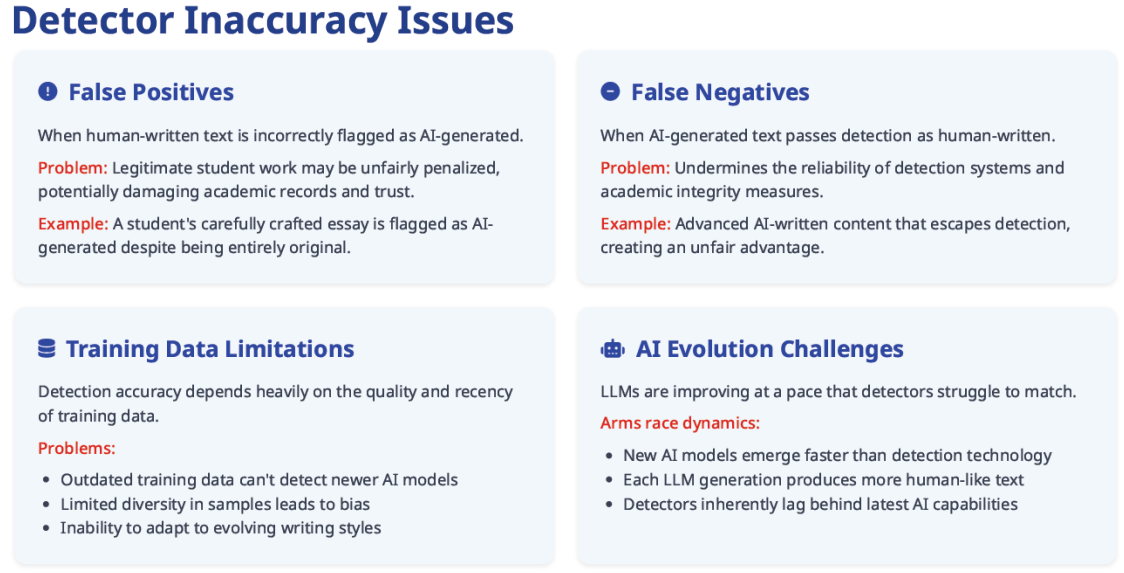
There are two kinds of failure when it comes to AI detectors.
The first is when AI-generated writing is not identified correctly, and the system says, “This looks 90% human and maybe 10% AI.” That is obviously a problem, because it allows students who relied too heavily on AI to slip through.
But the more serious problem is the opposite one: when a student writes the essay personally, without using AI, and the detector still labels it as AI-generated.
That is the more dangerous failure, because it punishes innocent students.
The companies behind these tools often claim they are working very hard to reduce this kind of false accusation. They also acknowledge that their training data has limitations and that generative AI is evolving so quickly that detection systems are constantly trying to catch up. There is an unavoidable lag between how fast AI models improve and how quickly detectors can respond.
Despite the claims made by detection companies that their systems are highly accurate and designed to minimize unfair accusations, real students continue to report the opposite experience.
And there is one research finding that matters especially for students like ours.
According to Stanford research, writing by non-native English speakers was identified as AI-generated at a rate of 61.3%, even when it was genuinely written by a human.
That is a staggering number.
One reason is that many non-native English speakers are taught to write in highly structured English patterns—subject, verb, object, clearly separated ideas, straightforward explanatory language. Because they also tend to read formal explanatory texts, their own writing can sometimes sound mechanically polished in ways that resemble AI output.
That is why non-native English-speaking students need to be especially intentional.
So What Should Students Actually Do?
If non-native English-speaking students want to reduce the chances of being unfairly flagged, there are several practical things they should focus on while writing.
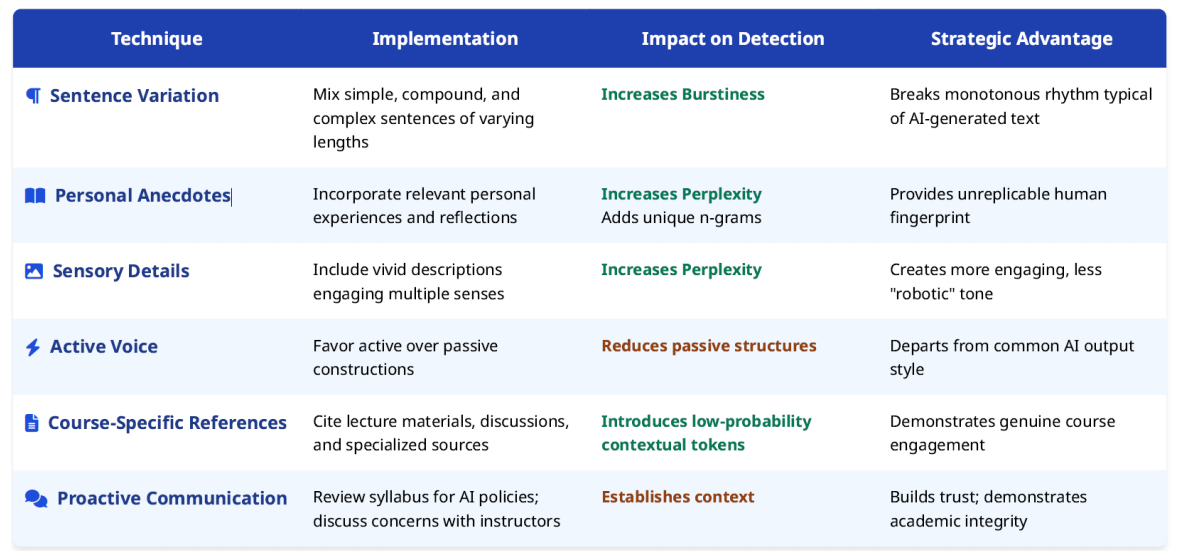
1. Vary your sentence structure
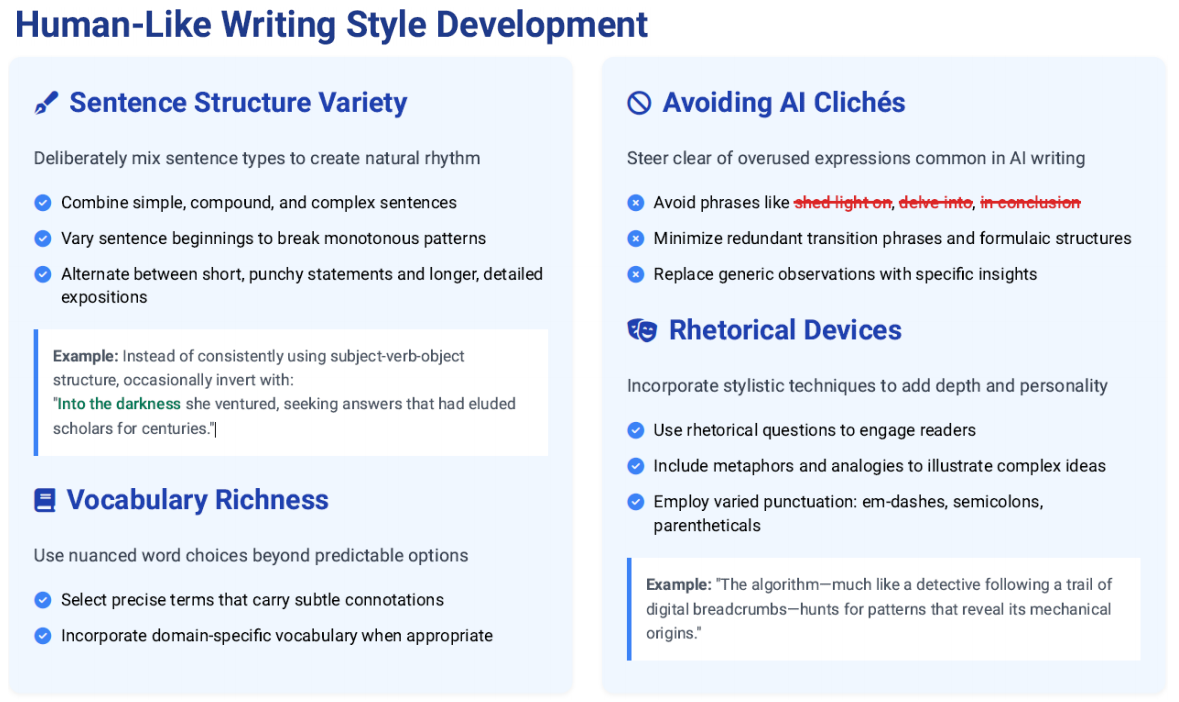
Students should mix short, medium, and long sentences. They should not rely too heavily on only simple sentences, but they also should not stack complex academic sentences one after another just to sound sophisticated.
The goal is to create variation.
This is not about retyping the same AI-generated paragraph or changing the formatting. It is about writing in a way that avoids monotony from the beginning. That kind of variation increases burstiness.
Students should also avoid writing everything in rigid subject-verb-object order.
For example, compare these two sentences:
- Into the darkness, she ventured, seeking answers that had eluded scholars for centuries.
- She ventured into the darkness and sought answers that had eluded scholars for centuries.
The second version is perfectly grammatical, but it is more structurally expected. The first version disrupts the pattern slightly, which makes the sentence less mechanically predictable.
That kind of variation can help.
2. Avoid clichés
Students should avoid stock phrases such as:
- shed light on
- delve into
- in conclusion
These phrases are common in academic-style writing and often appear in predictable patterns. Replacing them with more natural, situation-specific phrasing makes the writing feel less formulaic.
3. Use richer, more flexible vocabulary
If a draft repeats the same word over and over, students should revise it by substituting words more thoughtfully while preserving nuance. A broader vocabulary helps the writing feel more human and less algorithmically repetitive.
4. Use rhetorical devices when appropriate
Students can also use rhetorical tools more intentionally: rhetorical questions, purposeful punctuation, or other stylistic choices that create a more human rhythm.
This does not mean over-writing. It simply means that students should not write in a flat, overly standardized way.
5. Include highly specific personal details
This is one of the most important strategies.
Students should describe specific personal experiences in concrete detail—details AI would not know. That includes not just what happened, but how they interpreted it, what they noticed, and what it meant to them personally.
This raises perplexity because the essay becomes less generic and less statistically predictable.
6. Use active voice whenever possible
AI-generated writing often leans more heavily on passive voice or detached, general explanation. That is why it helps to use active voice more often and to move away from a purely abstract or impersonal tone.
7. Use references that are genuinely yours
Instead of relying on generalized knowledge that sounds like it came from a lecture summary, YouTube video, or internet article, students should use details that are genuinely tied to their own life—something a specific teacher said, a particular moment in a classroom, an experience with a certain mentor, a unique observation from a real event.
That kind of specificity is much safer than broad, generic “smart-sounding” commentary.
Prepare Evidence in Case You Are Wrongly Accused
This point is extremely important.
If a student is unfairly flagged, it makes a huge difference whether they have evidence of their writing process.
That is why students should write in platforms like Google Docs or Microsoft 365, where version history is automatically recorded. There are also tools and browser extensions that help preserve revision history.
Even if a student used limited outside help during brainstorming or drafting, a detailed revision history still matters. If the writing process is documented over time—showing earlier drafts, edits, expansions, and revisions—that history can become critical evidence demonstrating that the student genuinely developed the essay.
A student who has documentation is in a very different position from a student who has none.
So one of the smartest preventative steps is simply this: build a record of the writing process from the beginning.
A Practical Summary
If I were to boil all of this down into a few key writing principles, it would look like this:
- Increase burstiness by varying sentence length and structure.
- Increase perplexity by using less predictable phrasing and more original interpretation.
- Include highly specific personal anecdotes that AI would not know.
- Use vivid, concrete detail rather than generic abstraction.
- Favor active voice when possible.
- Avoid using function words and sentence structures in overly repetitive patterns.
- Use specific references tied to real people, classes, mentors, or moments.
- Keep revision history and writing evidence from the beginning.
In other words, students should not rely on gimmicks like changing spacing, retyping AI output, or trying formatting tricks. Those are not real solutions. The safer and more effective approach is to write in a fundamentally more human way.
And this is especially important for non-native English-speaking students, because even fully human writing is more likely to be flagged if it sounds overly rigid or mechanically polished.
What If a Student Uses AI a Little?
Of course, students should never ask AI to write the entire essay for them.
But in real life, some students may use AI in small ways—for brainstorming, for helping them get unstuck, or for generating an initial idea. If that happens, the student should be extremely careful about what they ask AI to produce.
One useful strategy is to prompt AI in a way that specifically avoids standard AI-style writing. For example, students can ask for output that maintains:
- high perplexity
- high burstiness
- a reflective, personal tone
- avoidance of common academic phrases
A prompt might say something like:
I am writing an essay about climate change. Please help me brainstorm a draft with varied sentence structure, strong personal reflection, less predictable transitions, and more unusual word choice. Avoid generic academic phrasing.
That kind of output may still need major rewriting, but it is at least farther away from the most stereotypically AI-generated style. Then the student should rewrite the content in their own words while keeping in mind all the principles discussed above.
Still, the very first step should be this: start brainstorming in a platform like Google Docs and preserve the writing history from the beginning.
That is one of the best forms of protection a student can have.
Writing
AI detector
